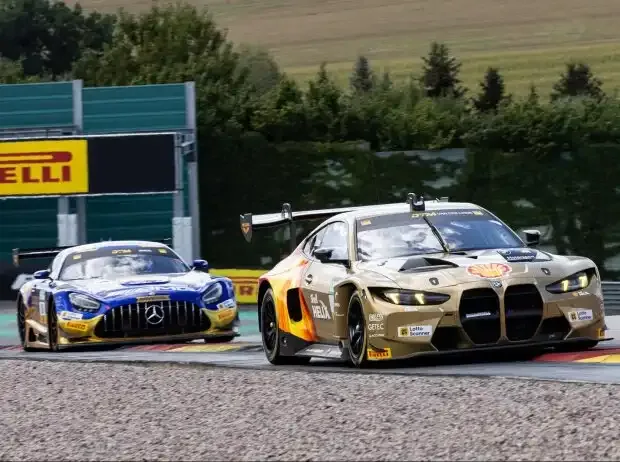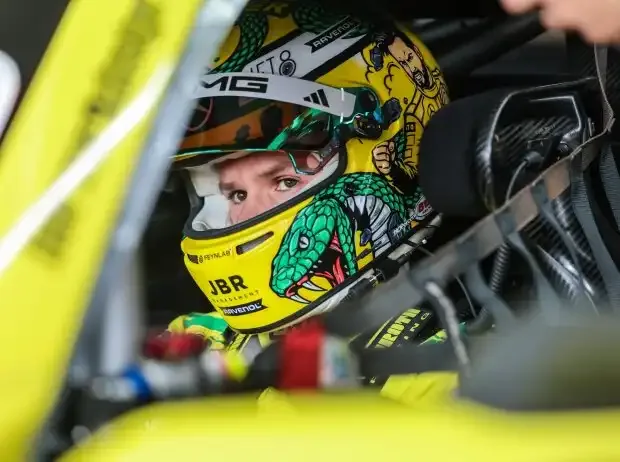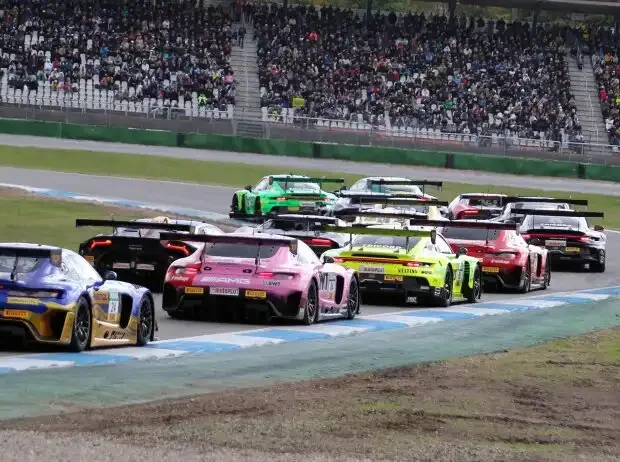


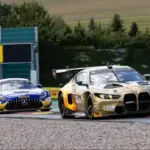
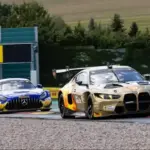
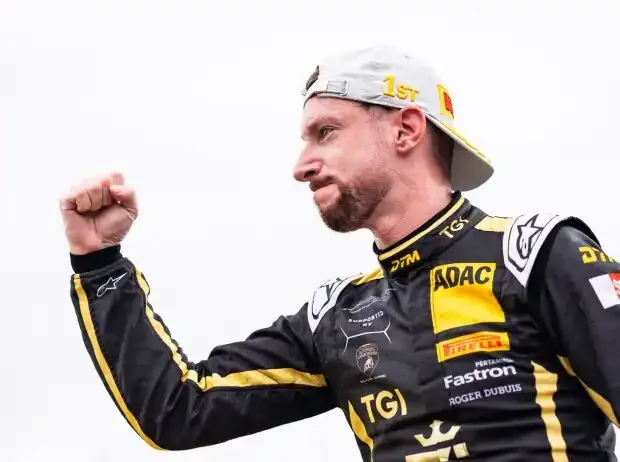
– First worldwide victory for the heavily criticized Lamborghini Temerario GT3 at the start of the season in the Sunday race of the DTM in Oschersleben! After the strong second place by Abt-Lamborghini driver Luca Engstler on Saturday, Grasser driver Mirko Bortolotti topped it off on Sunday and gave the car its breakthrough. But are the Temerario problems solved now?
Read more Carlos Sainz: This is why Spain is so successful in every sport
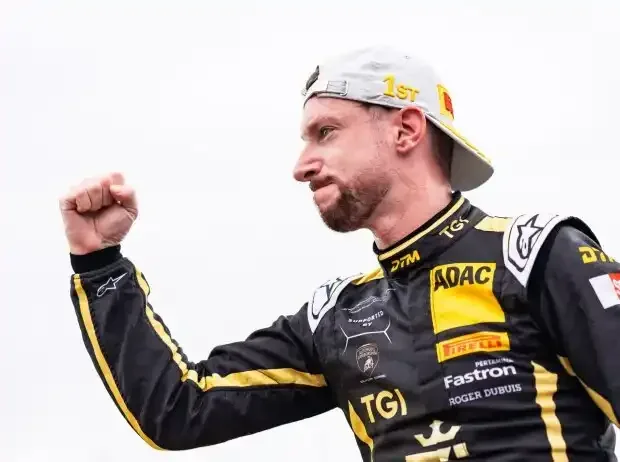
“I don’t suspect it will continue like this,” team boss Gottfried Grasser said suspiciously in an interview with Motorsport-Total.com. “Now everything came together, but I think tracks like the Sachsenring will be relatively difficult.”
Despite the euphoria at the Lamborghini traditional team, which had already helped the predecessor Huracan GT3 to its first worldwide victory ten years ago, Grasser remains realistic, saying “that with this single result, of course, not all problems are solved.”
“Still haven’t found all the answers”
“We still haven’t found all the answers regarding the car’s performance. We see that repeatedly in qualifying and also on certain race tracks. So there is still a lot of work waiting for us.” (SPONSORED LINK: Secure tickets now for the DTM 2026 season!)
But why did the Temerario GT3 work so well in Oschersleben? “In the first sector with the tight corners, we are unbeatable,” explains Grasser. “In sector 3, where there are normal corners, we are back again. That shows the current characteristic of the car. In tight corners with few braking zones, the car is very strong.”
Indeed, in the first sector in Oschersleben, which consists of the first three corners, there is no hard braking point. And the brakes remain the biggest issue of the car, which, thanks to a DTM exception rule, is allowed to be used with more downforce on the rear axle and more boost than permitted by FIA homologation.
Why the first sector was tailor-made for the Lamborghini
“The first corner is not a brutal braking point, because you brake gently into this kink. It’s not like Monza, where you arrive at 250 km/h and then have to brake hard,” explains Grasser. Apart from that, the car, according to the engineer who co-developed the predecessor model Huracan, suits slow corners, which are abundant in Oschersleben.
“We also saw that at the Norisring. There, braking was an issue, but everything fit in the corners,” he refers to Nuremberg, where the Grasser team was in the midfield and Bortolotti finished eighth and eleventh.
Read more Three teams, three compounds: Pirelli tests tires in Hungary
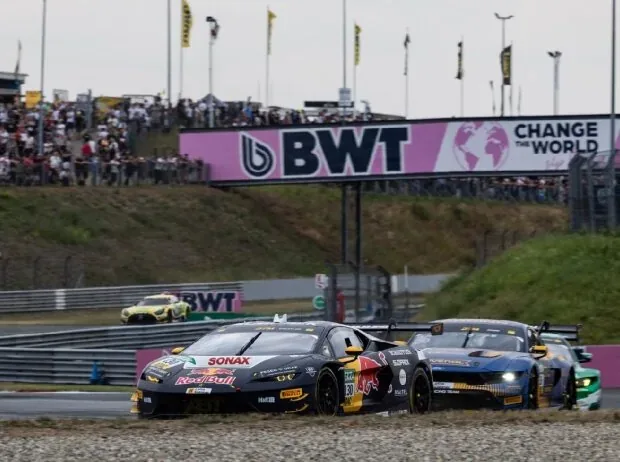
The Oschersleben data also confirm Grasser’s statement: Abt-Lamborghini driver Engstler was the absolute fastest in the first sector in the two qualifying sessions with 29.833 seconds – ahead of Thomas Preining (29.849), who dominated the weekend in the Manthey Porsche.
In third and fourth place were HRT drivers Arjun Maini (29.858) and Finn Wiebelhaus (29.909), whose Ford Mustang GT3 Evo is also not known for strong brakes.
“If we had managed the first stop, we would have led”
“I don’t think we were the fastest out there,” says Bortolotti as well. Instead, “the strategy was the key to success in our case,” because the Italian, who started from sixth place, came to the pits last at the first stop, which moved him up to second place.
And that, although the tire change actually went wrong with 9.2 seconds and they lost 2.2 seconds to leader Thomas Preining. “If we had managed the first one, we would have led after the first stop,” believes Grasser. After the stop, Bortolotti was 3.1 seconds behind Preining, but Preining would have had to pass Bortolotti first.
Why the overcut worked so well for the Lamborghini
“We were surprised why hardly anyone went for this strategy, because long stints have always been good in Oschersleben,” Grasser knows. “For us, it also helps that we have a car that is very gentle on tires anyway. And you get the tire up to temperature quickly through the many corners, and no one can easily overtake you. That is impossible on another track.”
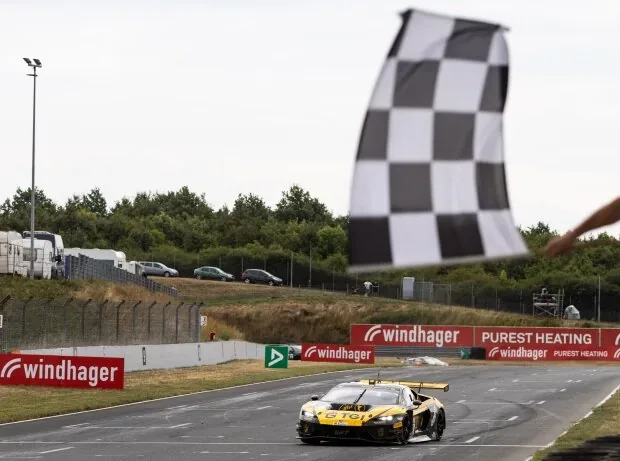
Before the second stop, Bortolotti positioned himself and lurked directly behind leader Preining to then benefit from the pit stop mishap at Manthey. Because the Grasser crew serviced the 2024 DTM champion in 7.3 seconds, making them 2.2 seconds faster than Manthey this time, which brought Bortolotti the lead and ultimately the victory.
“You have to highlight Mirko’s brilliant performance,” says Grasser after the first joint DTM victory with his longtime companion and friend Bortolotti, who crossed the finish line first three seconds ahead of Preining. “What he fired off again with the car! He even pulled out a gap at the end, really hats off.”
Read more Formula 1 boss counters criticism: «Nobody cares!»