
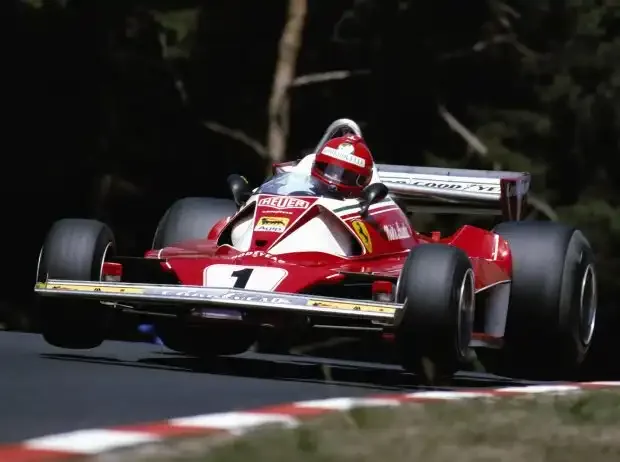
– It is August 1, 1976, just before 2:30 p.m., when the German Grand Prix at the Nürburgring is overshadowed by one of the most serious accidents in the history of Formula 1: Niki Lauda crashes his Ferrari 312T2 into a rock wall, spins back onto the asphalt, and bursts into flames.
Read more Abt RSQ8-LE 1000: Limited special model with 1,000 hp
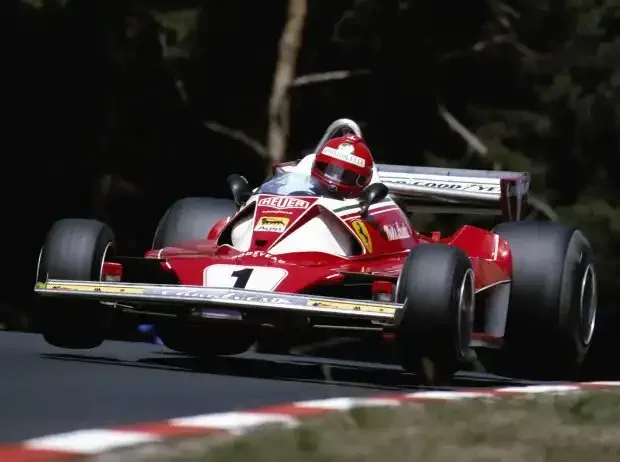
It is the day when the then 27-year-old Formula 1 world champion narrowly escapes death by fire and remains physically and emotionally scarred forever. The shaky amateur footage of the burning wreck and the shocking images of his severe injuries go around the world – and remain unforgettable to this day.
Lauda survives the disaster, returns to the cockpit just six weeks later, and wins his second of three world championships just one year later. The humorous Austrian with the red “cap” becomes a legend of Formula 1 and remains one of the greatest personalities of the premier class to this day.
Niki Lauda did not want to race at the Nürburgring at all
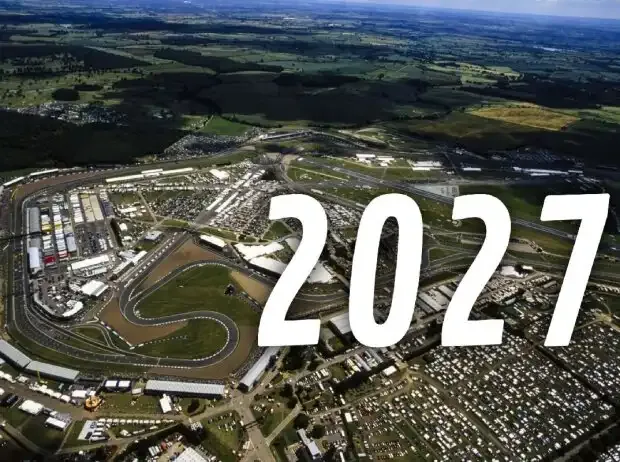
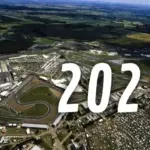
The fact that Lauda even starts at the race on the legendary Nordschleife of the Nürburgring with his Ferrari 312T2 on that fateful day in August 1976 is an unfortunate circumstance. Because several years earlier, the 22.8-kilometer track had increasingly come under criticism due to several serious accidents on other circuits.
Therefore, extensive reconstruction measures with guardrails, catch fences, and straightened sections are agreed upon. 17 million marks are invested to keep the premier class. 1976 is supposed to be the last race. But the technical development of Formula 1 progresses so rapidly that the cars have outpaced the track’s modernizations again.
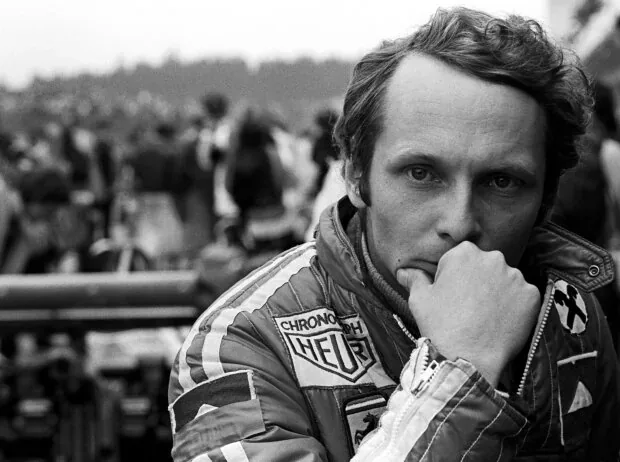
Everything that had been improved at the Nürburgring before was, in Lauda’s view, long outdated again. Already on the sidelines of the third race of the season in Long Beach, five drivers come together to discuss the situation and vote on whether to continue racing on the Nordschleife at all.
But the drivers are in a dilemma because the Nürburgring has met the original demands. The vote is accordingly close: three drivers vote to race, two against – Lauda himself and Emerson Fittipaldi. The Austrian yields to the majority decision and competes in the German Grand Prix in August 1976.
The Nordschleife, which Jackie Stewart once called the “Green Hell,” is a unique challenge for the drivers despite all the risks. Even then, it was “the coolest track you could drive,” Lauda admits repeatedly. Mastering his car there at the limit was simply “the crowning achievement.” The risk was suppressed at the time.
Without this suppression mechanism, the Austrian later admits, he wouldn’t have been able to drive fast there anyway. And Lauda is lightning fast: He is the first driver to lap the Nordschleife in a Formula 1 car in under seven minutes. In 1975, he drives a lap time of 6:58.60 minutes with his Ferrari 312T.
The last hours before the severe fire accident
The fact that it rains on the morning of the race day in August 1976 makes the situation even more complicated. Lauda again calls a drivers’ meeting to discuss a last-minute boycott of the race. But again, the majority decides to let the Grand Prix take place.
No one suspects at this point that this day will end in tragedy. But in retrospect, a bizarre encounter seems like a bad omen: A fan asks Lauda for an autograph shortly before the race and explicitly demands that he write the date on it.
When Lauda asks in surprise, the man dryly replies that it might be his last autograph after all. Whether it was actually the last signature before the fire accident, Lauda can no longer say with one hundred percent certainty later. Because the three-time world champion only remembers the following hours in fragments.
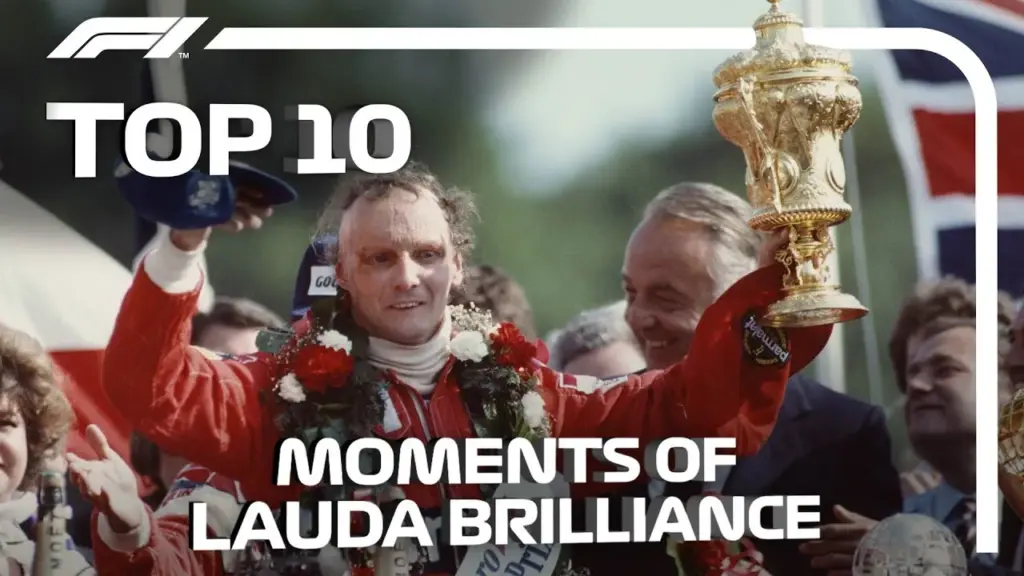
Except for Jochen Mass (McLaren-Ford), all drivers start on rain tires, although the track is drying increasingly. While Mass plows through the field on slicks, Lauda, who started from second place but has already lost numerous positions, pits for a tire change after the first lap.
After that, Lauda’s memory completely breaks off. The last thing the then 27-year-old can later remember is leaving the pit lane. The following nearly ten kilometers to the accident site are completely erased from his memory.
At first, everything goes smoothly. But when Lauda reaches the “Bergwerk” section at kilometer ten, it happens. It is a fast left bend, a normal full-throttle curve, and “actually nothing dangerous,” as Lauda himself later emphasizes. But it is exactly there that the tragedy takes its dramatic course on August 1, 1976.
Material failure as the cause of Lauda’s accident at the Nürburgring
As it later turns out, a possible material failure is to blame. Although the exact cause of the accident is never officially confirmed by the Scuderia, Lauda himself repeatedly reports that there was damage to his Ferrari 312T2.
Ferrari chief mechanic Ermanno Cuoghi told him that the mounting point of the right rear trailing arm had broken. To save some weight, it was attached to the engine with a newly developed magnesium part. This component apparently failed.
The right rear wheel collapses, the Ferrari spins out, hits the rock wall, and immediately bursts into flames. Following cars cannot avoid the wreck and hit it. The reason Lauda suffers not only broken bones but also severe burns on his head is that his helmet is torn off upon impact.
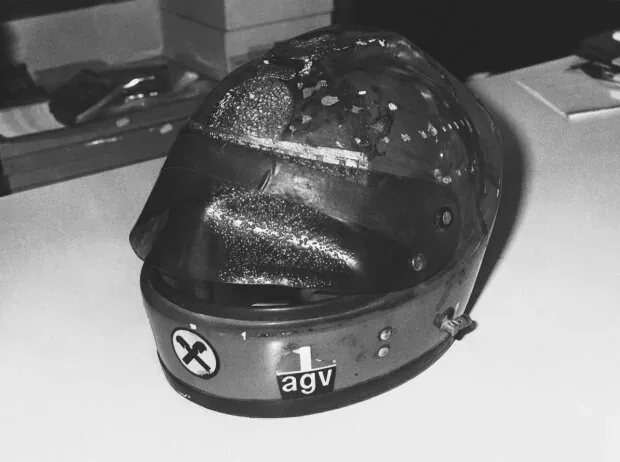
Previously, Lauda had driven for years with a Bell helmet, but AGV won the Austrian over from 1976 as a driver for a new helmet model. The helmet is lighter and more comfortable but fits him a bit too loosely. Lauda is later convinced that his proven Bell helmet would not have flown off on impact.
Arturo Merzario as an important lifesaver of Niki Lauda
Amid the inferno, help approaches. Hans-Joachim “Strietzel” Stuck, who races for March at his home race in 1976 and is only a few positions behind Lauda, reaches the accident site among the first. Together with Brett Lunger, Harald Ertl, Arturo Merzario, and Guy Edwards, he tries to rescue the trapped Ferrari driver.
Read more BoP trouble at Thiim: Why was only Thomas Preining shining in the Porsche?
Eyewitnesses later report that Lauda screams loudly while the other drivers fight the flames and try to free him from the burning Ferrari. Merzario is the one who manages to undo the belts after about a minute.
“I only managed it on the third attempt,” the Italian reports on the 40th anniversary of the accident on ZDF. “Unfortunately, Niki did not help me at all. He should have relaxed. His vehicle was deformed from the impact, so the belts were very tight.”
“And when he then passed out, his body went limp. On the last attempt, I was able to open the belt,” says Merzario. “I laid him beside the track. When I gave him artificial respiration, he came back to.”
Hans-Joachim Stuck spares Lauda a long ambulance ride
Stuck secures the accident site, warns the approaching drivers, and then helps coordinate the rescue efforts. He instructs the first responders at the time to drive about one kilometer against the direction of travel to the makeshift Breidscheid exit, which leads directly to the federal road.
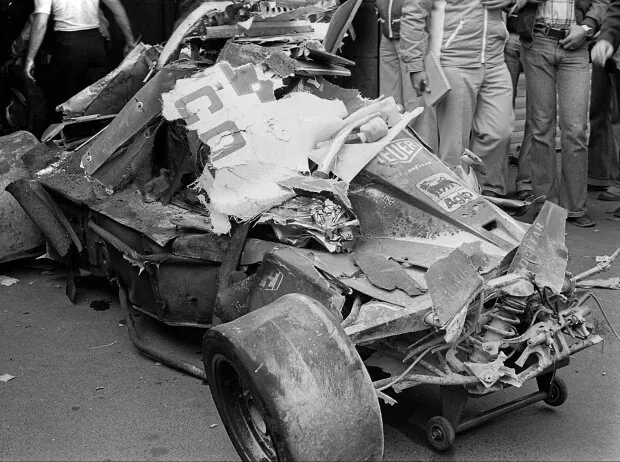
Without this advice, the rescuers would have had to transport the severely injured Lauda about ten kilometers over the Nordschleife to the start-finish area. This spares the Austrian a roughly 40-minute ambulance ride. “He thanked me for that. He really appreciated it,” Stuck later reveals in an interview with Focus. “That was an incredible story.”
After initial treatment at the hospital in Adenau, Lauda shows astonishing presence of mind despite his life-threatening injuries. He is said to have even given an interview to a Brazilian radio reporter and asked the race director to inform his wife Marlene. Shortly afterward, he loses consciousness again.
He can only later remember the helicopter flight to Ludwigshafen. To his left sits a doctor dressed in white holding the IV drip. Lauda only wants to know how long the flight will take – after that, his memory fails again. In retrospect, he even considers these massive memory gaps a blessing.
Without the spectator who filmed the fire drama from the embankment, Lauda says he would never have known what actually happened that afternoon. When he sees the footage for the first time, it feels as if a completely stranger is experiencing this terrible accident – not himself.
Lauda sits in a Formula 1 car again just 42 days later
Having consciously witnessed the accident would have been much worse for him. Perhaps that is also a reason why Lauda was able to return to normality so quickly back then. Just 42 days, or only six weeks after the fire drama, the Ferrari driver squeezes back into his Formula 1 car in Monza and finishes fourth.
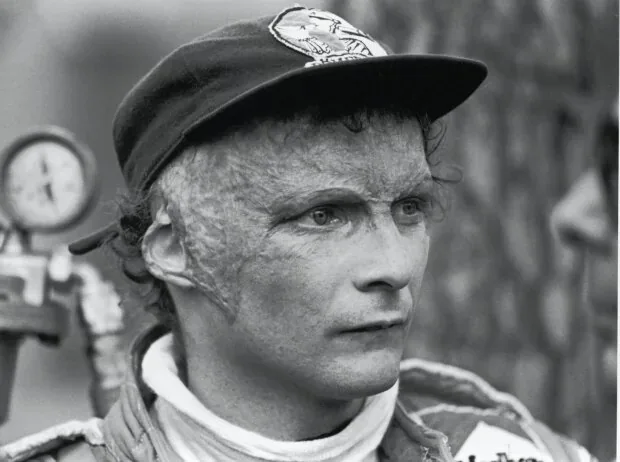
Although he later admits that his willingness to take risks was somewhat lower in the first races after the accident, this phase does not last long. Soon the Austrian drives again with the same determination as before the accident. However, Lauda misses the world championship title in 1976.
Only the season finale in Fuji, Japan, brings the decision. Due to extreme conditions and heavy rain, Lauda voluntarily stops his Ferrari after just a few laps, while James Hunt collects enough points with third place to secure the title by just one point.
But Lauda makes an impressive comeback just one year later. In the 1977 season, he wins his second world championship in Formula 1, followed by the third title with McLaren in 1984. The Nürburgring accident marked his body but never broke his ambition.
The missing ear and the scars on his face remain visible for life. “My then-wife fainted when she saw me for the first time. So I knew it couldn’t have looked good,” Lauda once recalls in an interview with the Daily Telegraph.
Even for Lauda himself, who was even in a coma and already receiving last rites after being transferred to the Mannheim hospital, the first sight of his face in the mirror was “shocking.” “As I got older, the scars gradually disappeared into the wrinkles. You get used to it.”
The red “cap” as a symbol of Lauda’s willpower
The cap, which became his trademark after the accident, still symbolizes his unshakable will today. “So that the blood-stained bandage wouldn’t slip when I took off the helmet, my physio Willi Dungl put the cap on me,” Lauda said a few years ago to Bild am Sonntag.
Photo series: The eventful life of Niki Lauda
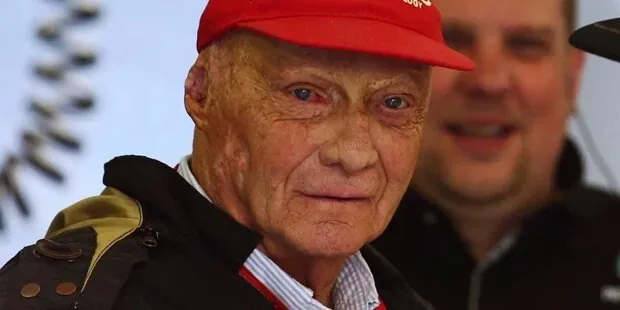
After the end of his active career, the cap remains, not only to make room for sponsors. “Everyone thought, ‘What happened to his head now?’ When I realized that, I told myself, ‘Now you always wear the cap.’ So the cap became my protection against those nasty looks.”
The accident also has consequences for Formula 1. The legendary Nordschleife disappears from the race calendar for good after the 1976 German Grand Prix, after the premier class had regularly visited there since 1951. At the same time, the topic of safety moves more into focus than ever before.
In the following decades, vehicles, tracks, and rescue concepts are continuously developed further – progress that among other things helps Gerhard Berger in 1989 at Imola and Romain Grosjean in 2020 in Bahrain to survive their spectacular fire accidents almost unscathed.
- MotoGPHow the conflict over Maverick Vinales reveals the biggest KTM weakness
- DTMBoP trouble at Thiim: Why was only Thomas Preining shining in the Porsche?
- Nürburgring Endurance SeriesTwo Porsche legends in the last-built 718 Cayman GT4 RS CS
- Formula 1Why Kimi Antonelli is still not a world championship favorite for Toto Wolff
For Lauda, the consequences of the accident remain noticeable for life. The three-time world champion repeatedly struggles with health problems resulting from the severe injuries. In August 2018, he receives a life-saving lung transplant. On May 20, 2019, Niki Lauda dies at the age of 70 surrounded by his family.
Read more Two Porsche legends in the last-built 718 Cayman GT4 RS CS