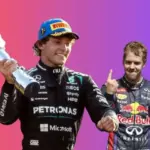
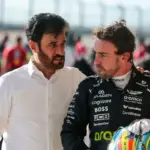

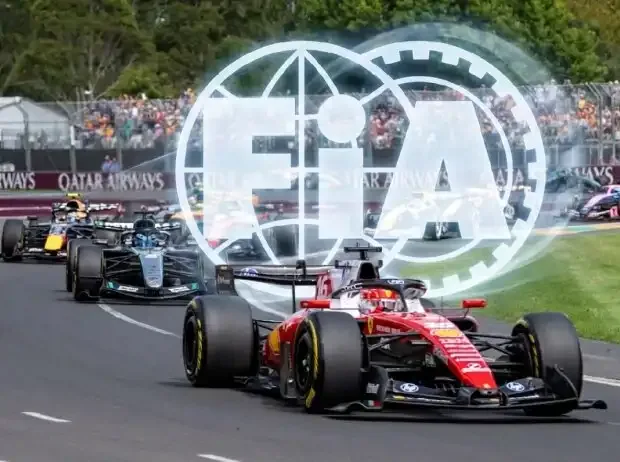
– “I think drivers are by definition quite demanding customers. I don’t believe we expected them to sugarcoat things or keep quiet,” says FIA Monoposto chief Nikolas Tombazis about the ongoing criticism from Formula 1 drivers regarding the new 2026 Technical Regulations.
Read more Vinales defends himself: «I will finish the season as contractually agreed»
From “Formula E on steroids” to self-driving cars: the criticism of the new Formula 1 was diverse and imaginative. While Formula 1 emphasizes that fan ratings were largely positive, it was especially the drivers who repeatedly made sharp remarks towards the sport.
But: “To say it was more than expected – no, I wouldn’t say that,” says Tombazis.
The drivers’ complaints about energy management, super-clipping, and algorithms also corresponded, according to him, to what the FIA had expected: “I mean, we foresaw many of these things they complained about in the two years before the season started. We tried to make some adjustments but failed due to the existing governance.”
“So realistically, it was exactly to be expected.”
FIA tried to listen to F1 drivers’ criticism before 2026
According to Tombazis, the rule changes now decided for 2027 and 2028 – to gradually move towards a 60:40 distribution – ideally would have been introduced much earlier.
“I find it a bit unfortunate that we had to wait until we discussed things in May to arrive at a package for 2027 and 2028. I think ideally we could have done that a few years earlier, and then all these discussions wouldn’t have happened,” says Tombazis.
Several drivers had already warned before 2026 about potential problems with the new engine regulations. Verstappen was the first to do so publicly at the 2023 Austrian Grand Prix when asked about his first simulator runs with the new engine formula.
This may have given the impression that drivers were not listened to in the years before 2026. However, Tombazis insists that the reality is different. According to him, the initial feedback was taken seriously, but the governance framework prevented a fundamental revision of the regulations.
“When OEMs decide to participate as power unit manufacturers, they sign a governance agreement that is binding for all parties – the FIA, the FOM, and the PU manufacturers. It’s similar to the Concorde Agreement on the team side,” explains Tombazis.
“And there was a separate governance agreement signed in 2022 to basically outline the requirements for PU manufacturers for the years 2023, 2024, and 2025. That was before the championship started because for the first time there were things like financial regulations.”
Photo gallery: Formula 1 fails: These rule changes were a flop
This agreement stipulated, among other things, that newcomers were not allowed to spend unlimited amounts of money on developing their power units for 2026.
“If a PU manufacturer who was not represented in Formula 1 – say Audi – still had to be bound by the rules, they shouldn’t be able to come to us and say: ‘Well, we’re not participating yet, so we can spend five times as much money.’ That would have been unfair.
Read more Halftime Review Penalty Points: Why Only One Point Has Been Given So Far
“That’s why there was a governance agreement that on the one hand forced them to be bound by the regulations, including financial and operational rules and all that.”
At the same time, this document made it much harder for the FIA to reopen the regulations in the years before 2026 without a supermajority: “On the other hand, it set limits on how much we as FIA could unilaterally change things. And that’s why every change had to be approved by a significant number of PU manufacturers.”
“For the kind of changes we made [in May], we needed the approval of at least four of them. And simply put: four of them did not agree in the years we discussed adjustments.”
Challenges known since 2022, but races still entertaining
One reason was that the reality of the automotive industry looked very different back then and manufacturers placed a much greater emphasis on electrification. “Overall, it was always a challenging goal to have a power distribution of nearly 50:50 between the two units,” says Tombazis.
“But that was a very important position for the participating OEMs and honestly crucial for whether they decided for or against Formula 1. Don’t forget: if we hadn’t had them, we would have had only two engine manufacturers in Formula 1, which I think would have been quite a problem.”
“This requirement for a significantly stronger electric share thus created these difficulties.”
Tombazis explains that the FIA became aware of these challenges already in 2022 – a year before Verstappen publicly voiced his concerns – but at that point, it was simply too late to fundamentally change the regulations.
Why ADUO divides the Formula 1 world
“When the first simulations came around 2022, we knew these problems existed, but we were already a bit too far along to change things, and some parties had already committed too many resources.”
“That put us a bit behind in the discussions at the start of the season. That aside, I think most races were quite exciting, I would say. There were quite a few battles.”
“And I would even say that we still currently – I don’t know if I would go so far as to call it dominance – but we have a clear advantage for one manufacturer. And when we had that in the past at the start of a new regulation, the races were mostly very procession-like,” he continues.
- MotoGPVinales defends himself: “Will finish the season as contractually agreed”
- MotoGPAcosta explains Ducati switch: “Wanted a world championship-capable bike”
- MotoGPKTM apparently takes consequences: Vinales faces early exit
- Formula 1Hardly any privacy for F1 stars? Lando Norris describes incident in London
“Now I think the races – even despite the fact that Mercedes has won most of them – were still quite exciting, with quite a few position changes and so on.”