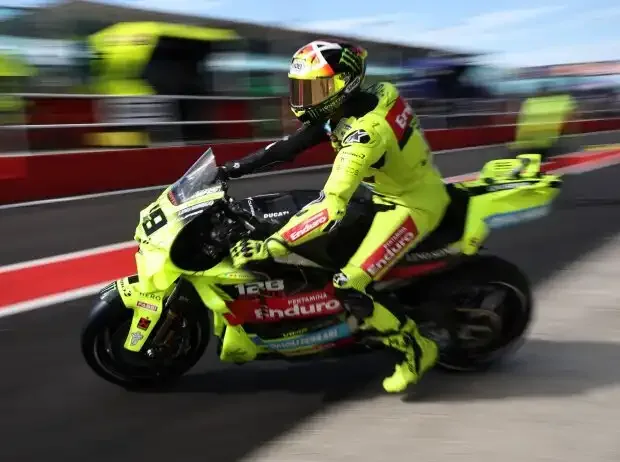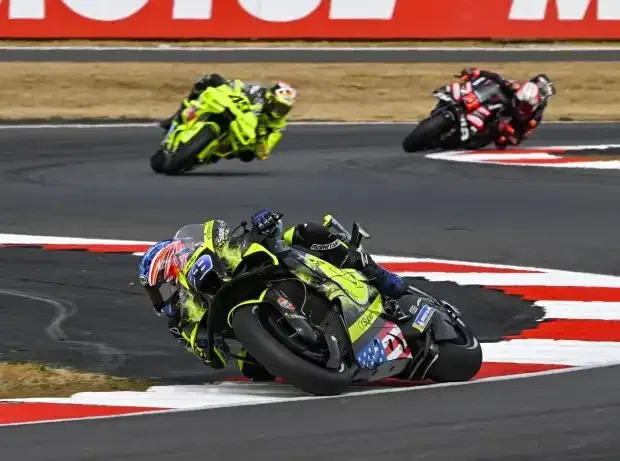


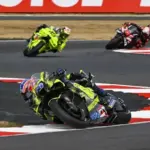
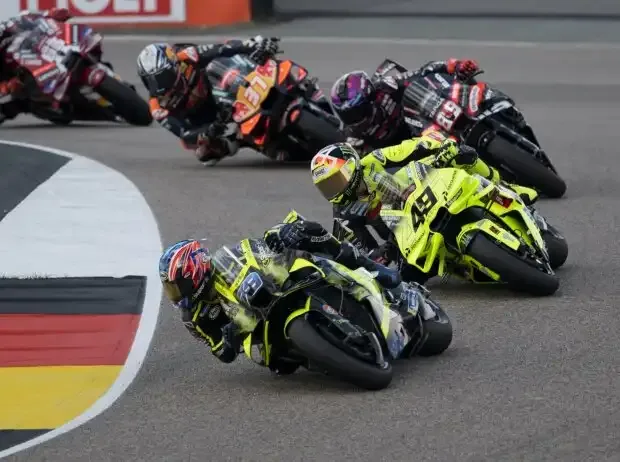
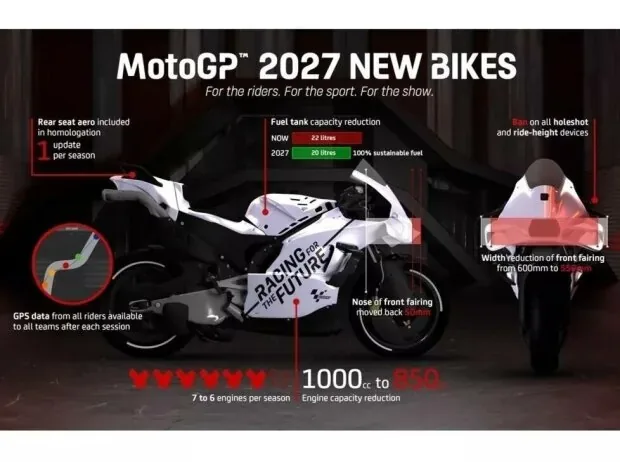
– MotoGP is facing one of the biggest upheavals in its modern history. From 2027, a new era begins: the current 1000cc engines will be replaced by 850cc units, aerodynamics will be restricted, and Pirelli will become the new tire supplier in the World Championship.
Read more Norris makes it clear: Piastri duel made me a better driver
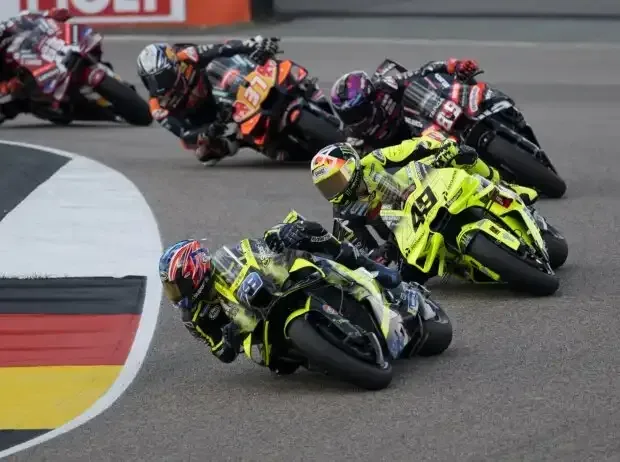
For Davide Brivio, this reform is more than just a technical adjustment. The experienced team manager, who has already experienced major rule changes with Yamaha and Suzuki and is currently celebrating successes with Trackhouse, sees it as an opportunity to redefine the balance between machine and rider in an interview with Motorsport.com, a partner site of Motorsport-Total.com.
“I think it is the right direction because the decision for 850 cc was made jointly by the manufacturers and their engineers based on technical data,” he explains. “We have to trust them. They know much more than we do.”
Less speed, but just as much spectacle
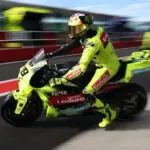
A central point of the reform is the reduction of performance. The current MotoGP motorcycles have made enormous technical progress in recent years. More power, increasingly sophisticated aerodynamics, and the growing use of ground effects have made the machines extremely fast.
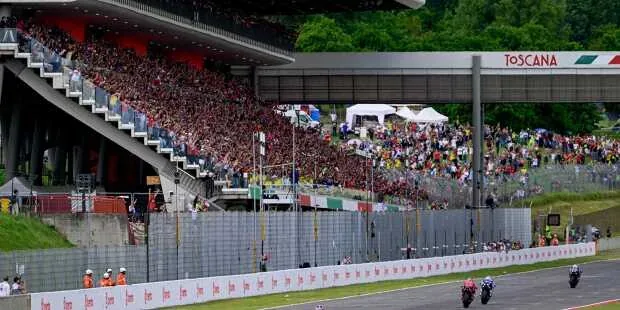
For Brivio, this point is crucial: “We have reached incredibly high speeds. Just think of the 368 km/h in Mugello.” A moderate reduction, in his opinion, would not change the value of the races.
“If we become 20 or 30 km/h slower, we lose nothing of the show,” he is convinced. On the contrary: Brivio considers a step back to be sensible. “I think it is right to take a small step back in this regard.”
The current MotoGP has strongly changed the riding style
The development of recent years has strongly changed the way riders have to handle a MotoGP motorcycle. Aerodynamics now plays an enormous role. Today’s motorcycles require a special riding style.
“The current generation of motorcycles has forced riders to develop a riding style specifically adapted to these 1000cc machines,” says Brivio. It’s not just about pure speed. Especially braking behind other riders, cornering, and acceleration out of corners have been strongly influenced by modern aerodynamics.
“Braking behind another motorcycle is completely different than braking alone. Then there is the ground effect in the corners, the corner exit – all these factors have changed how riders approach MotoGP,” Brivio knows.
The new 850cc machines could allow a more original feeling again, he believes. “I say this with some caution, but the new 850s probably offer a more natural riding experience than the current motorcycles.”
Riders could come back more into focus
Brivio sees one of the most exciting possible changes exactly in this. If the motorcycles become less extreme, the influence of the rider could become greater again.
“Maybe the skill and adaptability of the riders will become even more important,” he hopes. Such a development would correspond to the philosophy of the Italian. In his career, Brivio repeatedly relied on riders who were not only fast but could adapt to new situations – from Valentino Rossi at Yamaha to Joan Mir at Suzuki to his current protégé Ai Ogura.
Pirelli instead of Michelin: New tire philosophy begins
Besides the motorcycles, the tire question will also be a decisive factor. From 2027, Pirelli will take over the role of Michelin as the official tire supplier. For Brivio, this means another big unknown. “We have to understand the tires and find out the crucial differences between Pirelli and Michelin.”
The Italian recalls previous changes in MotoGP, especially the transition from Bridgestone to Michelin. “There were clear differences back then as well.”
Read more Steiner prediction: Will George Russell go to Audi in 2028?
“Bridgestone had an exceptional front tire, while Michelin’s greatest strength was the rear tire.” At the beginning, Michelin simply did not offer the same precision at the front wheel. “Later, everything developed further.”
Today, Michelin is an extremely capable partner of MotoGP. “Michelin now produces an outstanding tire with exceptional performance,” says Brivio.
With Pirelli, on the other hand, a new development phase begins. “Pirelli will come with areas that still need to be developed. We just don’t know yet.” The tire manufacturer will go through its own learning process in MotoGP, and with it the teams and riders who have to adapt.
A technical revolution with many open questions
For Brivio, it is clear: 2027 will not only bring a new motorcycle but a completely new dynamic. “It will be a big change,” he predicts. Not least because, besides engines, aerodynamics, and tires, the paddock landscape will also change significantly due to various rider changes.
It is precisely this mix that makes 2027 particularly interesting. “I think next season will be fascinating because there will be so many new things to understand.”
Street Circuits: MotoGP must get closer to the people
Besides the technical future, Brivio is also concerned with how MotoGP as a sport can grow. He is one of the few responsible persons who openly spoke about challenges after the difficult premiere in Brazil. Nevertheless, he sees no reason to fundamentally reject street races.
Photo gallery: The contract durations of the current MotoGP tracks
“No, not at all. On the contrary, it really excites me,” emphasizes Brivio. For him, more races in cities could be an important step for the future of the sport. “I actually believe that this is the direction we should go.” Of course, safety must always be the top priority.
Brivio refers to the development of Formula 1, which reaches new audience groups with races in cities like Miami or Las Vegas. “The biggest sports all do the same. Stadiums and arenas are located in cities or very close to them. They are close to the people.” MotoGP must follow this principle. “We have to go where the people are,” the Italian warns.
He is aware that motorcycle racing brings special challenges. “Our sport is more complicated because you can’t just build permanent race tracks in city centers.” Nevertheless, he believes that safe solutions are possible.
Adelaide as a possible guide for street races
Brivio is particularly curious about the planned MotoGP appearance in Adelaide. The Australian street circuit could be an example of what the future might look like.
“I hope Adelaide becomes an example that other cities follow,” says the Italian. However, he does not call for a complete calendar overhaul: “I’m not saying we should have 22 street races.” But a few city races could already offer a certain added value from his point of view.
- Formula 1Formula 1 technology: Battery capacity is also expected to increase in 2027
- MotoGPBeirer on KTM future: “The 850 needs extremely strong riders”
- 24h NürburgringInside long-distance dispute Nürburgring (1/3): Participants and their goals
- MotoGPMarc Marquez on courage and risk: “The craziest doesn’t win”
“Two, three, four or even five would be exciting and would represent the right direction for MotoGP,” says the team manager. An inspiration in this context is also Formula E. “That is one of the things we envy about Formula E. They race right in the middle of cities, surrounded by fans.”
Read more Formula 1: Several Broadcasters Compete for German TV Rights from 2028