

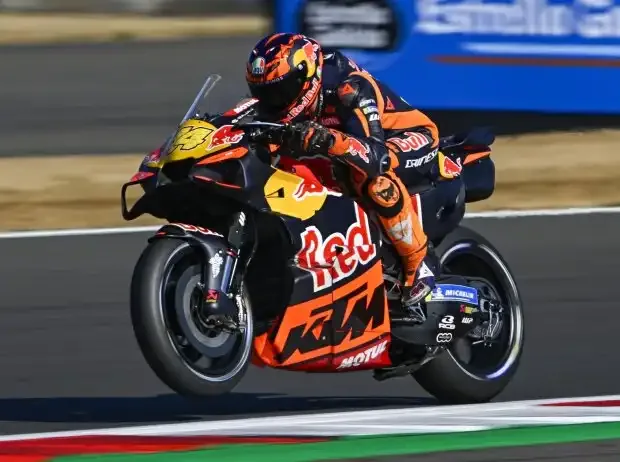
– MotoGP is in the midst of preparing for one of the biggest technical upheavals in its recent history. From 2027, the displacement will drop from 1,000 to 850 cubic centimeters. This will be accompanied by significantly less aerodynamics, the ban on devices, and a new tire supplier.
Read more Valtteri Bottas: «I’m finally at the level I should be driving at»
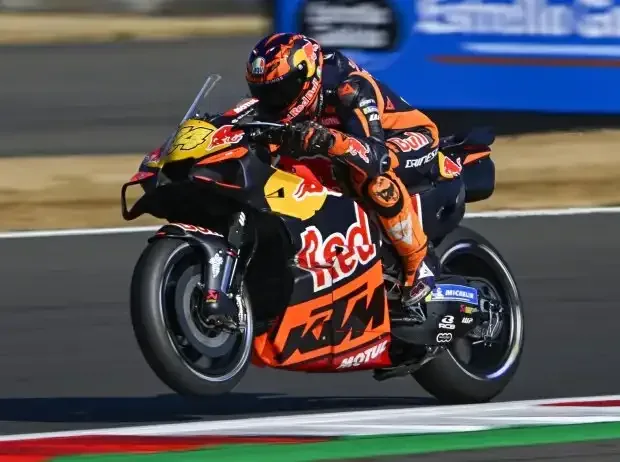
How different the two motorcycle generations are can now also be assessed from the perspective of test riders. Particularly interesting is the reverse switch: from the new 850 back to the current 1000.
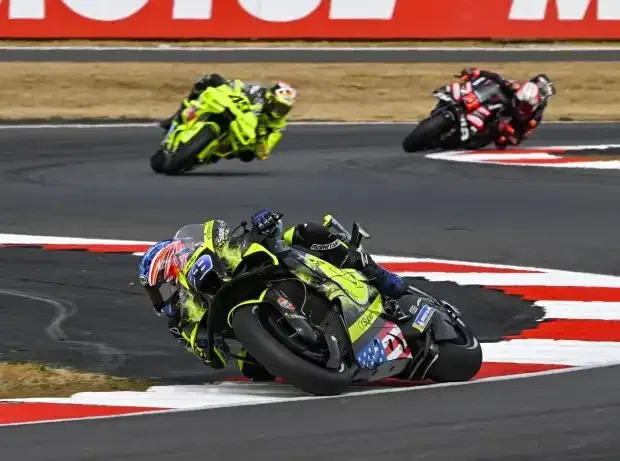
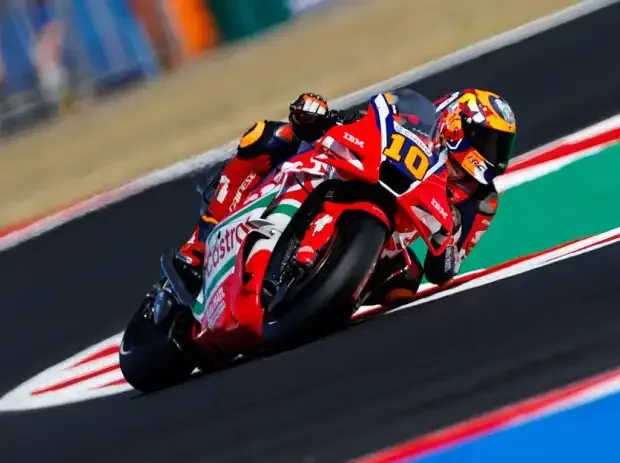
Augusto Fernandez and Pol Espargaro, test riders for Yamaha and KTM respectively, made this step during their recent MotoGP outings and describe it as much more difficult than the switch in the other direction.
Fernandez: “The biggest difference is the tires”
Fernandez has been heavily involved in the development of the new MotoGP generation in recent months. The Yamaha test rider was among the first pilots to test the new prototypes before regular riders were used for the first time at the official Pirelli test in Brno in June.
According to his experience, the return to the current 1000 is especially challenging. “I think it’s harder to switch from an 850 to the 1000 than the other way around,” explains Fernandez. The reason is not just the engine power.
The current machine has more electronic systems and a different riding style, while the riders are increasingly adapting to the character of the 850.
“We are now starting to get very used to the 850,” says Fernandez. Through numerous test rides, many laps have already been completed with the new generation, with the Spaniard identifying the tires as probably the biggest difference.
It is precisely this combination of a changed motorcycle and a new tire supplier that makes the transition so fundamental. Pirelli takes over from Michelin in 2027, bringing not only a different tire but also a different riding characteristic to the premier class. The development of the new tires has been underway since 2025, initially with modified current motorcycles and deactivated ride-height systems.
For Fernandez, the return to the 1000 during his wildcard appearance in Silverstone was therefore initially mainly a question of rhythm: “It was about building up speed again and trying to get as close as possible to the Yamahas.”
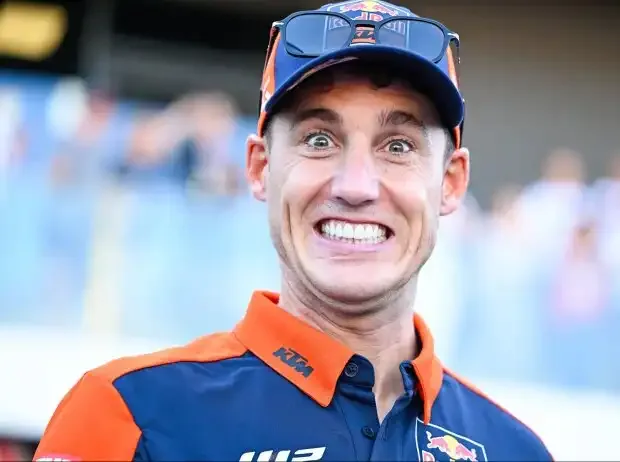
Espargaro feels like a rookie on the 1000
Espargaro describes the transition even more drastically. The KTM test rider said he had not ridden the current 1000 since the shakedown test in Sepang. After the long phase with the new 850 generation and Pirelli, he now had to switch back to the current MotoGP package with Michelin.
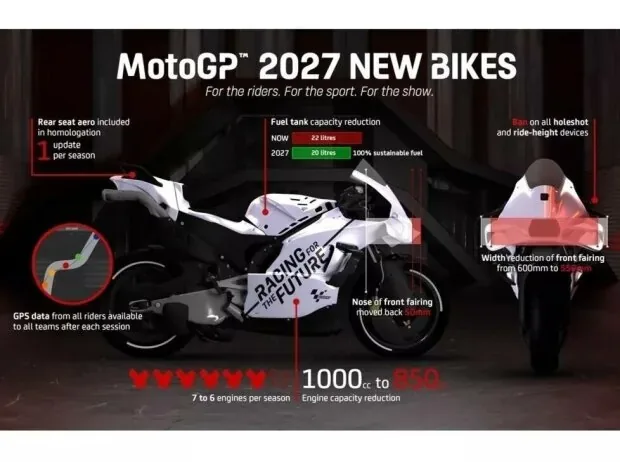
The first impressions were accordingly intense. “You can’t imagine how much the category will change next year,” Espargaro compares. “Switching from Michelin and this 1000 motorcycle to Pirelli and a slightly smaller 850 engine is pretty easy.”
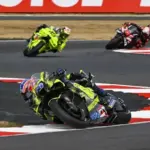
The reverse path, however, is “a different world.” Espargaro has known the 1000 for years, yet he initially felt like “a rookie” upon his return. The Spaniard replaced Maverick Vinales at the British Grand Prix.
Above all, he has to recalibrate his feeling for the crucial points of a lap. Braking distances, corner entry, deceleration, line choice, and the point at which the throttle is applied again: all these processes have to normalize again.
What makes the switch back so extreme for riders
Especially the engine character makes the difference noticeable. “From fourth gear onwards, this motorcycle is incredible, the torque is incredible,” explains Espargaro.
The sheer power must first be integrated back into one’s own riding style. Accordingly, the KTM test rider approached the first day back on the 1000 very cautiously. “I didn’t want to make stupid mistakes and planned to attack fully only the next day,” describes the substitute rider his approach.
Read more Who slept the worst last night: Maro Engel
For Espargaro, the difference is not only a matter of lap time but also physical strain. After the experience with the 850, he suddenly sees the current MotoGP machine from a completely different perspective.
“After the 850 and Pirelli tests, I feel more ready to ride a Moto2 machine than a MotoGP bike,” he says. This is also an important development for the riders moving up from Moto2 to the premier class in 2027 and makes the comparison with the future Moto2 graduates particularly interesting.
Photo gallery: The contract durations of current MotoGP riders
Because Moto2 has been running on Pirelli tires since 2024. This exact experience could give young riders an advantage when moving up to the new MotoGP era. Pirelli supplies not only MotoGP but also Moto2 and Moto3 and thus already has extensive experience from the smaller classes.
“They will be incredibly fast,” predicts Espargaro with a view to the upcoming MotoGP rookies. The combination of familiar Pirelli tires and the less extreme 850 machine could make their adaptation easier.
Current bike generation physically a different league
Regarding physical strain, Espargaro emphasizes: “With the 850 and the Pirellis, I can race two races in a row. It is much, much less physical.”
With the current 1000, the strain is immediately noticeable. “The heart rate is so high after two laps, it’s incredible.” The current level of the motorcycles is simply “brutal.” But for Espargaro, these extremes also make up part of the fascination of today’s MotoGP. “The degree of madness in this category is currently incredible,” he says.
That is precisely why it is valuable to step out of this environment and ride a different motorcycle. The direct comparison makes it clear how much the class has developed.
The first impressions of the 850 therefore do not at all suggest a slower or less interesting MotoGP. On the contrary: Aleix Espargaro, who is also involved in the development, already described the new machine as significantly more rider-friendly and praised the grip of the Pirellis. In addition, it is more than ten kilos lighter, which is especially noticeable when changing direction.
Espargaro expects a closer and safer MotoGP
Pol Espargaro therefore sees the technical upheaval not only as a challenge for the riders but fundamentally as an opportunity for the championship. He believes that the 2027 motorcycles could ensure closer races in the long term.
“I think so,” he answers when asked if the changes will also be positive for the spectators. And he addresses another important point: safety. “The riders will be less injured because the speed and the category overall, let’s say, will become gentler,” Espargaro believes.
However, the Spaniard expects a transitional phase at first. At the beginning of the new regulations, some manufacturers could be significantly better prepared than others. Only when development evens out will the competition become closer.
Espargaro assigns a special role to Ducati and the experience from the Superbike World Championship: “It’s easy to think that Ducati will be fast from day one because they have all the information from the Superbike World Championship.”
The technical similarities of the future 850 with the Superbikes could give manufacturers with extensive Pirelli experience an advantage. “Basically, it’s a kind of Superbike,” says Espargaro. Especially in dealing with the tires, the experience from the Superbike World Championship could be valuable.
- DTMAfter the Grasser case: Engines collected from Preining, Engel, and Wittmann!
- Formula 1“Silly Season”: Does Mercedes no longer need Max Verstappen?
- Formula 1Red Bull: Max Verstappen names “top priority” for the second half of the season
- Formula E“I don’t forget things”: What lies behind Pascal Wehrlein’s warning
“They have a lot of information that other manufacturers who are not in the Superbike World Championship don’t have.” For example, on how the tires must be managed over a race distance and how to optimize them for a single fast lap.
Read more “I don’t forget things”: What lies behind Pascal Wehrlein’s warning