







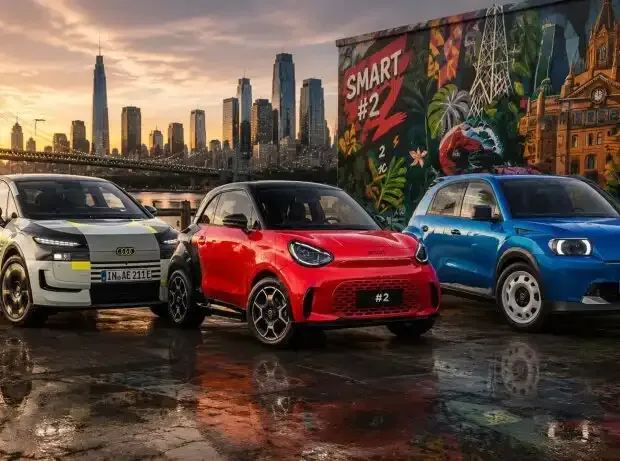
(Motorsport-Total.com/Motor1) – Those declared dead live longer – this applies in the automotive world now more than ever. To revive the stalled electromobility, more and more manufacturers are resorting to an emotional secret weapon: nostalgia. Instead of designing cool, futuristic spaceships, the brands are resurrecting their icons of the past. Bestsellers like the electric Fiat 500, the Renault 5 E-Tech, or the Twingo set the example. The strategy behind it is clever: familiar design and resonant names are meant to take away customers’ skepticism about switching to pure electric drive.
Read more Leclerc cheers after P3 in Sprint Qualifying: «Best qualifying lap of the year!»
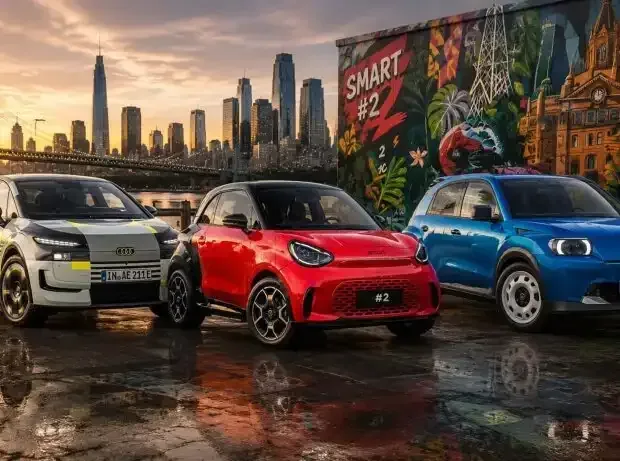
Similarly in approach is VW, with the new ID. Polo aiming to attract conservatively minded customers with retro instruments and many real buttons. Looking back to their own past can also be a way to stand out from the flood of similar Chinese models. At the Paris Motor Show in mid-October, we will see the official world premieres of three electric cars that quote famous names from the past.
Audi A2 e-tron
Audi is diligently working on its smallest electric car to date. Small is relative, however, as the new A2 e-tron is based on the approximately 4.27-meter-long VW ID.3 Neo. Official prototypes show that the A2 e-tron will reference its namesake from 1999 at the rear. It ends quite steeply, where there is a split rear window. Noticeable are the so-called “Winglet” door handles, small wings under the windows. The car will only be seen without camouflage in the fall; that is also when orders will start. Deliveries are expected to begin in 2026.
The new compact car shares much of its technology with the VW ID.3 Neo. While the latter consumes 14.0 kWh/100 km in the best case, the A2 e-tron with 140 kW and efficiency package consumes only 12.8 kWh/100 km. This makes the model one of the most efficient electric cars ever.
Photo series: The new A2 (2026) is the most efficient Audi ever, says Audi
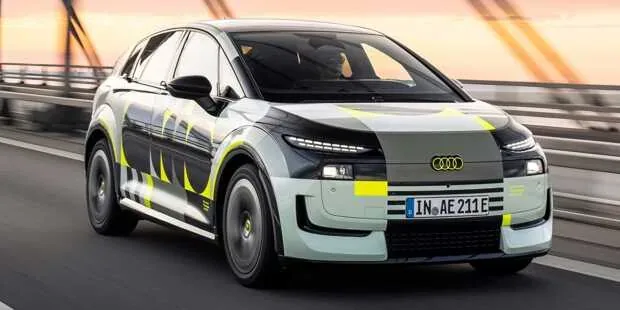
The low consumption is achieved through aerodynamic refinement, reducing the drag coefficient to 0.24. This includes an optimized underbody, air curtains, controllable cooling air intakes, and wheels with low wind resistance. But less obvious measures also help: a good cooling strategy reduces charging losses, which factor into consumption. Audi specifies the efficiency when charging with alternating current at 89.6 percent.
The Audi is said to offer up to 649 kilometers of range. The motors deliver 125, 140, 170, and 240 kW respectively. Accordingly, the A2 e-tron has the same powertrains as the VW ID.3 Neo and the Cupra Born.
Citroën 2CV
The “Duck” returns: The Neo-2CV will be presented in October at the Paris Motor Show. However, it is likely still a concept, as the model will only launch in 2028. The car apparently belongs to the small e-cars that Stellantis plans to produce from 2028 at the Pomigliano plant near Naples, as announced on May 19. These are apparently electric microcars. The background includes the EU’s plans for a new vehicle category called M1E, which is to be promoted in the future, although the category is not yet precisely defined.
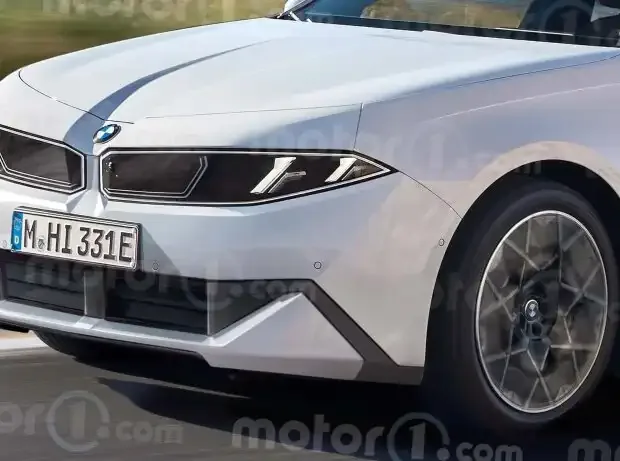
Photo series: Citroen 2CV (2028): The Neo-Duck in rendering by Motor1.com
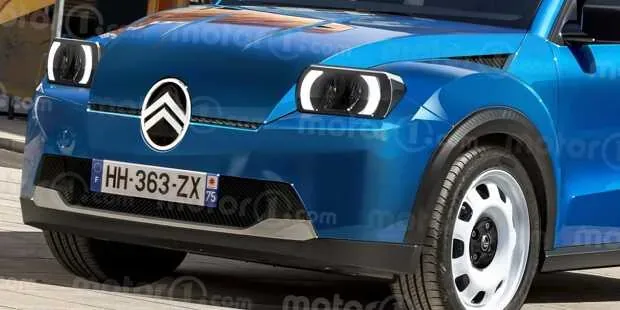
A target price of 15,000 euros is mentioned. Just as the 2CV made cars affordable after the war, the electric Duck is supposed to “democratize” electromobility, as electric cars are considered too expensive so far by Citroën CEO Chardon. According to the manager speaking to Autocar, 60 percent of purchase reluctance is due to high prices.
Read more Record auction: Shelby Cobra Daytona Coupé sold for 42.9 million dollars
The Neo-Duck would thus be positioned below the e-C3. The latter currently starts in Germany at 20,140 euros with 83 kW power and 205 kilometers of range. Officially, only the teaser image shown above exists so far; we will learn more at the latest in Paris.
Smart #2
The last Smart Fortwo, 2.70 meters long, was unbeatable in the city but a billion-euro loss for Mercedes. Nevertheless, there is still a six-figure number of the small cars. A fairly large market, therefore, that the “new” Smart wants to cover as a joint venture with the Chinese Geely Group.
And so soon the 2.75-meter-long #2 will follow the Fortwo, further developing the typical cube design. Inside, a mix of quality, gloss, and practicality is pursued. Our colleagues from Motor1 Italy report that the car is 1.66 meters wide and 1.55 meters high. The wheelbase is 1.87 meters, and the weight is 1,130 kilograms.
Photo series: Smart Concept #2: Finally a small Smart again!
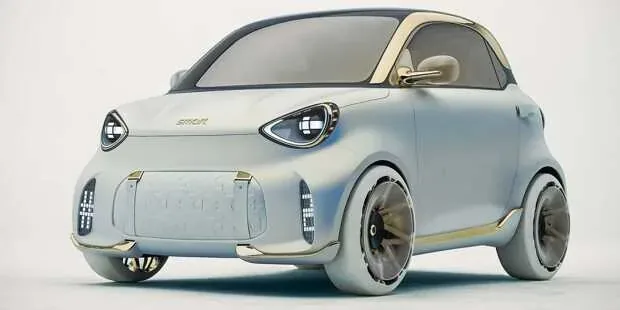
The electric two-seater is powered by a 60 kW electric motor, enabling a top speed of 140 km/h. The power comes from a 35.7 kWh battery with lithium iron phosphate chemistry (LFP). The battery cells come from CATL.
Already officially confirmed are a (surprisingly high for the vehicle size) WLTP range of around 300 km and a DC charging time of about 20 minutes (10 to 80 %) as well as a turning circle of 6.95 meters. There will also be a Vehicle-to-Load function. The base price is expected to be around 22,000 euros.
Other small electric new releases:
Dacia New Spring (2027): The new Spring is also called Spring
This is what the new VW ID. Polo for 25,000 euros looks like
Read more Upgrades make car fast and stable: McLaren preserves Hungary form