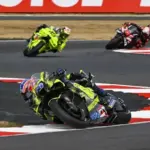


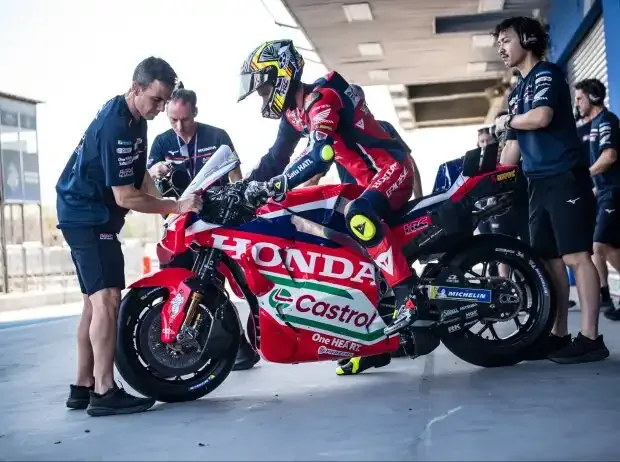
– When fans discuss MotoGP, it is often seen that the progress or difficulties of a brand are attributed to the talent of their riders. They are credited with a greater or lesser ability to steer the development of a motorcycle. But what actual influence does a rider have on the technical development of their motorcycle?
Read more Williams reveals new detail about B-Version: Chassis will be the basis for 2027
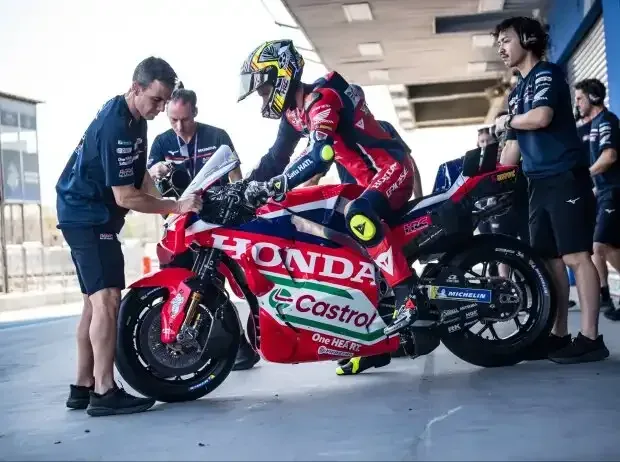
Joan Mir was a factory rider at Suzuki, where he won the world championship in 2020, and subsequently a factory rider at Honda. Over the years, the Spaniard had the opportunity to test numerous developments.
He sees his task as providing reliable feedback to the engineers. However, the necessary corrections must be implemented by them.
“Normally, all riders want to be faster,” Mir explains in an interview with Motorsport.com, a partner site of Motorsport-Total.com. “We riders can say what we feel on the motorcycle, but we are not engineers. Maybe some riders think they are, but we are not!”
“We are riders and can provide an explanation. Our task is to describe very precisely what we feel, but not to suggest a solution. The solution to how to make a motorcycle faster is not in our hands.”
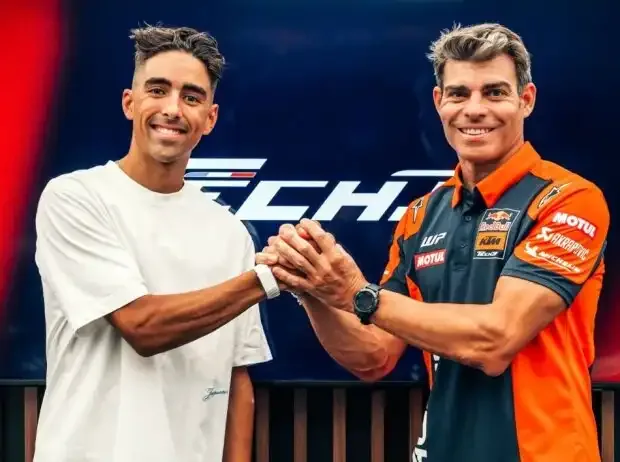
Nicolas Goyon is now team manager of Tech3. Previously, he worked extensively with data analysis in the French team and later worked as chief mechanic with several riders. He was able to observe up close how the behavior of motorcycles changed through new components. Nevertheless, he confirms that the ideas ultimately come from the design offices.
“It is the engineers who implement the developments and tune the motorcycle,” he explains to Motorsport.com. “The role of the rider is crucial because he ultimately selects the components and the combination of parts.”
“But it is the creativity of the engineers and the factory teams that determines whether a competitive motorcycle can be developed or not,” Goyon also emphasizes.
However, this does not mean that the rider has no influence on development – quite the opposite. When he comes to the pit, he describes his impressions and can suggest that the behavior of the bike changes in a certain direction, says Mir. But he rarely names a specific technical change.
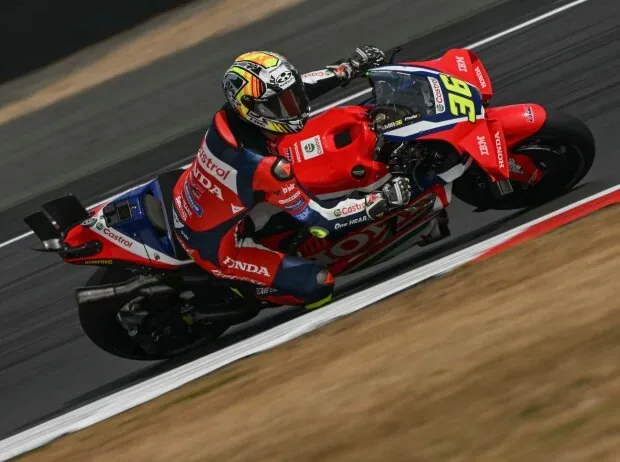
“We don’t know, we are not engineers. But we can say: ‘I want a motorcycle that turns in better at the corner exit, I want a better feeling at the front wheel, maybe the front wheel feels too light to me and I want more load on it.’ Things like that,” explains Mir.
“But we can’t say: ‘We want a shorter swingarm or a different frame.’ That is the team’s job. We can say: ‘I want a shorter motorcycle.’ But I don’t know how to achieve that. The team has to take care of the development and turn these wishes into reality. That’s exactly what the rider can do. And normally we feel it when something works.”
Rider feedback fuels engineers’ work
In this context, Goyon dispels some myths and cites as an example one of the first developments he experienced in MotoGP. He joined Tech3 in 2003, a year in which the team’s Yamaha had difficulties.
After this Yamaha season, which Goyon described as catastrophic, the manufacturer signed Valentino Rossi – with the well-known success: Already in his first season on the M1 in 2004, the Italian won the world championship.
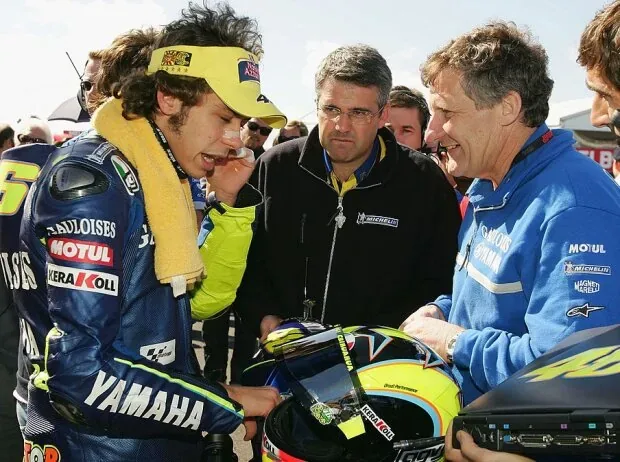
Rossi brought part of his technical team with him, led by Jeremy Burgess. According to Goyon, “The Doctor” mainly contributed to success through his exceptional talent, while the solutions for the motorcycle to make the way back to the top came from the minds of the Yamaha engineers.
“For me, you can’t just go from a bad motorcycle like the one in 2003, which won nothing, to a winning motorcycle. Regarding the importance of the rider: Yes, speed counts. It is clear that Valentino Rossi, at the level he had when he arrived, helped with his setup, knowledge, and riding style,” Goyon recalls.
“Today, Marc Marquez might even win with a KTM,” he draws the comparison. “In this case, it might look like the motorcycle is good, but in reality, it’s because Marquez is just exceptionally strong.”
“However, the base of the motorcycle was already good in 2003. The engineers had already developed solutions, and it was not Valentino Rossi who made the M1 a winning motorcycle. He took over a motorcycle that certainly was not bad but was not ridden properly, and won immediately.”
“After that, the motorcycle actually stayed at the top because he was able to select the right components. But again: He did not design these components. There are engineers and teams who develop a motorcycle and provide it to the rider. They propose solutions, and the rider more or less selects the appropriate components,” explains Goyon.
“It’s about further development, especially today, when you look at, for example, the decline of Yamaha or the rise of Ducati, which have reached the top,” he names two examples. “It is not possible to have a really bad motorcycle in 2003 and suddenly a winning motorcycle in 2004.”
This process is currently particularly important because the motorcycles for the 2027 season are being developed. They must comply with a new technical regulation.
Read more Lamborghini Diablo as Restomod: Eccentrica unveils the V12 Roadster
The behavior of the machines will change significantly due to an engine with smaller displacement, less pronounced aerodynamics, the elimination of the ride-height device, and new tires (Pirelli instead of Michelin).
Marco de Luca, head of the vehicle department at Aprilia, does not rely solely on simulation tools and considers the first feedback from riders extremely valuable.
“When you have a rider at the highest level, especially someone who has never ridden with the new tires, it is crucial that he describes his impressions very, very clearly: what he feels, what he wants, and what he likes. This feedback is very important,” emphasizes the engineer.
The rider remains the crucial puzzle piece
“I expect different and more complex comments from the riders because they will be confronted with a completely new motorcycle, especially because of the tires. But simulations always remain crucial. We cannot do without them.”
If a simple analysis of simulations and data is not enough to develop a competitive motorcycle, it is because the rider still plays a decisive role in selecting the most effective components.
Some parts that appear better on paper sometimes have to be discarded because the rider is not able to fully exploit their potential in practice.
“There are things you can see in the data. When we talk about aerodynamics, we can see it based on the data. We have information from the wind tunnel and from the track. But the rider’s sensations are really important, even more so on a motorcycle than on a car,” Goyon knows.
Photo gallery: The motorcycles and teams of the 2026 MotoGP season
“Regarding aerodynamics: If we develop a fairing that delivers excellent results in the wind tunnel, but the rider then says on the racetrack that the handling – something that no sensors can measure – is not good and that the fairing is somewhat unwieldy, it is extremely important that we receive this information. It is really teamwork.”
“We have a lot of data to analyze that provides us with numerous pieces of information. But on a motorcycle, the most important factor is the rider. He is the one who really shows you the direction by saying: ‘Yes, you have an advantage’ or ‘No, you don’t have an advantage.’ He shows the path to follow.”
“It is important to have a rider who has a feel for the right selection of components, but he does not design the components. That is the engineers’ job.”
As an example, he names Ducati and Gigi Dall’Igna: “They had different riders, and Ducati was the one that developed a motorcycle that harmonizes with the respective rider. This relationship is extremely important. The rider is the one who selects.”
In this game, some riders are superior to their colleagues because they possess a special technical sensitivity that is not necessarily related to their lap times. According to Goyon, a competitive rider is not automatically the one who can convey technical feedback most precisely.
“When Marquez won at Honda, people said his problem was that he was so strong that he could win with any motorcycle. And I think that’s true. They said Dani Pedrosa developed the motorcycle because he had the sensitivity to select the right components, and Marquez won thanks to these components. I think this assessment was not far from the truth.”
“History has shown that the motorcycle became increasingly difficult to ride after Dani left, and Marquez at some point, despite his exceptional talent, could no longer fully exploit his potential,” Goyon states.
He speculates that “Marquez may not be the best rider at setup. Or more precisely: Marquez is just so strong that he can win with almost anything.”
Regarding development, the rider’s technical sensitivity counts more than his pure performance. Goyon is particularly impressed by the information Andrea Dovizioso provided during his time at Tech3 in 2012. He credits him with part of Ducati’s success in recent years.
“In Ducati’s development, for me, there is one rider who took over a motorcycle that was not particularly good and made it a winning motorcycle: Dovizioso. Andrea is exceptionally good at setup.”
“We know him, we worked with him, he spent a season at Tech3. For me, he is the decisive rider who gave Ducati the direction. But without the engineering team in the background, Ducati would not be where they are today.”
- Formula 1Formula 1 live ticker: The qualifying in Zandvoort live!
- Formula 1F1 Sprint Zandvoort: Russell wins, Antonelli finishes 4th
- DTMAudi guest start in DTM canceled: Why Seyffarth will not race in 2026 after all
- IndyCarMick Schumacher on IndyCar future 2027: “I don’t have to look around”
“The rider drives development in one direction or another. But ultimately, it is the engineers who develop the ideas. Yes, the rider is a key element in the development of a motorcycle. But he does not develop the motorcycle himself.”
Read more Formula 1 Live Ticker: The Qualifying in Zandvoort live!