


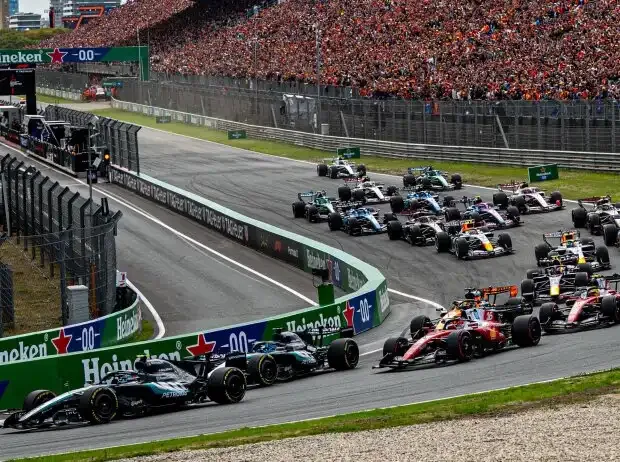
– After the Dutch Grand Prix, several Formula 1 drivers criticized the decisions regarding the starting procedure. Not all drivers considered completing the formation lap behind the safety car and then having a standing start to be the right approach. The FIA explains why it chose this procedure given the wet conditions.
Read more MotoGP 2027: Enea Bastianini switches to Trackhouse-Aprilia
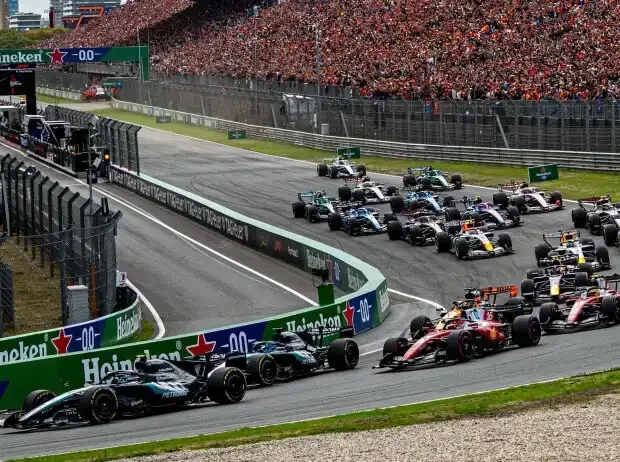
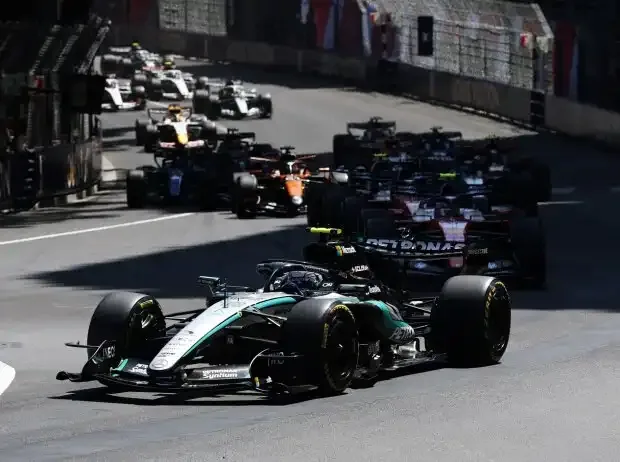
Chaos broke out already in the first lap of the Zandvoort Grand Prix. After rain started during the start preparations, the formation lap was completed behind the safety car. Afterwards, the race control decided on a standing start.
Verstappen crashes after start on wet track
Max Verstappen lost control of his RB 22 at the exit of the last corner in the first lap and crashed heavily into the track barrier. The Dutchman later admitted that he caused the accident himself. He had tried to get back on the throttle early, although that section was still significantly wetter and therefore more slippery than the rest of the track.
Gabriel Bortoleto also nearly went off track at this spot. The Audi driver was able to avoid a collision. His teammate Nico Hülkenberg also had to react. “It was really just that corner, to be honest. It was completely wet there. I think that’s why Max lost control, and it was the same for me,” Bortoleto explained after the race.
“I was on the downhill side of the banking. I think I made a small reaction to the left when I saw the big smoke in front of me. And when I did that, I also went off,” the Brazilian continued.
Drivers question the starting procedure
According to several drivers, most of the track had already largely dried at that point. Only the last two corners still posed a significant problem. Slicks were therefore basically the right tire choice.
Criticism was mainly directed at the combination of a safety car formation lap and then a standing start. Pierre Gasly would have preferred a normal formation lap to bring the tires more up to temperature:
“If we do it the way we did, that is one lap behind the safety car and then a standing start, I would have preferred just a normal formation lap so that we could have driven a bit faster. I thought the idea was to go at least once with the safety car through the last corner and over the banking before the normal race start,” said the Alpine driver, surprised.
Gasly calls for more leeway for drivers
From the Frenchman’s perspective, race control should have chosen between two conventional options: a rolling start behind the safety car or a standing start after a normal formation lap.
“I’m sure that at the next race we will review what the drivers had to say about it,” Gasly explained. “But I think there should have either been no safety car and just a formation lap or the safety car should have at least allowed us an additional lap.”
Lawson sees chaos coming even before the start
Liam Lawson also could not understand the chosen starting procedure. According to him, he had already assumed before the start that the combination of a safety car lap and standing start could be problematic.
Read more Antonelli warns Mercedes: «Clearly no longer the fastest car»
“I don’t know why we had the safety car. Doing a standing start and at the same time one lap behind the safety car makes no sense,” said Lawson.
“I’m not sure what the reason was, but I feel like we could all foresee what would happen. We probably all said the same thing when we got the message, but we had no influence on it.”
FIA explains decision
The FIA explained why race control nevertheless decided on this procedure. The decisive factor was the information available immediately before the start.
The race director first sent the medical car on an exploratory lap on the track. According to an FIA spokesperson, this is not usual under normal circumstances. The feedback was that there was still standing water on the track in corners 2 and 3.
Corner 3, the Hugenholtzbocht, is also the first banked corner of the track at Zandvoort. Based on this information, race control concluded that it was safer to complete the formation lap behind the safety car. At that time, a standing start was still planned. However, the safety car lap kept open the possibility for race control to switch to a rolling start if conditions became too dangerous.
Sainz doubts advantage of a rolling start
Carlos Sainz, however, believed that a rolling start would not have prevented the incident in the last corner:
“I think, given that it was towards the end of the lap, a rolling start would have led to the same result because at that point we would all have been driving one behind the other anyway. So I don’t think it would have changed much. It was an unfortunate situation with a lot of water in just one corner,” said the Williams driver.
Lawson defends Verstappen
Lawson explained that he himself deliberately left a lot of safety margin. Verstappen in front of him took a bit more risk: “It was just impossible. The entire first half of the lap was dry and the last corners were then completely wet. With so much power on a slick tire, it was very easy to do what happened to Max.
“I really lifted off the throttle clearly because, to be honest, I had no confidence at all in how much grip we would have there. I think Max probably wanted to get closer and prepare an overtaking attempt and simply lost control,” Lawson’s assessment of Verstappen’s crash.
- Formula 1 Verstappen puts finger in the wound: Why was Lawson so close?
- Formula 1 Formula 1 live ticker: Is Ferrari making too many mistakes for the world championship?
- Formula 1 Antonelli warns Mercedes: “Clearly no longer the fastest car”
- IndyCar IndyCar Washington: Mick Schumacher achieves best road course result
Verstappen himself did not want to use the difficult conditions as an excuse afterwards. The Red Bull driver took responsibility for the accident and made it clear that it was simply a driving error on his part.
Read more Skoda Octavia RS: With 365 km/h to the world record on the salt lake