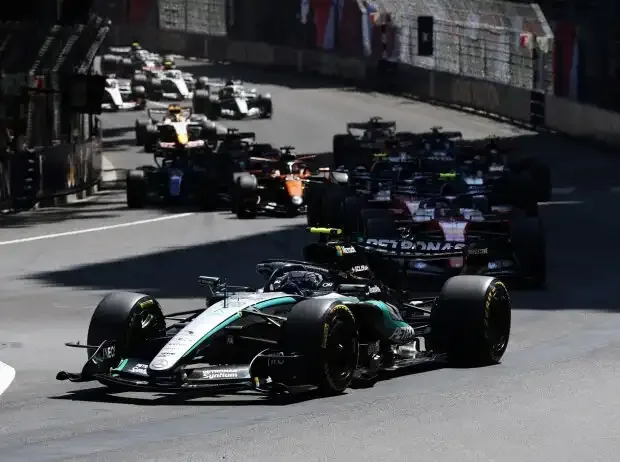








– Zandvoort winner Lando Norris dominated the reader ratings of Motorsport-Total.com for the 2026 Dutch Grand Prix with a final score of 1.14. But the big surprise were the drivers in second and third place: Fernando Alonso and Nico Hülkenberg.
Read more «Haben Max for the most important races»: Wolff jabs at Red Bull

In both cases, the three pillars of our reader ratings were surprisingly unanimous: Alonso and Hülkenberg each received a grade of 2 from the editorial team and Formula 1 expert Marc Surer. Therefore, the readers made the difference: an average rating of 1.82 ultimately secured Alonso second place ahead of Hülkenberg, whom the readers rated on average with 1.95.
Surer praised Alonso’s “good strategy” in the race with only one pit stop after the red phase. “Also in terms of speed, that was a glimmer of hope for Aston Martin.” Hülkenberg convinced the expert especially with his “good reaction to the teammate’s spin” and with “strong fights” over the Grand Prix distance.
Expert praise for race winner Lando Norris
Although both Alonso and Hülkenberg performed significantly better in the reader ratings than in reality – they could not match race winner Norris. And unlike in the cases of Alonso and Hülkenberg, the readers rated Norris even more strictly than the editorial team and Surer: on average, Norris received 1.41 rating points from the readers, and the best grade 1 from both the editorial team and Surer.
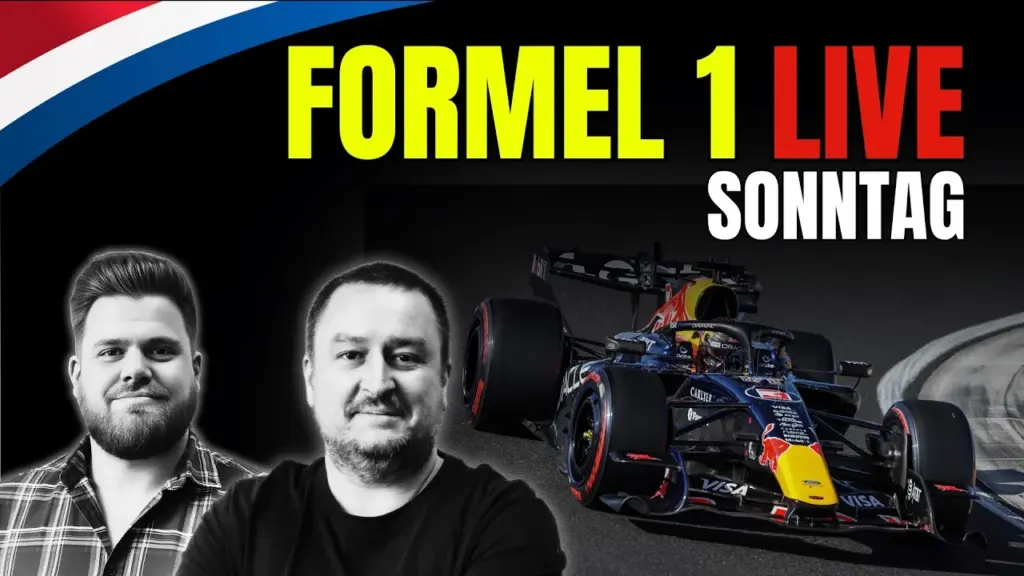
Surer praised Norris for a successful weekend and said: “Pole position, victory and great overtaking maneuvers!”
Criticism of Carlos Sainz and Max Verstappen
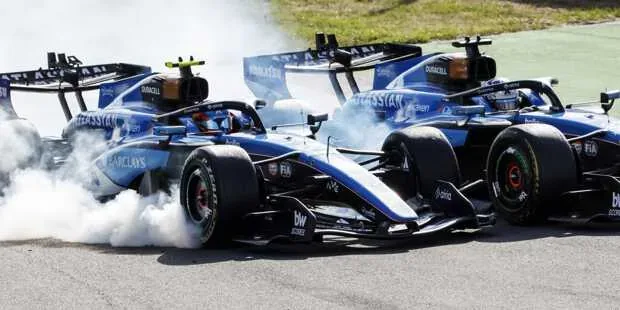
At the other end of the rating spectrum, however, criticism was in order: Carlos Sainz scored the worst with a final rating of 4.58 points. “Somehow the worm was in it this weekend,” commented Surer and gave Sainz a 4. Reason: “He was off track three times already in the first practice.” The low point was the collision with teammate Alexander Albon in the Grand Prix.
Verstappen also did not fare well in the reader ratings: his early crash in what was initially the last Formula 1 race in Zandvoort earned him a 5 from the editorial team. Surer gave a 4 and said: “He went too deep into turn 14, so a clear driving error. Otherwise, he was driving with the handbrake on.” The readers took an intermediate position with an average of 4.32 rating points.
The clear number one in the overall 2026 reader ratings is still Kimi Antonelli with now 164 points. Lewis Hamilton remains second with a large gap, but Norris moves up from fifth to third place – at the expense of George Russell and Verstappen. Hülkenberg even gains three positions and is now 13th after Zandvoort.
Who really shone in Zandvoort – and who didn’t?
By the way, how the editorial team discussed the driver ratings after the Dutch Grand Prix is a topic on Tuesday evening from 8:30 p.m. in the call-in show “Live bei Scheuren” on the Twitch channel of Formel1.de. Host Kevin Scheuren invites users to join via Zoom personally and chat with him about the Dutch Grand Prix and Formula 1.
Read more F1 sprints under scrutiny: Why less would be better
Click through: How Surer rates the 22 drivers!
How Marc Surer rates the other drivers can be read in detail in an extended photo gallery. In this photo gallery, both the Formula 1 expert and the editorial team explain their ratings for each of the 22 drivers individually. So that users can hopefully understand even better from now on how the driver ratings came about.
Photo gallery: Zandvoort: The driver ratings by Marc Surer and the editorial team
By the way: Many users want more transparency from the editorial team in the awarding of grades. That is why we have decided to also publish the individual grades of our editors in a separate table. For the overall editorial grade, which makes up pillar 3 of the system, the editorial team agrees on a common full grade in a conference.
In this conference, which has become a fixed program item for us every Monday morning after Formula 1, things sometimes get heated when different opinions clash. And we collect arguments that speak for or against a better or worse grade.
How we award our grades
The idea behind our grading is to evaluate performances over a weekend and especially in the race with grades (1 = very good, 6 = insufficient). External influences that the drivers cannot control themselves should be excluded. And so that not only the editorial team subjectively rates, as is the case with football magazines, we have created three equal pillars with the readers and the expert.
And this is how we calculate:
From the average rating of Motorsport-Total.com users, the rating by expert Marc Surer, and the rating by our editorial team, we determine the average. Our driver ranking results from this average value. We only display one decimal place, but for the calculation, we use all decimal places. From these partially invisible decimal places, the order of the ranking of two drivers in the case of an apparent rating tie results.
The grades of the individual editors:
We are often asked how our editorial grades come about. All editors of our Formula 1 team first give their grades individually. In an editorial conference on the morning after the Grand Prix, we then exchange views and agree on common editorial grades, which usually (but not always) reflect the average of the individual editors’ grades. When setting the editorial grades, there is sometimes heated discussion. The goal is to agree on common driver grades with which every editor can come to terms.
Award for Driver of the Year:
Based on the overall grades of a race weekend, we award points for the 2026 annual ranking. Analogous to the points system in the real Formula 1 World Championship, the winner receives 25 points, the second 18, the third 15 – down to one point for tenth place. There is no bonus point for the fastest lap. At the end of the season, the driver with the most points is awarded the Motorsport-Total.com Award for Driver of the Year 2026.
Read more KTM opens MotoGP engines before Aragon: New chance for Pedro Acosta