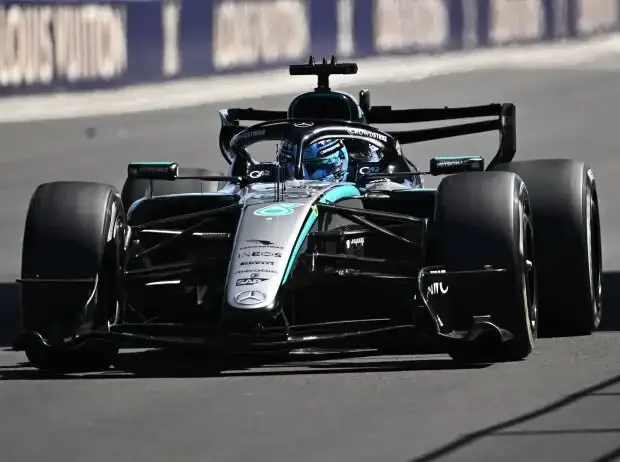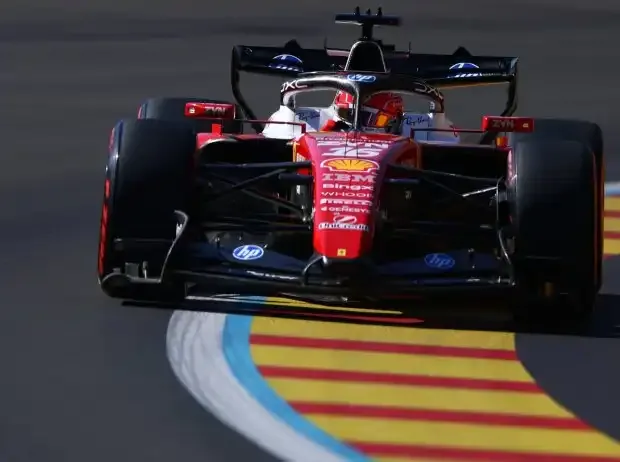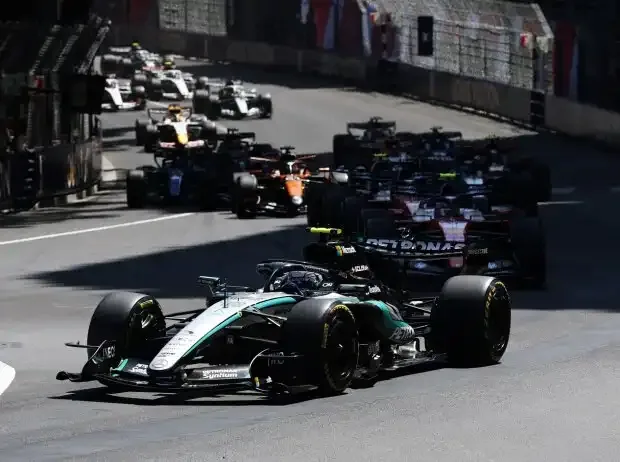
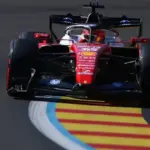

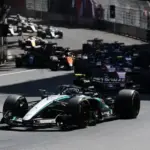
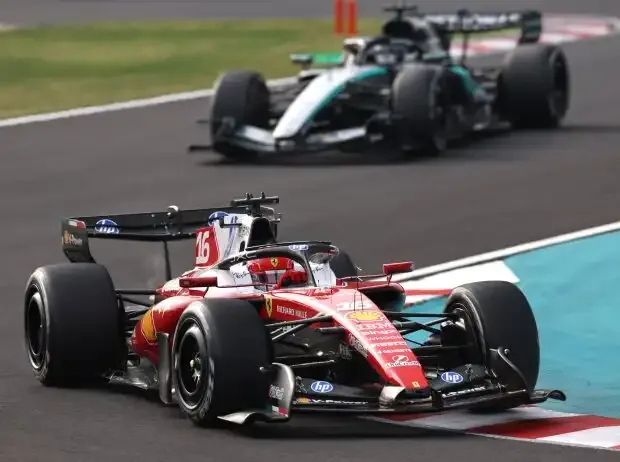
– Mercedes driver George Russell was not on the podium for the first time this season at the Japanese Grand Prix because he could not find a way past Ferrari driver Charles Leclerc in the closing stages of the race. This was mainly due to the fact that the Scuderia had optimized its energy management accordingly.
Read more Jolyon Palmer warns: Russell has an “ice-cold” side against Antonelli
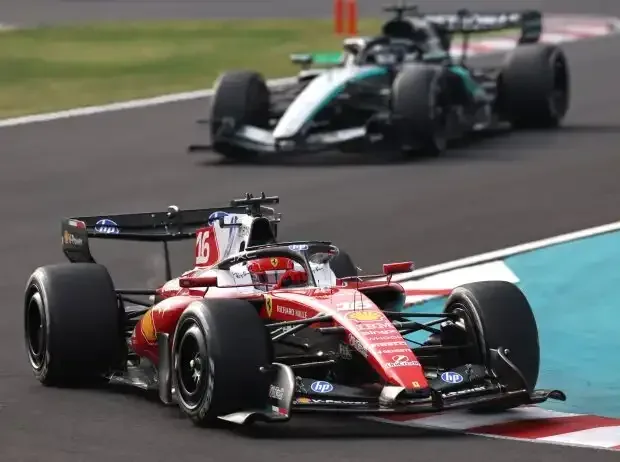
This assessment is also supported by race winner Kimi Antonelli, who already dueled with the Monegasque in the first stint. “It was difficult to overtake Charles because he used the battery at strategic points, exactly in the places where you can attack,” explains the Italian, who by his own admission had “great difficulty.”
At the same time, Ferrari benefited from the special characteristics of the Suzuka International Racing Course, which allows for more effective defense in certain situations: For the attacker, it was generally most effective to use energy between Spoon and the last chicane.
This is because speeds in this section are significantly higher, while the car in front experiences a sharper drop in speed as soon as MGU-K support drops off. Because Suzuka has three consecutive acceleration phases, energy management becomes a crucial strategic factor.
Japan Data: Why Antonelli would have won even without a Safety Car!
If the attacker uses too much energy before the last chicane, there is a risk, even after a successful overtaking maneuver, of not having enough battery power to defend on the following start-finish straight and being immediately overtaken again.
Ferrari accelerates harder than Mercedes
A dynamic that was observed several times in Japan: The new regulations amplified this effect so much that speed differences of around 30 km/h were even measured before the first corner, making counter-overtaking maneuvers easier than with the old DRS.
And this is exactly where Ferrari and Leclerc’s strategic energy use becomes particularly clear. Unlike in qualifying, the focus was not on pure lap time, but on identifying the optimal use of battery power to specifically hinder pursuers.
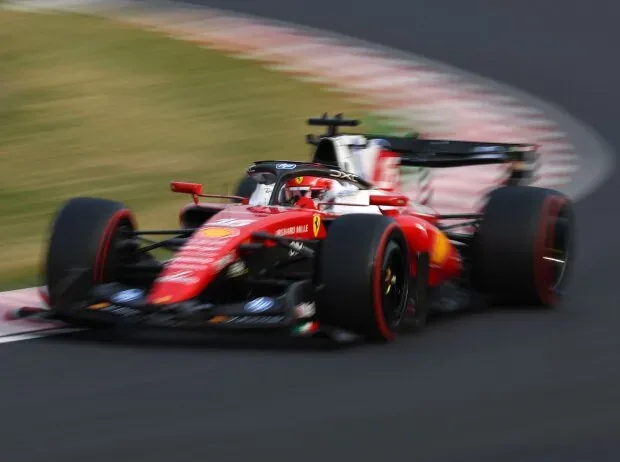
The data (for example from lap 48) shows a clear difference to Mercedes’ approach: Ferrari tended to use more energy out of the hairpin to take momentum towards Spoon, and went into so-called super-clipping earlier and more aggressively before Turn 13 than Mercedes.
The same pattern was evident at the exit of Spoon, where Leclerc was significantly more effective in the acceleration phase, also thanks to a slightly different interpretation of this track section. Antonelli confirmed this impression in conversation with other drivers in the area behind the podium.
Ferrari uses lead for energy recovery
In essence, Ferrari gained speed on the straights, gained a small lead early in the first part of the acceleration phase, and forced Mercedes to use more energy in the second half to catch up and – if possible – launch an attack before they themselves had to go into super-clipping.
Read more BMW iX3 40 (2026): New base model with 635 km range
This “yo-yo effect” opened up a certain flexibility in defense because it allowed Leclerc to recover energy in time to also protect himself from the Mercedes driver’s attack on the following start-finish straight.
However, another aspect must be considered: Due to the current interpretation of the rules, energy delivery resumes when using boost mode as soon as the driver accelerates again, even if there was a brief lift before 130R.
FIA reaction to Bearman crash: Will anything be changed? I F1 Japan 2026
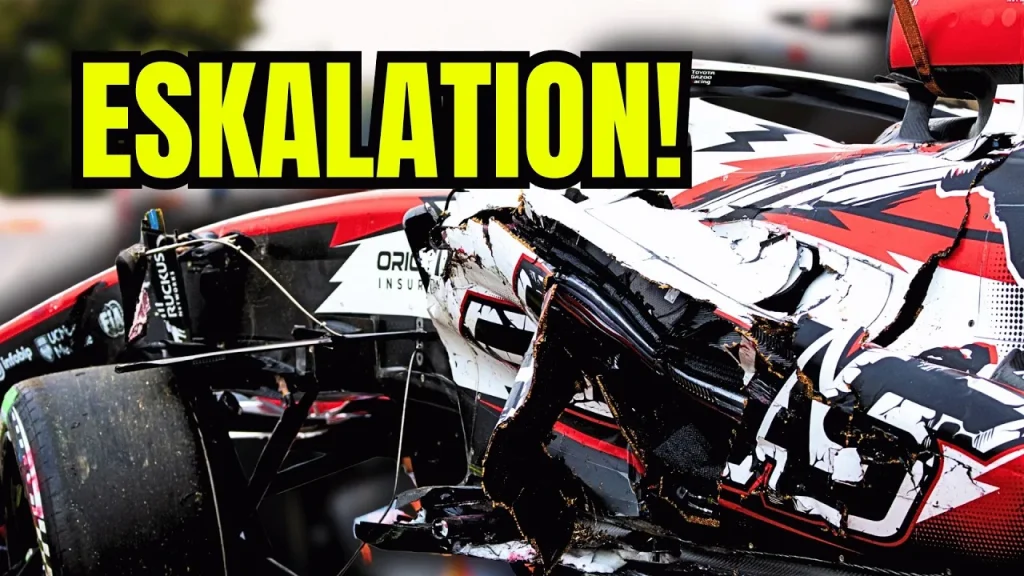
This is exactly what happened to Lando Norris, for example, during his overtaking maneuver against Lewis Hamilton in the closing stages of the race. This limits the driver’s ability to maintain control over energy delivery, which the world champion clearly criticized afterwards.
In some cases, an overtaking maneuver is almost “forced” by this, as was the case with Russell in lap 50 when he overtook Leclerc in the last chicane while the Monegasque was in super-clipping.
The problem: Energy consumption is high and you run the risk of being left without sufficient battery reserves for defense, which makes a counter-maneuver easier. Russell also had to let Leclerc overtake him again for this reason.
Ferrari team boss Vasseur: “We can do it”
Undoubtedly, some track characteristics also played a decisive role, from the layout to the practically non-existent graining and low tire wear on the new asphalt. Suzuka is traditionally a track where overtaking is difficult, as was seen last year.
To be successful here, however, additional strategic finesse was required, which Ferrari demonstrated. After the race, team boss Frederic Vasseur therefore emphasized the importance of the podium, especially for morale: “We want to achieve more, but I think it was a really very strong finale from Charles against Russell.”
- Formula 1Tech Revolution: Formula 1 gets PitBoost and induction asphalt
- MotoGPYamaha crisis worsens: Quartararo expects “very long season”
- Formula 1No desire for Formula 1: Is Verstappen now dedicating himself to his friends and family?
- 24h Nürburgring24h Nürburgring 2026: New qualifying format and important changes
“It was important for us to keep Mercedes behind us and leave Russell behind us,” Vasseur emphasizes. “In the last ten laps, he also showed everyone at the factory and in the team: We can do it. That means a lot and is the best way to go into the break.”
Read more GT3 bolide in anime look: BMW brings Fortnite M4 to real life