








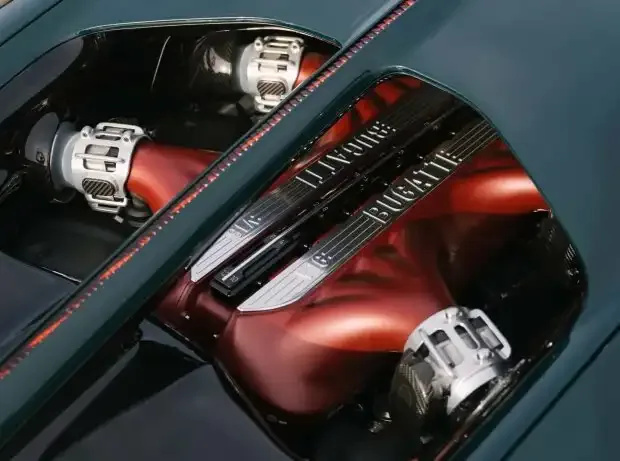
(Motorsport-Total.com/Motor1) – While the W16 engine of the previous models was characterized by turbochargers, the new Bugatti Tourbillon relies on a naturally aspirated V16 with up to 9,000 revolutions per minute. A current video from the manufacturer now offers exclusive insights into the acoustic development of this extraordinary hypercar. The engineers placed great emphasis on an authentic sound character that works entirely without electronic support.
Read more Charles Leclerc: The aftereffects of the Monza crash were that bad
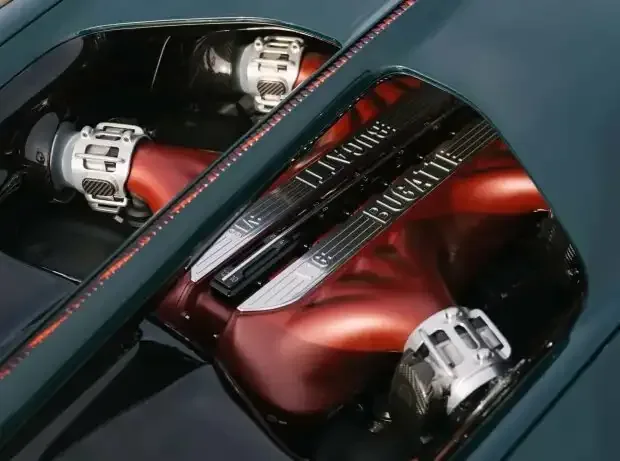
And it sounds very different from the well-known W16 from Veyron, Chiron, Bolide, and W16 Mistral. Instead of four turbochargers, the Tourbillon has a naturally aspirated V16 that revs up to 9,000 rpm. Bugatti has by no means left to chance how this engine should sound.
Thousands of simulations for the right sound
In a new episode of its documentary series “A New Era,” Bugatti shows how the acoustic tuning of the Tourbillon was created. We have embedded the corresponding video in this article. The developers worked for three years on the sound character of the new hypercar and conducted thousands of simulations for intake and exhaust systems, among other things.
Bugatti – Sound of a New Era
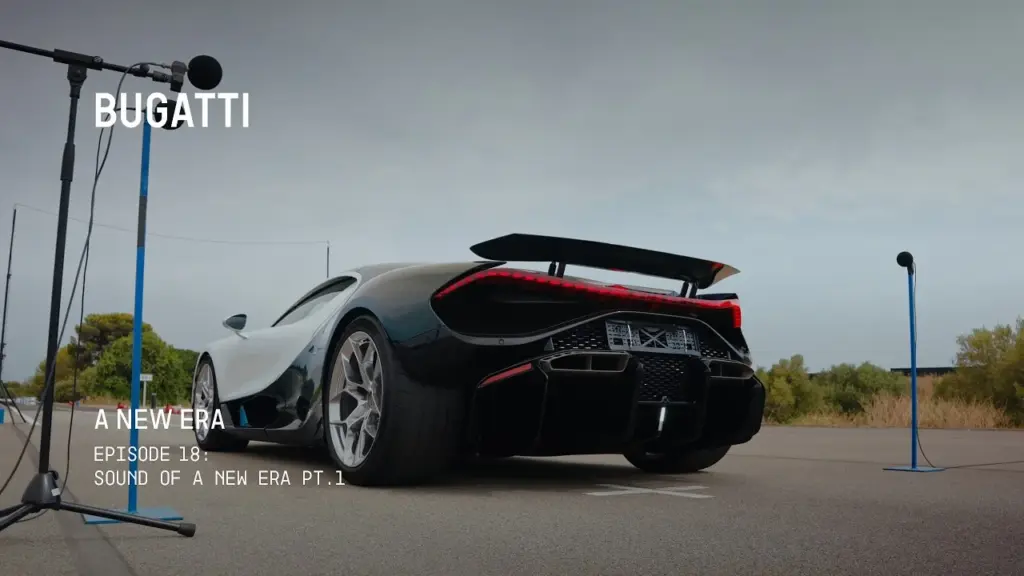
The task was quite tricky. On the one hand, the new powertrain was to have its own sound, on the other hand, Bugatti did not want to completely sever the acoustic connection to its previous 16-cylinder models. The fundamentally different character of a high-revving V16 naturally played into the developers’ hands.
At the same time, the Tourbillon is still supposed to be a car that can be driven in everyday life. With the windows closed, the interior should be correspondingly refined, especially when driving purely electrically. When you open the windows and demand the V16, the intake and exhaust should be heard as directly as possible.
The speakers are to stay out of it
Bugatti refrains from a now widespread trick. The engine sound is not artificially amplified through the speakers. What the occupants hear is actually supposed to come from the drivetrain. The developers therefore tuned the acoustic concept so that the real mechanical noises are deliberately transmitted into the interior.
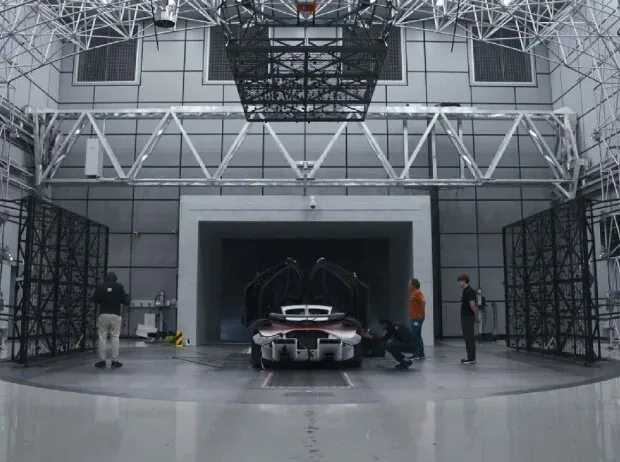
As beautiful as a V16 at 9,000 rpm may sound, eventually the type approval awaits. And that cares less about goosebumps than about measured values. For homologation, the Tourbillon must not exceed a maximum noise level of 72 decibels.
Read more Baptism by fire in Madrid: Formula 2 car catches fire after severe crash
This is not a single measurement. Drives at constant speed and acceleration tests are included in the result. The microphones also do not listen exclusively to the V16. Tires, bodywork, and aerodynamic elements also contribute to the measured noise level.
The rear wing also makes noise
Therefore, active aerodynamics also play a role in the Tourbillon. The movable rear wing generates downforce but, according to Bugatti, also contributes to the car’s acoustic signature. Even temperature and wind speed must be within precisely defined limits during the measurements.
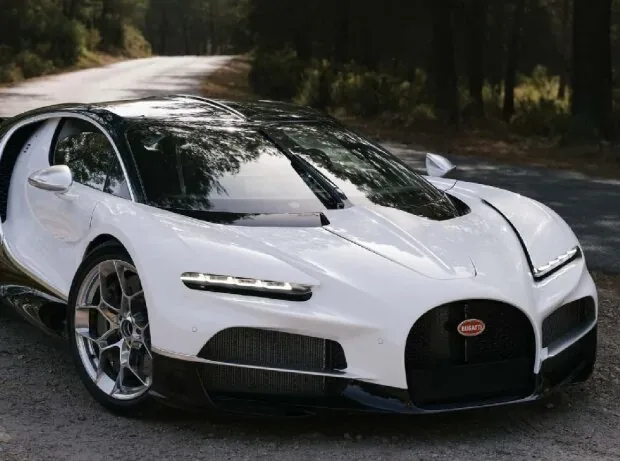
A gust of wind can invalidate an otherwise successful attempt. Bugatti therefore carried out numerous preliminary tests before the final homologation measurements took place. The Tourbillon has now successfully passed these.
After three years of development work, its final sound is now set. The new V16 may rev up to 9,000 rpm and is supposed to do so entirely without artificial support from the speakers. Fortunately, we don’t have to describe how that sounds any further. Just start the video.
More on the topic of sound:
Electric Mercedes-AMG GT 53 4-door coupe has “authentic” six-cylinder sound
No joke: New Porsche patent for even more sound fun in the tunnel
Read more 15:89 in qualifying: Nevertheless, Lance Stroll is supposed to be «just as fast» as Alonso
Source: Bugatti