









(Motorsport-Total.com/Motor1) – In the world of hypercars, the McLaren W1 and the Ferrari F80 mark the current pinnacle of hybrid development. While the British focus on a purist connection between man and machine with the W1, the Italian impresses with the highest technological complexity. Both cars consistently use electrified drives to maximize driving dynamics, achieving a system output of at least 1,200 hp.
Read more Why Vettel Would Gladly Lose His Formula 1 Record to Antonelli

The McLaren W1 measures around 4.64 meters in length, 2.08 meters in width, and 1.21 meters in height, with a wheelbase of about 2.68 meters. The Ferrari F80 is longer and slightly lower: 4.84 meters in length, 2.06 meters in width, and only 1.14 meters in height, with a wheelbase of 2.67 meters.
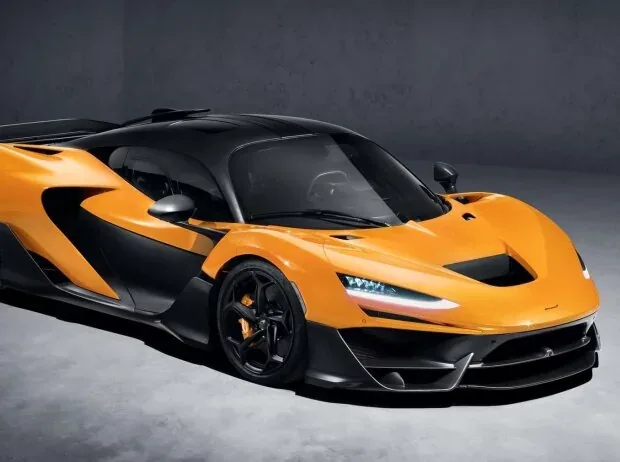
Stylistically, the two hypercars take different paths. The W1 appears aerodynamically functional, with a body consistently optimized for airflow. Together with the raw carbon surfaces, the British car presents an appearance that almost resembles a road-legal race car.
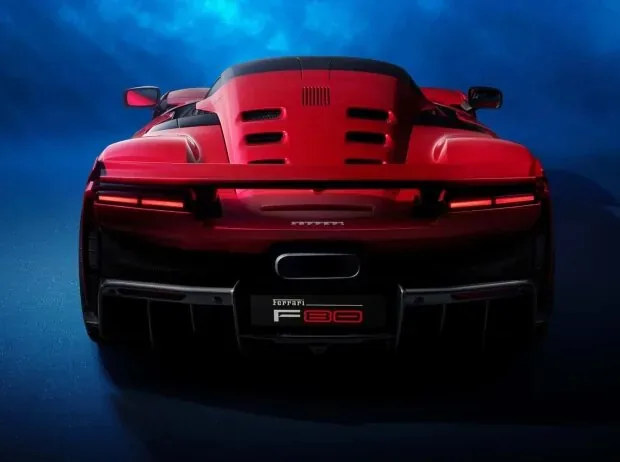
The F80, on the other hand, interprets Ferrari’s design language much more futuristically. The body, designed by Flavio Manzoni, features a compact passenger cell and a clear separation between the upper and lower vehicle sections. The front integrates the lighting units into a dark element that also serves an aerodynamic function.
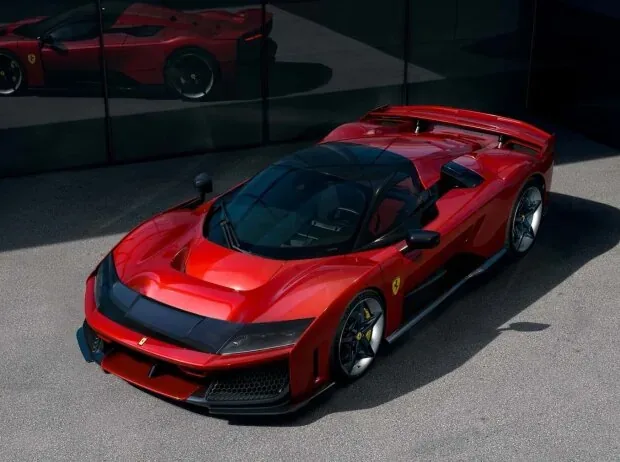
The wheels also underline their respective philosophies. The W1 uses Pirelli P Zero Trofeo RS 335/30 R20 at the rear, while the F80 is equipped with Michelin Pilot Sport Cup 2 or Cup 2 R front tires in 285/30 R20 and rear tires in 345/30 R21.
Aerodynamically, the duel is equally impressive. The W1 can generate up to 1,000 kilograms of downforce, mainly thanks to the huge rear wing and the elaborate underbody. The F80 achieves an equally impressive 1,050 kilograms at 250 km/h. To its advantage, the hypercar uses an S-duct, a covered underbody, aerodynamic channels, and an active rear wing.
| Model | Length | Width | Height | Wheelbase |
| McLaren W1 | 4.64 m | 2.08 m | 1.21 m | 2.68 m |
| Ferrari F80 | 4.84 m | 2.06 m | 1.14 m | 2.67 m |
Interior
The McLaren also feels like a real race car inside. The seat is fixed – the steering wheel and pedals come towards the driver. This solution is intended to reduce weight and complexity. Visible carbon and seats integrated into the structure of the passenger cell create a kind of shell around the occupants.
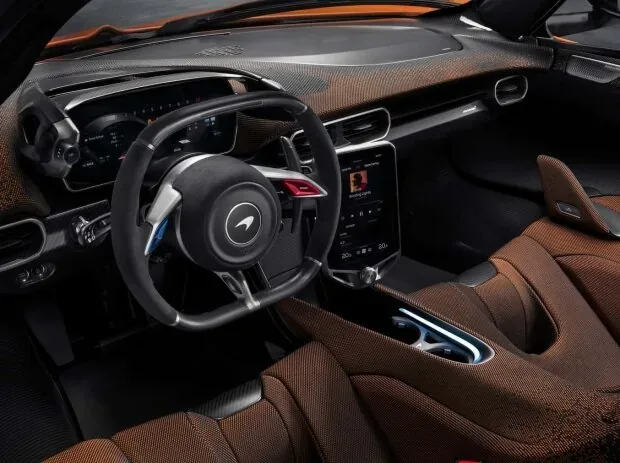
In the center of the dashboard sits a vertical 8-inch display, flanked by a digital instrument cluster. The steering wheel is deliberately designed to be minimal and offers only a few controls for the most important functions, including Aero and Boost. The atmosphere is correspondingly minimalist and clearly focused on driving.
Ferrari, on the other hand, pursues the concept of a “1+1” interior, where the passenger sits further back than the driver. The dashboard and seating position clearly recall Formula 1. The steering wheel is more compact than in the LaFerrari, and the Italians again rely on physical buttons for the controls.
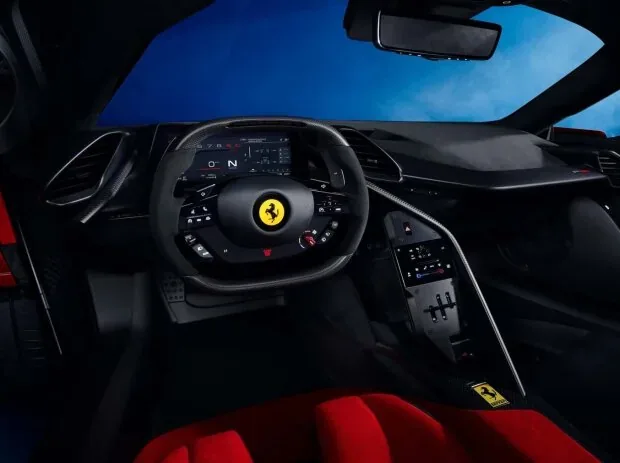
Both models use plenty of carbon and technical materials. However, the F80 feels closer to the tradition of road-legal Ferrari models, while the W1 appears even more radical and more track-focused.
Read more After «Max vs. 100»: Verstappen is already thinking about the next crazy challenge
In terms of everyday usability, the F80 offers a trunk with 35 liters of volume. For the W1, McLaren specifies 87/118 liters.
| Model | Instrument Cluster | Infotainment | Trunk |
| McLaren W1 | – | 8 inches | 87/118 liters |
| Ferrari F80 | – | – | 35 liters |
Drivetrains
The McLaren W1 uses a 4.0-liter V8 biturbo combined with an electric motor producing 252 kW (342 hp). The hybrid system features a compact battery with only 1.4 kWh. The system output is 938 kW (1,275 hp), and torque reaches 1,340 Nm. The combustion engine revs up to 9,200 rpm, the electric motor even up to 24,000 rpm.
The most surprising feature, however, is the rear-wheel drive: all power is sent to the rear wheels. For a hypercar of this performance class, this is an unusual decision but fits McLaren’s goal of maximizing driver involvement.
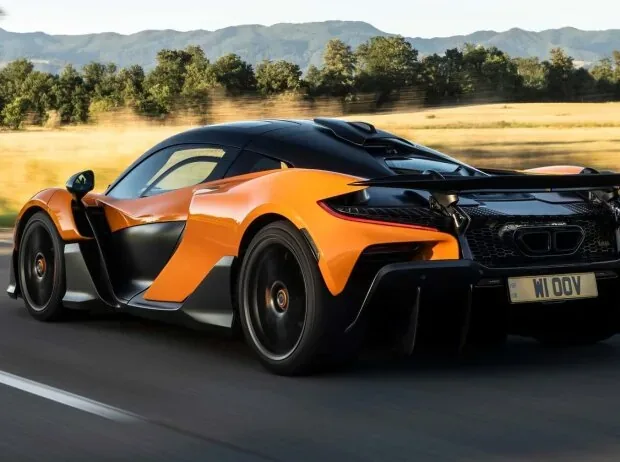
The W1 accelerates from 0 to 100 km/h in 2.7 seconds, from 0 to 200 km/h in 5.8 seconds, and reaches an electronically limited top speed of 350 km/h. The dry weight is only 1,399 kilograms.
Ferrari responds with an even more elaborate system. The heart is a 3.0-liter V6 biturbo with a 120-degree cylinder angle, 662 kW (900 hp), and 850 Nm. The unit is complemented by three electric motors: one at the rear with 60 kW (81 hp) and 45 Nm, and two at the front with 104 kW (142 hp) and 121 Nm each. The system output is thus 883 kW (1,200 hp).
Thanks to the two front electric motors, the F80 has all-wheel drive. The 2.28-kWh battery is integrated into an 800-volt system. Power is delivered to the road via an eight-speed dual-clutch transmission – as with the W1.
In terms of performance, the Maranello factory goes one better: 0-100 km/h in 2.15 seconds, 0-200 km/h in 5.75 seconds, and a top speed of 350 km/h. However, the F80 weighs 1,525 kilograms dry, 126 kilos more than the McLaren.
| Model | Engine | Battery | Maximum Power | 0-100 km/h | Top Speed |
| McLaren W1 | 4.0 V8 biturbo | 1.4 kWh | 1,275 hp | 2.7 seconds | 350 km/h |
| Ferrari F80 | 3.0 V6 biturbo | 2.3 kWh | 1,200 hp | 2.15 seconds | 350 km/h |
Prices
The McLaren W1 has a starting price of around 2 million euros plus taxes. Only 399 units will be built.
The Ferrari F80, on the other hand, costs 3.6 million euros including taxes. 799 vehicles are planned for production. Manufacturing is scheduled until 2027.
Read more MotoGP FT1 Spielberg 2026: KTM double lead — Acosta ahead of Espargaro!