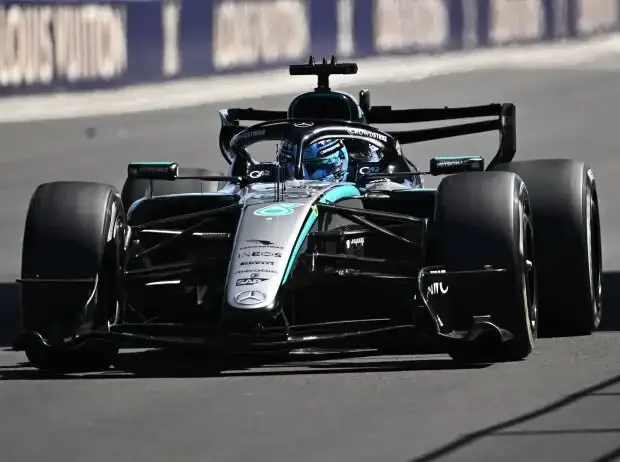


– A recent exclusive interview by Autosport with Formula 1 boss Stefano Domenicali sparked many reactions, especially regarding his dismissive stance on the question of whether overtaking under the latest technical regulations has become a matter of quantity rather than quality.
Read more New Team Principal useless? Sky expert on Wheatley at Aston Martin
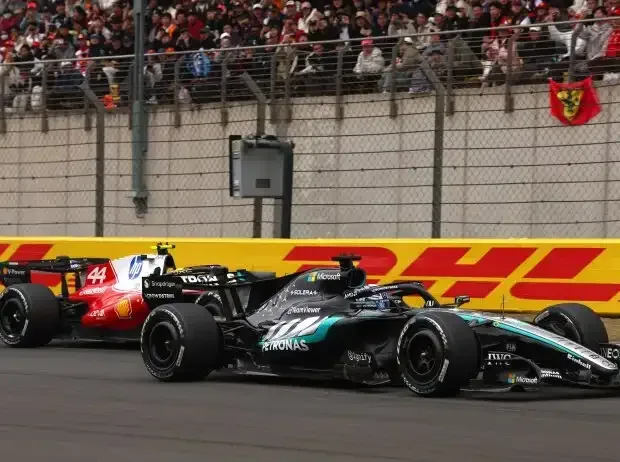
“Some say it’s artificial,” Domenicali explains, posing the question: “What is artificial? Overtaking is overtaking. And people have short memories, because in the turbo era in the 1980s […] there was lift-and-coast with different turbos, different speeds.”
“And you had to save during the race, otherwise the tank would have been too small. Perhaps some of the people who criticize this or comment on it have short memories. So look back to the 80s, to the turbo era, these things existed then,” he emphasizes.
There’s a lot to unpack in these few sentences. Immediately after the opening race of 2026 in Australia, Formula 1 was keen to publicize the sheer number of overtakes via its social media channels compared to the previous year. The reaction was so negative that they have refrained from doing so ever since.
Officially, however, the motto remains: more is better, regardless of the widespread belief that “yo-yo racing” triggered by different boost levels is fundamentally meaningless.
Is Racing in Formula 1 a Problem? F1 Boss Domenicali Says This! #Autosport #Racing #F1

The question of available boost and energy management is related to the associated topics where drivers have to use lift-and-coast or even super-clipping to manage energy – and how this affects the show and safety.
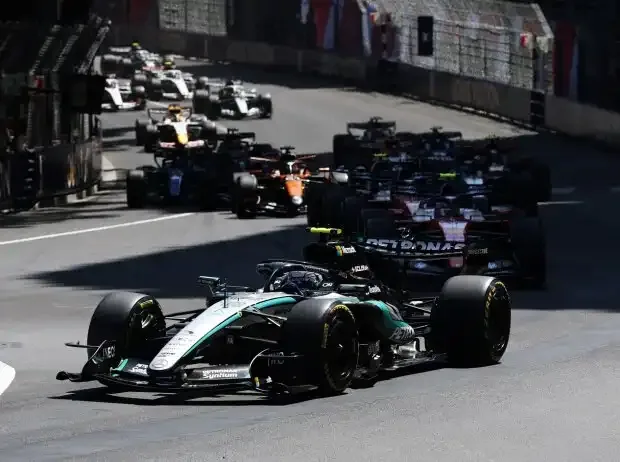
In Japan, few were impressed that 130R, once one of the more fearsome challenges in Grand Prix racing, became a glorified charging station. The significant differences in approach speeds that triggered Oliver Bearman’s accident also gave cause for thought.
On the topic of quantity versus quality, Domenicali faces none other than the 1992 World Champion Nigel Mansell, who was also in the title fight in 1986 and 1987 when the turbo era was at its peak.
True or false?
Mansell also gave interviews last week, in his role as ambassador for a special guest of the Pop-Up Hotel in Silverstone, overlooking the site of one of his most memorable overtakes in Formula 1: on the Hangar Straight and at Stowe, where he passed his Williams teammate Nelson Piquet in 1987 to win the British Grand Prix.
“Maybe I’ll get shot for this,” he says, “but unfortunately, some overtakes are just completely wrong. I mean, some look great. And then you come out of the next corner. And then the other car just shoots past. And the other car falls back.”
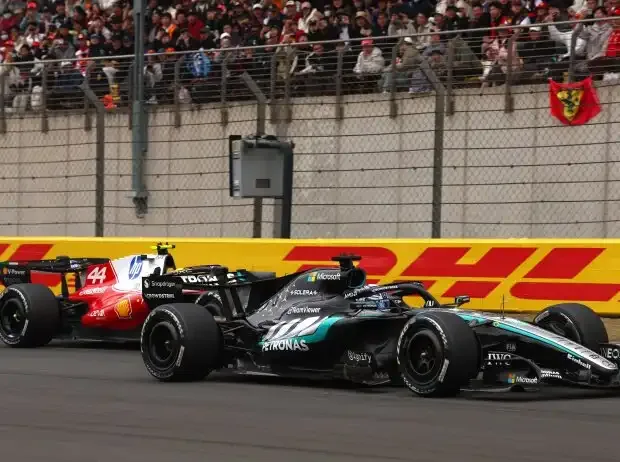
“Because the computer doesn’t give you the extra power at the right time. And the driver, of course, doesn’t control that. Otherwise, he wouldn’t have used it. I think it was Lando [Norris] who was quoted: ‘I didn’t want to overtake [Lewis Hamilton in Japan] in the fast corner or the chicane. But I had no choice.'”
“Coming out of the corner, he’s ahead. And then the other car just drives past again on the straight. That’s why you should be very careful. It’s not about me, but the fans all over the world, I know a lot of them, are very grumpy. And to be fair: I agree with the fans,” says Mansell.
Assessing the quality of overtakes will always remain somewhat subjective. There will always be people who, like the rights holder, believe that overtaking is overtaking and that more of it is fundamentally better.
Photo gallery: The biggest false starts by Formula 1 World Champions
However, this seems rather tactless and dismissive in the face of such broad and well-founded criticism. Different cars have always had different performance parameters, yes. But the actual dramatic value of a sporting performance depends on whether the moment was “earned” or not.
An overtake executed with cunning, skill, and courage feels more impactful than one determined by a machine learning algorithm and a battery. One could say that displaying each car’s “State of Charge” in the TV graphics is helpful for understanding what we’re seeing. But it doesn’t make the heart beat faster.
Even if the first Grands Prix of the 2026 season seemed eventful at first glance, much of the position battle was determined by battery level rather than bravado.
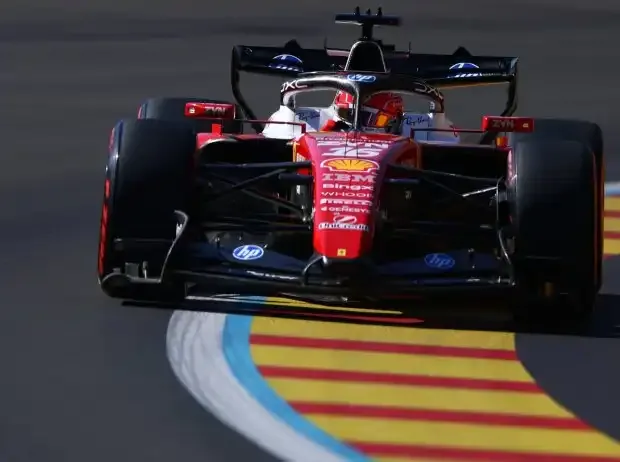
Interestingly, the so-called “low-energy” tracks – Albert Park and Suzuka – were most affected by “unreal” overtaking, although there were exceptions. For example, Charles Leclerc’s overtake on George Russell in Japan.
In China, where the major braking point at Turn 14 and the tightening radius of Turns 1-2-3 relied more on driver judgment, much seemed less superficial. Formula 1 claims that a significant portion of the audience shares the view that any overtake is a good overtake. Even if Domenicali preferred to talk around the question rather than answer it when asked for the underlying data.
Read more McLaren tester admits: “Zero desire” to go into Formula 1
Ultimately, however, a large part of the fanbase remains cold as long as overtaking is not decided by the driver seizing the moment, i.e., by controlling the power with the right foot. There is ample evidence for this, for example, on social media.
We (don’t) lift off the throttle
Beyond the question of whether overtaking is simply overtaking, the question arises: Is the lift-and-coast comparison with the 1980s really the big trump card that defenders of the current rules believe it to be?
Here too, there are parallels to the present, insofar as energy management became a component of the competition, primarily because the tighter fuel tank capacity was one of the means by which the FIA limited turbo power, along with upper limits for maximum boost pressure.
But it’s not a one-to-one comparison, as Mansell clarifies. “No, we didn’t,” he says, repeating for emphasis: “No, no, we didn’t. If you did lift-and-coast, it was more ‘feathering’. Playing with the throttle when driving in someone’s slipstream and deciding not to overtake them, that’s fuel saving and finesse. That’s clever.”
“A computer taking control of the car from you and recovering energy for the battery is something completely different,” he clarifies. “And we weren’t slowing down by 50 to 70 km/h before the fastest corners. Therefore, the comparison is a bit far-fetched, I must say.”
Of course, in the 1980s, there was no hybrid system in the cars, meaning no electric motor that could charge the battery via magnetic resistance. So, lifting off was solely about saving fuel, not collecting energy.
What’s happening in Formula 1? You ask, the editorial team answers! I Q&A F1 2026 LIVE

Where the comparison falters is the relative crudeness of fuel consumption calculations in the 1980s. It was a time when injection pumps were mostly driven by the engine’s camshaft, as were the metering devices.
Under the rules introduced in 1984, with no refueling and a 220-liter tank, McLaren dominated. This was partly because the Porsche-built TAG V6 turbo was the most fuel-efficient in the field, though not the most powerful. Race pace was more important than peak qualifying performance.
In this era, fuel saving was significantly more irregular. Engineers calculated consumption before the race and gave their drivers a target pace – which might or might not be accurate, even if the drivers adhered to it.
Early upshifting while accelerating was, alongside reducing boost pressure, the most important tactic for fuel saving, along with “feathering,” while lift-and-coast only became a last resort for most when cars began to stutter in the final laps.
Anyone sifting through the results of 1980s Grands Prix will find countless examples of late retirements due to lack of fuel. This is mainly because there were no tools at the time that could display in real-time how much fuel was still on board. And even when such displays emerged in the mid-decade, they were not always particularly accurate.
Memory is selective, and very few racing drivers would like to be described in a Grand Prix as someone who “takes it easy.” But undoubtedly, fuel saving was a factor in the turbo era after the introduction of a fixed tank size.
Then as now, additional weight brought a disadvantage in lap time, so it was to be expected that teams would push as close to the limits as possible. Only the means of measuring the changed load were much cruder and less accurate back then.
Modern race engineers can tell their drivers exactly where and when to lift or reduce throttle, with a large part of this process increasingly being taken over by machine learning software.
Other drivers from the 1980s, including Martin Brundle, have pointed out that lift-and-coast was an indispensable part of the toolkit in the turbo era with limited fuel, as were early upshifts and turning down boost pressure.
But did they do that lap after lap and in precise areas? Not to the extent they do today. The use of such tactics in modern times is much more measurable and precise, a digital rather than analog process.
- Formula 1After criticism of new rules: Formula 1 regulations to be adjusted
- IndyCarIndyCar Long Beach 2026: Mick Schumacher with his best result
- Formula 1Are the F1 changes coming too late for Max Verstappen?
- MotoGPHow fast are MotoGP bikes really? All facts and figures
One could say that “dictating the pace” to the driver is more or less the same as today’s engineering language of driving a certain “delta.” What is undeniably different, however, is the extent to which the driver’s right foot was involved.
Read more MotoGP future of Nicolo Bulega: A switch is also possible without Ducati