
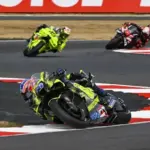

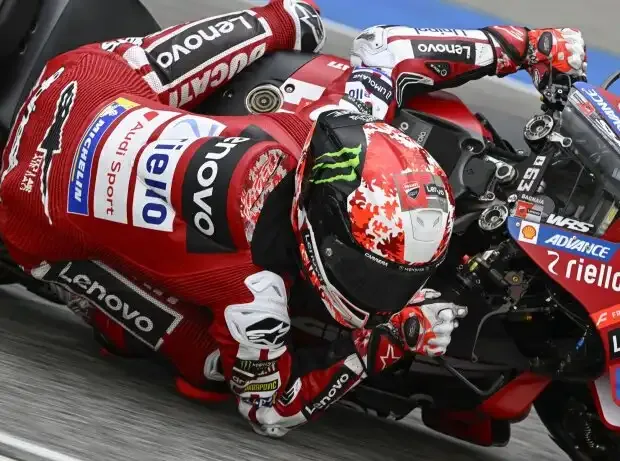
– As if the start of a new season hadn’t already brought a high dose of uncertainty and nervousness, several riders in all three classes faced an additional source of stress at the opener in Thailand.
Read more Coulthard warns Aston Martin: “Massive penalties” loom during Honda catch-up
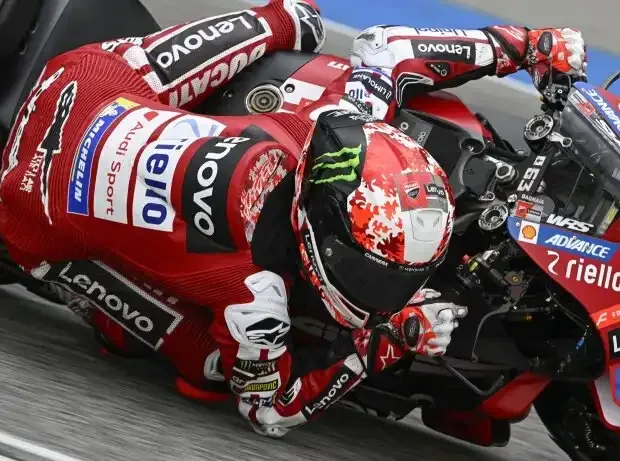
Paradoxically, the disruptive factor was of all things the helmet, the very piece of equipment designed to protect the racer’s head as best as possible.
The problem, which affected Francesco Bagnaia, Enea Bastianini, and Diogo Moreira from the MotoGP field, among others, led to unusual situations, including the case where one rider, namely Bastianini, used helmets from two different manufacturers during the same event.
Changes to the safety protocol for helmets
The cause of the confusion lies in the latest homologation standard prescribed by the Federation Internationale de Motocyclisme (FIM), known as FIMFRHPhe-02. It came into force this season, although the world governing body had announced its introduction three years ago.
In addition to revised impact tests for helmet shells, which are now significantly stricter, particular care was taken to ensure that visors cannot come loose in the event of a fall.
These changes pushed manufacturers to their limits, so that more than one was not ready in time for the first two days on track in Buriram. In addition, helmet brands must obtain separate approval for every single size, which further complicates the certification process.
Certification labels collected from Switzerland
The most striking case in Thailand concerned the PT Tara Group, an Indonesian company that owns KYT and Suomy. KYT is the brand that equips Bastianini and Moreira, while Suomy supplies Bagnaia.
Read more Bugatti Bolide in Miami: Trackday for the most extreme hypercar
The helmet sizes for the two Italians and the Brazilian only received homologation on Thursday afternoon after passing laboratory tests in Aragon.
Photos: MotoGP: 2026 season opener in Thailand (Buriram)
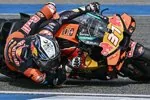
The problem, however, was that the certification labels can only be printed at the FIM headquarters in Mies, Switzerland. Therefore, a PT Tara employee had to fly there, pick up the labels on Friday, and then fly on to Thailand via Doha, where the Grand Prix was taking place.
Helmet designs replicated, but without brand logo
Fearing that the homologation confirmation would not arrive in time for the Friday and Saturday sessions, the three affected riders obtained already approved alternatives from competing manufacturers.
All had their usual helmet designs replicated while the actual brand was hidden to avoid potential legal issues. On Friday, Bastianini rode with an Arai model, but he didn’t feel completely comfortable with it. Therefore, he switched to an Alpinestars helmet on Saturday.
Bagnaia, who gets his leathers from Alpinestars and is an important brand ambassador, appreciated the attention shown to him: two members of the racing department stood at the entrance of the Ducati garage and followed his feedback.
- Formula 1Coulthard warns Aston Martin: “Massive penalties” loom during Honda catch-up
- Formula 1How Red Bull Ford’s new engine project fared in Australia
- Formula 1Why Hülkenberg couldn’t drive at the Audi debut
- IndyCarIndyCar Phoenix 2026: Mick Schumacher without a chance after pit lane bad luck
On Sunday, everyone finally competed in the warm-up again with their regular helmets, which were now equipped with the correctly sewn-in certification labels.
Read more “Painful” start: Williams is missing “at least half a second”