





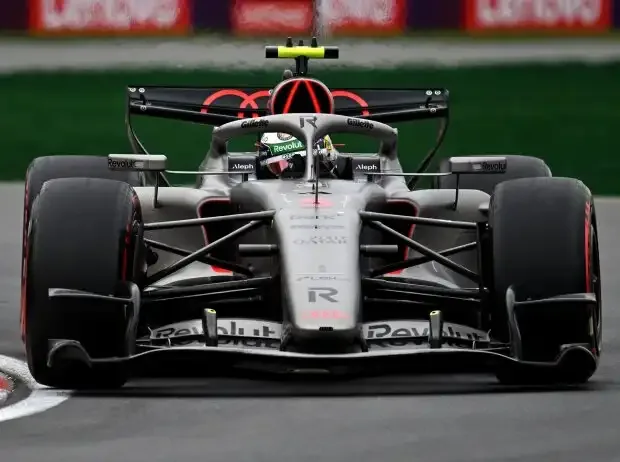
– Mattia Binotto has very clear ideas about Audi’s goals in Formula 1 – especially in the long term. This is important because it means having a precise roadmap for the steps needed to turn ambitions into a concrete plan for the path to the top.
Read more From Benetton to Gucci: Does Flavio Briatore close the circle in Enstone?
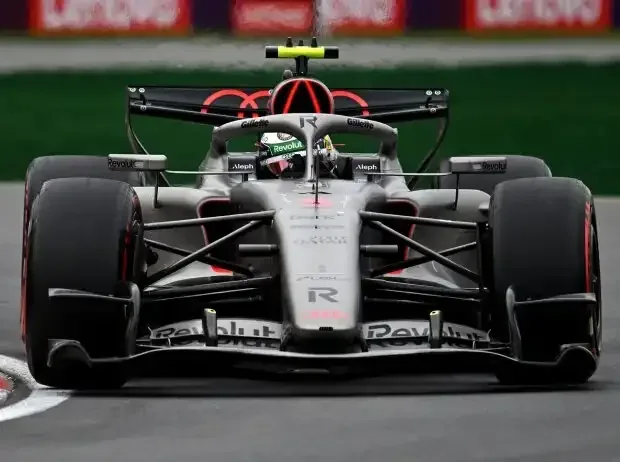
In recent months, the team principal has confirmed this several times: Audi’s goal is to fight for the world championship by 2030. No rushed scenarios, but a clearly defined plan. And in the meantime?
Binotto has also developed a step-by-step plan together with the team and the brand’s leadership. Because transforming a team that is among the smallest in Formula 1 in terms of personnel into a top racing team takes time. It is a process that develops both through people and infrastructure.
“We have coordinated and discussed this with the team, and as much as we have set a goal for 2030, we also have a roadmap to get there as well as goals for 2026. The first step is to become competitive as a team and maybe be a challenger, and then a real potential winner,” says Binotto in the podcast Beyond the Grid.
“2026 is our first season as Audi, and becoming competitive is basically what we have set as our ambition and goal for the season. It’s not about the number of points, not about the number of Q3 appearances or certain positions in the championship. It’s about a change in mentality,” he explains.
Why “mentality” matters according to Binotto
This is one of the key points Binotto emphasizes. Building a team at world championship level requires more than top-notch facilities and highly qualified engineers. It also requires a winning mentality.
It is only logical that a team that has so far fought in the lower midfield with a limited budget must also make a big step forward in this regard.
“Becoming competitive means that every individual in the team understands what it means to compete and to be Audi. No longer, as we said before, to be satisfied with participation, but to leave no stone unturned to develop further, raise the bar higher, and increase the challenge to get better from race to race.”
Audi conclusion: Has Red Bull built the better F1 engine?
“I would be very satisfied if this mentality at the end of the season is not only obvious to ourselves but also from the perspective of fans or the media when they see the transformation of a team where at the end of the season everyone recognizes: Audi has arrived and is serious,” says Binotto.
The work is multifaceted but interconnected. Recruiting top engineers from other teams who have already won can undoubtedly strengthen this process.
That is why, for example, Jonathan Wheatley was chosen before his departure to lead the team: not only because of his knowledge of the regulations and the best engineers in the paddock but also because of the winning mentality he developed at Red Bull.
Does Audi really have a better chassis than Red Bull?
It is no coincidence that Audi has opened a factory in England to attract new personnel while simultaneously working on expanding the facilities in Hinwil to accommodate the new employees in Switzerland.
However, the Hinwil location itself is particularly interesting because there, in the former Sauber factory, the chassis and aerodynamics of the car are developed, while the power unit is designed in Neuburg, Germany.
Read more Mattia Binotto confident: Audi perhaps has the fourth best chassis
At the start of the season, Binotto spoke about the strengths and weaknesses of the R26 and explained that according to data analysis and GPS estimates, Audi has the fourth-best chassis on the grid, probably behind Ferrari, Mercedes, and McLaren, while Red Bull is further behind but credited with the second-best engine.
Photo gallery: Crashing failures: These Formula 1 mega projects were never successful
“I am very satisfied with the chassis,” emphasizes Binotto and explains: “This is confirmed not only by the GPS telemetry analyses but also by the drivers. Above all, we have achieved a good correlation between wind tunnel and simulator. That was the most important point from an engineering perspective. We have also made a step forward in our processes and methods.”
“I think our car is quite fast in the corners. We believe that we might even be the fourth-best team in terms of chassis, which is an outstanding result for a former Sauber team. This shows that the current momentum in Hinwil regarding organization, personnel, and development is working. I also see the progress we are already making during the 2026 season in the wind tunnel.”
This assessment confirms once again, as Binotto has emphasized several times, that Audi still has a deficit on the power unit side, which should lead to improvements in this area through ADUO in the future.
Why bigger leaps are not possible in 2027
Looking at the big picture, the real surprise is not that Audi is behind the more experienced manufacturers here (after all, it is Audi’s first Formula 1 engine), but rather that Red Bull Powertrains has developed such a competitive unit right from the start.
With a solid base in the chassis, which still has room for improvement compared to the top teams, the goal is to make a decisive step forward in the power unit.
Binotto considers it unrealistic to close the gap already in 2027, which is why 2028 is seen as a much more credible target, regardless of how the rules develop. This is not only about pure performance but also about drivability. These are two aspects that must work perfectly together.
“On our way to 2030, the next real step will be in 2028 because to achieve wins, podiums, and good results, you also need a great car. It’s not just about infrastructure or team size. You need a strong overall package,” explains Binotto.
“If we measure our gaps to the top teams today, the biggest gap is probably in the performance of the power unit, its control, and drivability, where we believe a significant step is necessary to catch up.”
“When it comes to the power unit, the time required is always greater. The development time for an engine is longer than for aerodynamics. That’s why I say the next big step cannot be a short-term one because we have to change the hardware of the engine.”
- Formula 1Formula 1 back on RTL: “This is a preview”
- MotoGPMugello turnaround for Toprak? “I rode a completely different bike”
- Formula 1Formula 1 technology: The unique diffuser design of Mercedes
- MotoGPRins fights to stay in MotoGP: “I’m waiting for an answer”
“To bring our current engine to the level of the competition, we believe that this will not be possible until 2027, but only in 2028,” says Binotto.
Read more Vincent Vosse warns against selfishness in Convergence 2030: Think of the WEC