

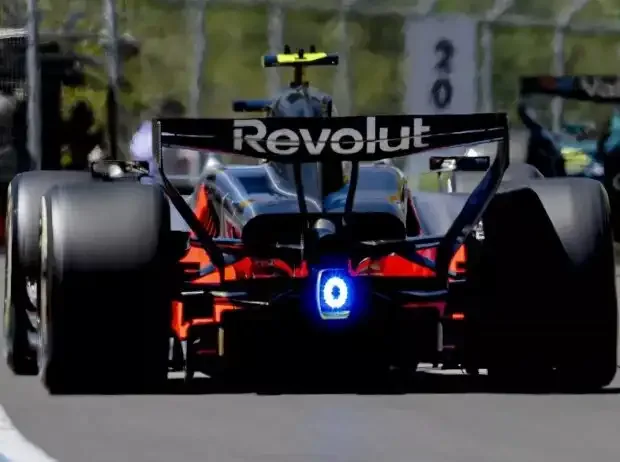
– To increase safety based on driver feedback, the FIA recently and unnoticed tested a new system for the rear LED light in Canada. This system codes the operating status of the MGU-K using three colors – from energy output to the charging process. This will make it significantly easier to understand what is happening on the track.
Read more Kimi Antonelli warns about Monaco: Mercedes not only strong with the engine
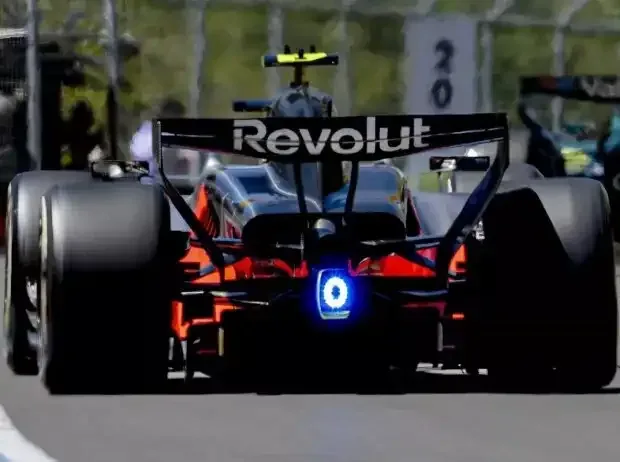
The topic of safety was a strong focus in the first weeks of the new Formula 1 regulations. One of the points raised by the drivers concerns how the operating status of the electric motor is signaled.
For safety reasons, it must be recognizable from the outside in which phase of energy management a car is. Precisely for this reason, the LED lights at the rear have taken on a much more comprehensive and informative role this season than in the past, now acting as a direct indicator for the various operating modes of the electrical unit.
They have been revised for this purpose and expanded with additional functions and, above all, new colors. These make it possible to recognize special situations, such as the presence of a rookie driver on the track or a changed work program compared to the competition – as was the case with Aston Martin during testing in Barcelona.
While the lights only activated during the charging phases of the hybrid system until last year, from this season onwards – also due to a significantly more powerful MGU-K – they must fulfill much more complex tasks.
Photo gallery: Formula 1 Fails: These rule changes were a flop
Instead of just indicating energy recovery, they now signal the operating status of the electric motor via a coded system that distinguishes three different operating modes based on the number of flashes.
Single Flash: If the LED lights flash only once, it means that the MGU-K is still supplying energy but not delivering the maximum power of 350 kW. In practice, the car can enter the derating phase from this moment and lose speed. Therefore, it is crucial for the following driver to immediately see what is happening with the vehicle in front of them.
Double Flash: If the LED lights flash twice in a row, it means that the MGU-K is practically “switched off”: it no longer supplies energy to the system, and the car is running exclusively on the internal combustion engine.
Fast, Continuous Flash: If the flashing becomes fast and continuous instead, this signals what is known as Superclipping. This is the phase in which the electric motor switches to recuperation mode and actively works against the internal combustion engine to charge the battery.
Read more Jorge Martin confirms Red Bull exit: “As of today, separate ways”
However, it was not always immediately obvious for drivers to recognize these modes based purely on rapid flashing, as strong vibrations in the cockpit make it more difficult to perceive subtle differences.
For this reason, the world federation has utilized the capabilities of the new rear LED light and decided to fundamentally revise the signaling system. It was tested experimentally for the first time during the free practice sessions of the Canadian Grand Prix before its final introduction.
Essentially, each mode of the electric motor is now coded by a specific color, instead of indicating the status of the hybrid system through a pure sequence of flashes:
Blue: If the rear light flashes light blue, it means that the MGU-K has stopped delivering the maximum power of 350 kW – which corresponds to what was previously indicated by a single flash.
Purple: If the light glows purple, it means that the electric motor is no longer delivering energy and the car is running solely on the internal combustion engine.
Yellow: If the light turns yellow, however, this indicates that the system has entered the charging phase through Superclipping. Although this has been reduced by recent regulatory changes, it still exists and represents an important tool for energy recovery for the teams.
This new system will provide following drivers with a significantly easier overview of their competitors’ energy levels, but the main goal remains safety.
When the MGU-K switches to charging mode, especially in the Superclipping phase, sudden drops in speed can occur. Therefore, it is essential that drivers can recognize this in advance. The first free practice session in Canada offered the optimal opportunity to collect data and feedback from the drivers before the new coding is finally introduced.
Read more Charles Leclerc: “I never really thought about alternatives”