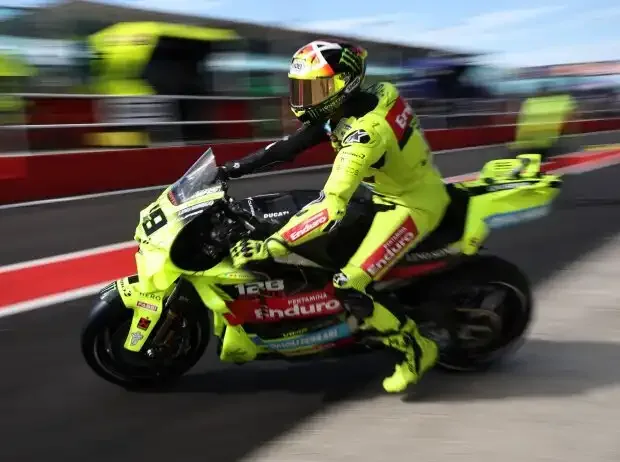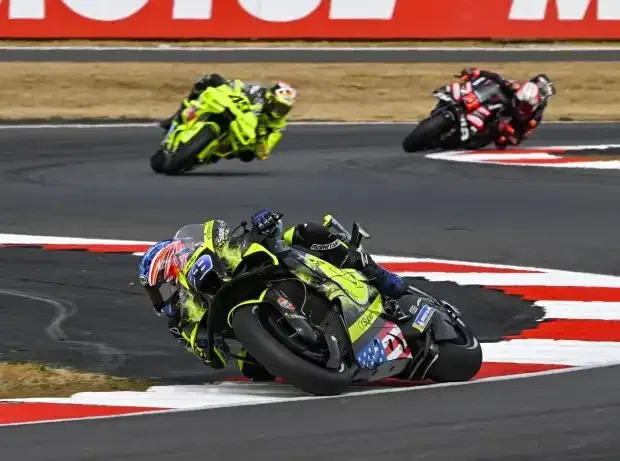



– On July 2, Honda announced the separation from Joan Mir at the end of the current MotoGP season 2026. In the corresponding social media post on that day, the Japanese motorcycle manufacturer wrote: “Three podiums and your fighting spirit as a champion are the outstanding highlights.”
Read more Left bad brother at home: Colapinto relies on new contract

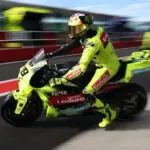
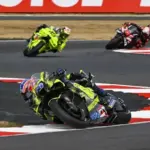
A look at the statistics is enough to determine that Mir, as a Honda rider, has so far only achieved two podiums: Japan and Malaysia 2025. If you think about it briefly, you realize that the Spaniard stood on the podium at this year’s Catalan Grand Prix in Barcelona after finishing second. However, in the official race result, Mir only appears in P13.
What happened? More than an hour after the award ceremony, the MotoGP race commissioners announced that Mir had violated the tire pressure rule. Therefore, they retroactively imposed the prescribed 16-second penalty. The same thing happened last year to Maverick Vinales when he finished second at the Qatar Grand Prix in Lusail but was kicked off the podium more than an hour later for the same reason.
It is a situation that undoubtedly damages the image of the premier class of motorcycle racing and, judging by Honda’s social media post, does not exactly make the teams happy – not to mention the riders and fans.
Since its introduction in the 2023 MotoGP season, the tire pressure rule has repeatedly caused controversy. More or less all observers assumed that the rule would disappear with the change of tire supplier in the 2027 season. However, this assumption is now denied by Pirelli – at least for the beginning of the new era.
“We have always said that we will keep the rule. I don’t know where the opposite comes from,” explains Giorgio Barbier, head of the motorcycle racing department at Pirelli, in an exclusive interview with Motorsport.com Spain, a sister platform of Motorsport-Total.com in the Motorsport Network.
“We have to show great respect to the current MotoGP supplier [Michelin]. If after eleven years together with Dorna they introduced a rule because they believe that riding with low tire pressure could be a danger, then I can’t just say that such a danger does not exist,” explains Barbier.
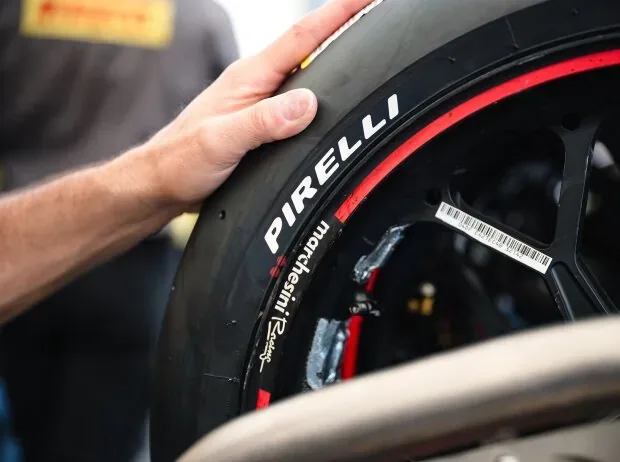
In this context, the head of the racing department of the future MotoGP tire supplier openly admits: “I don’t know the MotoGP bikes in detail yet. Where does this overheating of the front tires come from? From the aerodynamics? From the carbon brakes? From several motorcycles riding in the slipstream, where the aerodynamics strongly heats the front tire for the rear rider?”
Read more Pirelli is still considering: But not the last Formula 1 contract?
“This is a situation that I don’t have like this in the Superbike World Championship. Also in the Moto2 World Championship, I can’t test this situation,” says Barbier, noting that Pirelli has been the sole tire supplier for all teams in the two mentioned racing series for years. Regarding the MotoGP rule that prescribes a minimum air pressure in the front tire, he notes: “So I can’t claim that Pirelli will not have this problem at all.”
The tire pressure rule, valid for three years, requires MotoGP riders to maintain the air pressure in the front tire during Grand Prix races for 60 percent of the laps, and during sprints for 30 percent of the laps, above 1.8 bar. If these limits are not met, there is a time penalty: 16 seconds in the Grand Prix and 8 seconds in the sprint.
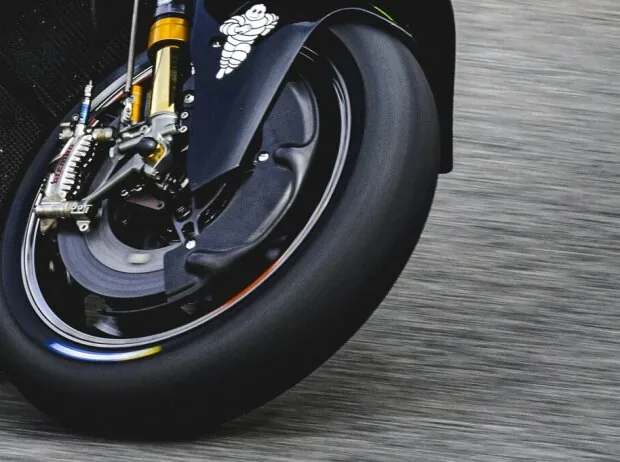
At least: Barbier leaves a door open that the controversial tire pressure rule could disappear at least in the medium term: “The fact is that we have a different construction, different materials, and different operating pressures. I don’t believe that a Pirelli tire works better at 1.4 bar than at 2.0 bar. Therefore, we will probably not have this problem,” he says and goes further into detail.
“If we relate it to the correct pressures for Pirelli, we have to wait and see if it becomes a problem when the pressure falls below the limit. Therefore, we will keep the rule for now, hoping that we won’t have to apply it. After that, we will decide whether to change or abolish it,” says Barbier.
A difference to Michelin is that Pirelli tires apparently behave more consistently with changing pressure. “What I noticed is that the tires of the current supplier react very sensitively to changes in pressure. If a certain value is exceeded, there is a great risk. With our tires, we have a relatively wide operating pressure range,” describes Barbier.
- Formula 1Formula 1 live ticker: The practice sessions for the Belgian GP in Spa live!
- Formula 1“Shock to the system”: Spa reveals the problem of Formula 1 2026
- MotoGPJorge Lorenzo praises Marc Marquez: “Today the smartest rider”
- MotoGPWhy Alex Marquez and “Diggia” switch from Ducati teams to KTM
“The manufacturer has the choice. The behavior of our tire does not change too much at different pressure values,” says the Pirelli official and finally admits that the negative image when a MotoGP rider is demoted in the results an hour after the race is something “we can no longer accept.”
Read more Jorge Lorenzo praises Marc Marquez: «Today the smartest rider»