







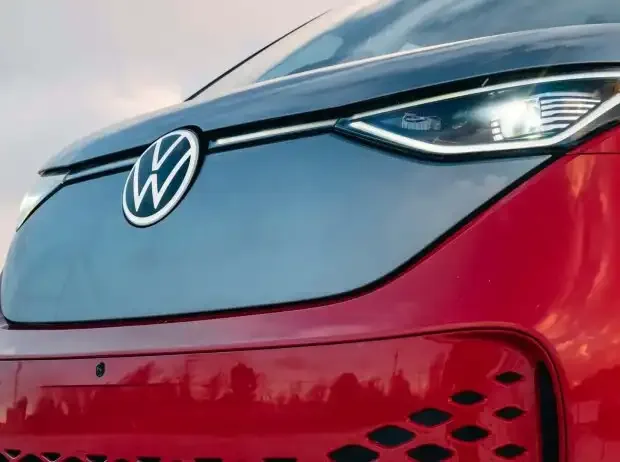
(Motorsport-Total.com/Motor1) – The VW ID. Buzz struggled with initial difficulties but is slowly coming into its own. Last year, 8,565 vehicles were sold in Germany, and in 2026, it’s already 5,254 units. With 60,700 units delivered worldwide in 2025, the ID. Buzz, however, was the eighth best-selling electric car in the Volkswagen Group.
Read more Ducati CEO defends Spanish duo: “Don’t choose by passport”
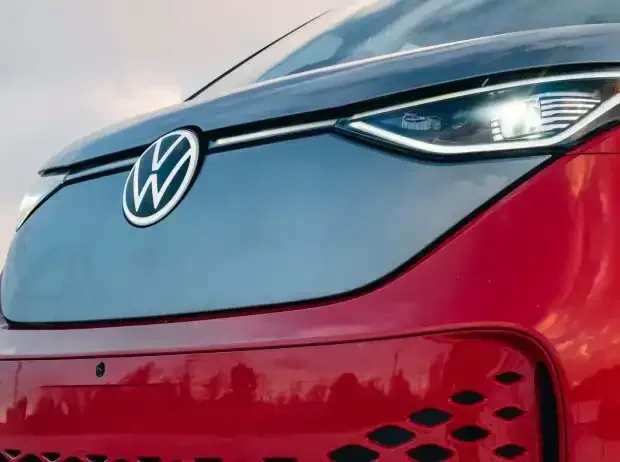
Demand for the retro-look electric van and its commercial vehicle offshoot has thus doubled compared to the previous year. A flop actually looks different. While the electric passenger transporter is slowly developing in Europe, it is struggling in the USA. Only 6,140 units were sold there, which led to the surprising decision to cancel the 2026 model year and first reduce the inventory of the 2025 model year before the ID. Buzz returns for 2027.
The hesitant sales in the USA are also due to the rather modest range of the rear-wheel-drive model, under 400 kilometers according to WLTP, combined with a high entry price of 61,545 US dollars there as well. When VW announced that the ID. Buzz would skip the 2026 model year, the company did not cite range or pricing as reasons for the van’s one-year hiatus.
Instead, they referred to the generally weak acceptance of electric cars in the USA and spoke of a “strategic decision” based on a “careful evaluation of current market conditions for electric vehicles”.
But now hold on to your hat. It became known that VW had indeed explored a way to make the ID. Buzz more attractive for the USA by mitigating range anxiety with a gasoline engine as a generator. In an interview with an Australian magazine, the head of Volkswagen Commercial Vehicles explained that a range-extender version was indeed considered at one point.
Photo gallery: ID. Buzz with gasoline engine? VW tested range extender concept
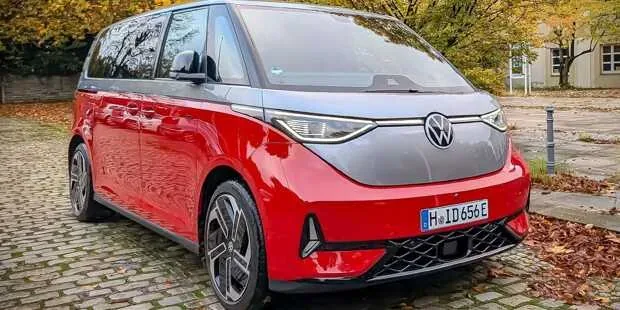
Stefan Mecha told GoAuto that while the concept of a REEV powertrain was investigated, engineers ultimately encountered packaging problems. The short front overhang of the ID. Buzz leaves absolutely no room for an internal combustion engine, as the MEB platform was developed exclusively for battery-electric vehicles.
Read more Audi suddenly scores points: Is seventh place in the World Championship now realistic?
More than 20 models use this dedicated architecture – from the ID.3 to the ID.7. These are not exclusively Volkswagen Group products, as the Ford Explorer and Ford Capri are also based on the modular, rear-wheel-drive-oriented platform.
Even if an ID. Buzz with a range extender is not coming, the VW Group recently introduced its first REEV in China. The ID. Era 9X, developed jointly with SAIC, is a large six-seater SUV. It uses a 1.5-liter gasoline engine as a generator to charge the battery, thus reducing charging stops. The new Group brand Scout will also offer range-extender versions of the Traveler and Terra in the USA when the SUV and pick-up go into production from 2027.
At the end of last year, Bloomberg reported that the Volkswagen Group is generally evaluating range extenders for Europe and the USA. This would be plausible, as the long-awaited SSP platform is being developed to accommodate internal combustion engines that operate exclusively as generators. SSP is intended to replace all current electric platforms of the Group in the long term. A debut in a production Audi is possibly expected in 2028, followed by models from Porsche and Skoda.
- Formula 1Explained: Are F1 drivers really remotely controlled by AI in the car?
- IndyCarRLL reverts to two cars in 2027 – Mick Schumacher facing team change?
- MotoGP“Your Grand Prix”: Officials explain the success of the Sachsenring
- Formula 1Audi suddenly scores points: Is seventh place in the World Championship now realistic?
More about the cute e-bus:
VW ID. Buzz becomes a camper: Good night package costs 2,600 Euros
75 years of VW Bulli: Special models of the Multivan and ID. Buzz
Read more Ferrari with a chance to win in Hungary? Why Team Principal Vasseur remains cautious