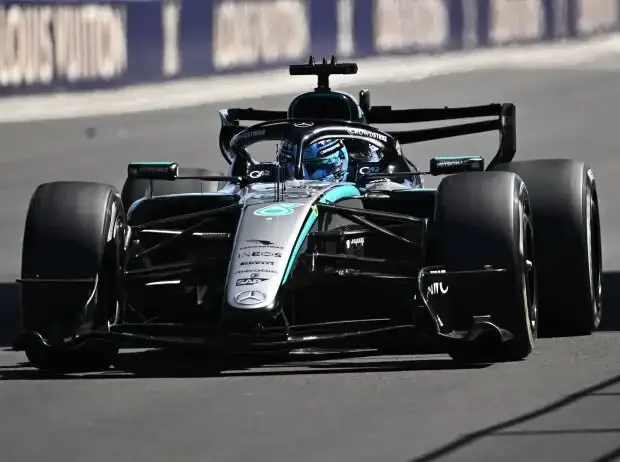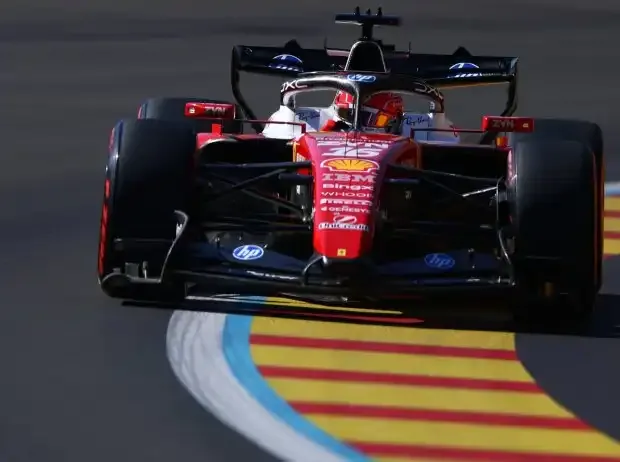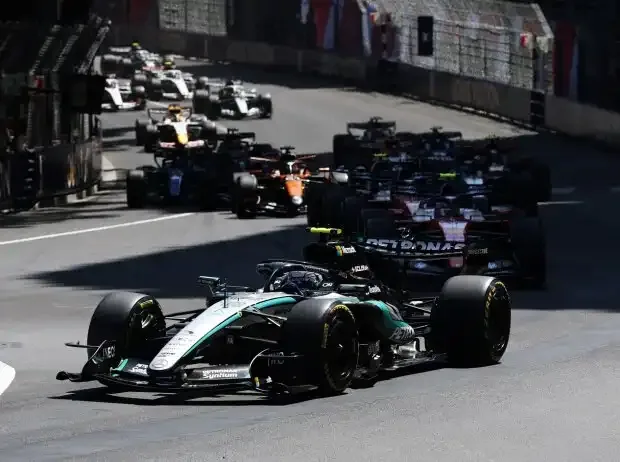




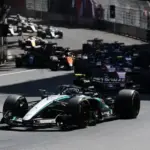
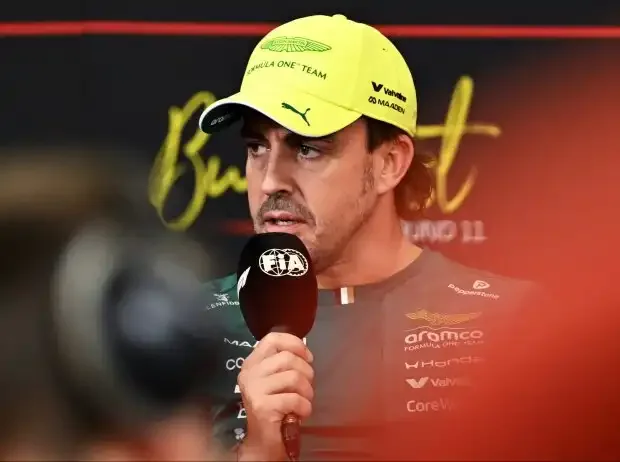
– Aston Martin is bringing a virtually completely revised B-spec chassis to the Hungaroring this weekend, but Fernando Alonso is doing his best to temper the high expectations in the paddock.
Read more Hadjar proves skeptics wrong: The silence about the 2nd Red Bull seat
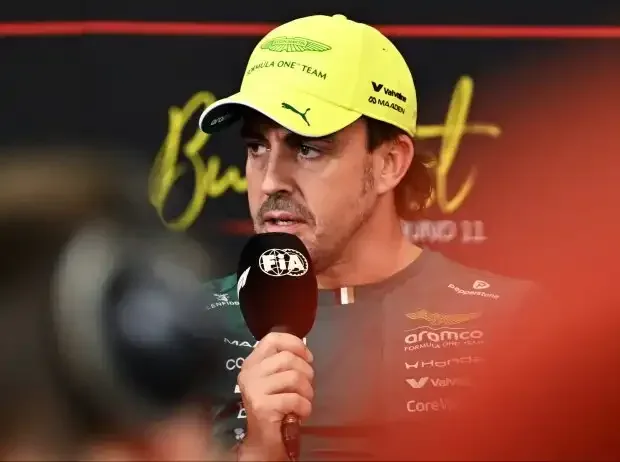
After a catastrophic season so far in 2026, the traditional British racing team – apart from a lucky point scored by Alonso in Monaco – is at the bottom of Formula 1. The Spaniard now makes it clear that even the long-awaited major update will not work wonders.
“There is no package in this world that gives you that much time,” says the Spaniard, referring to the current deficit of around five seconds per lap in race pace. “Probably nothing would have changed in our position, even if you had driven the updated car a week ago in Spa. That’s exactly how we have to approach and view the matter.”
The numbers from recent weeks speak a clear language: most recently in Spa-Francorchamps, Alonso and his teammate Lance Stroll qualified for the very last row of the grid for the fifth time in a row. The gap to Sergio Perez’s Cadillac ahead of them was a gigantic two seconds.
While the US competition has continuously developed its car, Aston Martin deliberately held back with updates to tackle fundamental problems with the AMR26 at the root.
Alonso calculates: No update will make up two seconds
At the Hungaroring, the moment of truth arrives with a drastically modified chassis including new aerodynamics and reduced mass, before an engine update is to follow only after the summer break in Zandvoort. But while Perez at Cadillac suspects that Aston Martin will “definitely” close the gap, Alonso is much more skeptical about an immediate performance leap.
“I’m not thinking so much about numbers, positions or anything like that. Because if we look back at the last five races, we had very different gaps to the midfield,” the two-time world champion clarified on media Thursday. The fundamental problem lies in the sheer size of the deficit, which a single aerodynamic package simply cannot make up.
Without grid penalty: Could McLaren have won in Belgium?
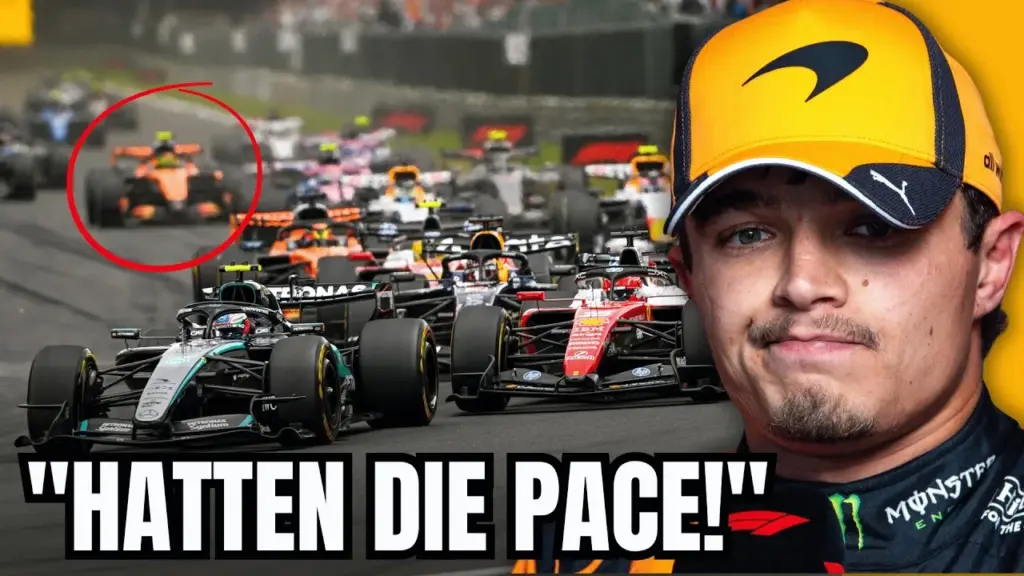
“We had a more or less constant gap to pole position, which is currently unattainable for us, of course. But there were a few extremely difficult tracks: Silverstone was tough, and Spa was one of the hardest tracks ever – there the driver directly in front of us was 2.1 seconds away,” the 44-year-old calculates.
Hope for Budapest and understanding the direction
A small glimmer of hope remains for the Hungarian Grand Prix, as far as the pure track profile is concerned. The tightly winding circuit does not necessarily demand the highest engine performance, where Aston Martin is still at a disadvantage due to the pending Honda update.
“It will differ from racetrack to racetrack. Hopefully, Budapest is a track that suits us a bit more. Engine performance is not the decisive factor here – and we are still updating the engine, but only later,” Alonso explains.
Read more Perez sounds the alarm in Budapest: Is Aston Martin now catching up with Cadillac?
“So we still have a deficit to make up. For me, it’s mainly about understanding the direction of the car. Whether we are on the right track and whether we can ultimately unlock the performance.”
The superstar’s statements exactly match the tenor of the team management from Silverstone. At Aston Martin, this weekend is all about targeted expectation management. The fact that a racing team essentially brings a complete B-spec car to the start in the middle of the season has become an absolute rarity in modern Formula 1 regulations. Accordingly, the primary goal in Budapest is to get to know the new material and collect data.
Krack slows down: “No tests like in winter”
Aston Martin’s trackside director, Mike Krack, underlines the complexity of this mammoth task. The main challenge lies in the fact that the team has no test kilometers available outside of the race weekend.
“When you bring such substantial upgrades, the team at the racetrack has to learn to understand them as quickly as possible,” Krack points out. “We don’t have winter tests where you can just do a few runs and back-to-back comparisons. That puts an extreme amount of weight on the quality of your data and the understanding of your simulations.”
Krack therefore also warns against expecting miracles on the stopwatch from the first free practice session: “We by no means expect to get everything out of it on the first run tomorrow. We have to learn to deal with it and get the best out of it. We have a good trackside team and a strong support team in the factory who will analyze this quickly. We will draw the right conclusions quickly, but it will take some time.”
Fundamental work is in the foreground
Instead of reaching for the stars, the engineers around Adrian Newey and Mike Krack will be busy with painstaking tuning work in the coming weeks to understand the redesigned car (including a return to the high-rake concept) on the track.
“I think the fundamental tests we have to do – be it regarding ride height, the car’s rake and all these things – will extend over the next events,” Krack concludes.
- Formula 1Aston Martin ignites the restart: What the Hungary update is supposed to change
- Formula 1Hadjar proves skeptics wrong: The silence about the 2nd Red Bull seat
- DTM“I’ve seen data”: Scheider explains why Glock is powerless
- MotoGPNew Honda era from 2027: Quartararo gets experienced crew chief
For Aston Martin, this weekend is by no means a “do-or-die,” but rather the first step in a long learning process. Whether the B-spec AMR26 will at least bring the team closer to Cadillac and the back of the midfield will be shown in the first sessions at the Hungaroring.
Read more Perez sounds the alarm in Budapest: Is Aston Martin now catching up with Cadillac?