




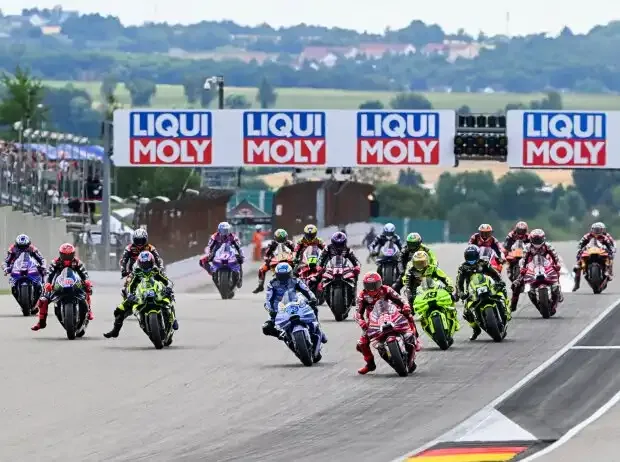
– Shortly before the start of the current summer break, two new rules were introduced in the 2026 MotoGP season.
Read more New Porsche Team: Addition for the GT3 class of the NLS
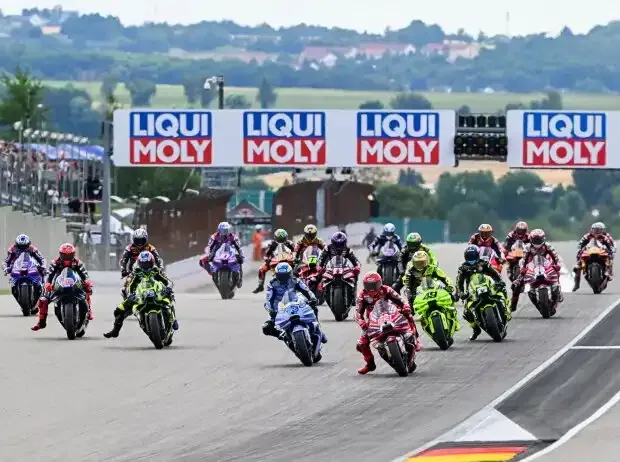
At the end of June, the first two MotoGP race starts in years took place at the Dutch weekend in Assen without a holeshot device. The ban on the electronic start aid, which primarily prevented wheelies, is a measure intended to increase safety and reduce the risk of start accidents.
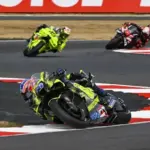
For the same reason, two weeks later, at the German weekend at the Sachsenring, the second rule change was introduced, namely a greater distance between the individual starting rows on the grid. While there were previously nine meters between two starting rows, since the Sachsenring weekend, it is now twelve meters for all three World Championship classes (MotoGP, Moto2, Moto3).
Both changes, i.e., the ban on the holeshot device and more distance between the starting rows, are binding and apply to all future race starts, whether they are sprint starts or Grand Prix starts. There were numerous reactions from MotoGP riders directly at the Assen weekend regarding the ban on the holeshot device. Opinions on this were quite divided.
Since the Sachsenring weekend, MotoGP riders now also have an impression of how the greater distance on the grid affects practice. Not everyone is (yet) of the same opinion on this topic either.
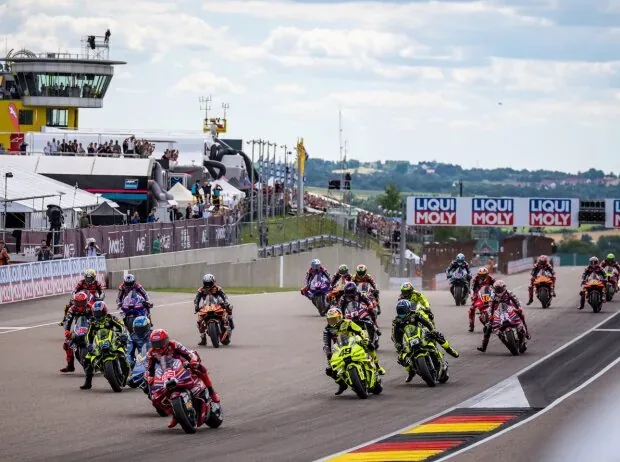
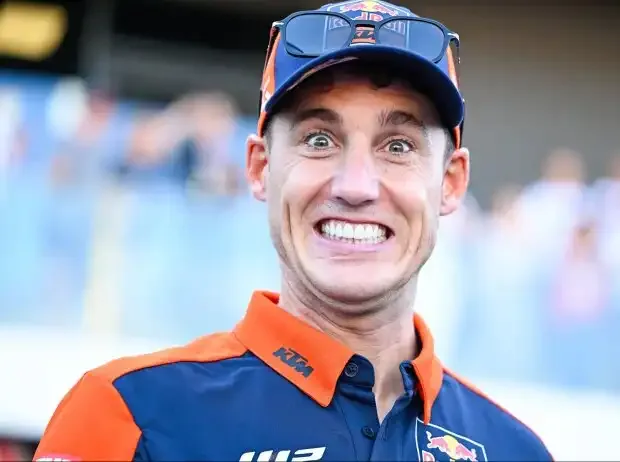
“This is the first rule change in terms of safety that actually provides more safety,” says Pedro Acosta about the new distances on the grid. “If you have a good start, you can overtake the people from your starting row in the first corner. Overtaking someone who starts a row further ahead has become significantly more difficult. That basically only works when braking.”
“The core of the matter, however, is that now, when you arrive at the first corner, you might have one or two riders next to you, but not five at once,” says Acosta, explicitly classifying the innovation valid since the German weekend as positive.
MotoGP rookie Diogo Moreira says: “I think it’s better. However, it’s hard to say if it’s really better in the long term. Overtaking has definitely become more difficult in the first few meters. But that’s the same for everyone, and that’s why I think it has become safer overall.”
When asked if qualifying now has even more importance than before, given that the distance to the next better starting row is three meters more than it used to be, Moreira replies: “Absolutely! It’s now more important than ever to start from the first or second row, because overtaking at the start has become more difficult. This is especially true for tracks like the Sachsenring. So yes, doing a good Q2 has become all the more important.”
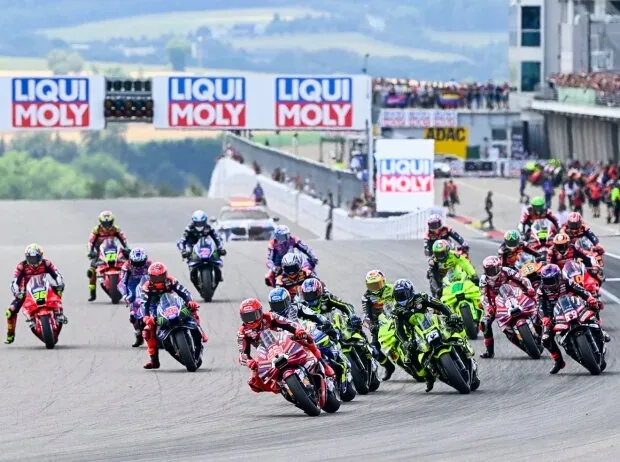
Alex Marquez also points out that “it has now become significantly more difficult to make up positions at the start.” He noticed at the Sachsenring weekend: “Unless someone makes a big mistake, it’s almost impossible to even get level in the first corner.”
Read more Antonelli: Budapest was the wrong choice to give up training
Alex Rins even calls it “crazy how many fewer overtaking opportunities there are now at the start.” At the same time, the MotoGP veteran emphasizes: “It has certainly become a bit safer, no question.”
Enea Bastianini sounds very similar, saying: “In terms of safety, the greater distance is probably positive. In terms of overtaking opportunities, it’s worse now. But if you consider what has happened in the past, it is definitely much safer now.”
Jorge Martin, who leads the 2026 MotoGP overall standings during the current summer break, says with reference to the Sachsenring weekend: “The main difference is probably that we now have a bit more space to react if something happens. This time nothing happened in the first corner. So it’s probably a good change.”
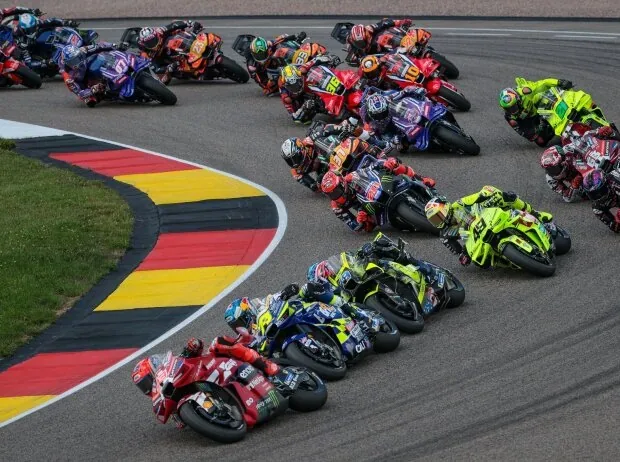
Former world champion Fabio Quartararo is one of those who did not notice too much difference, at least at the Sachsenring weekend: “In my opinion, it’s the same as before. Yes, we have a bit more space now, but I wouldn’t say that makes a big difference.”
“If we have more space, we will try to find a gap when braking. That means that in the end, we will brake later again. That’s why I don’t think it really helps, but for me, it’s not a big problem,” says Quartararo.
Ai Ogura sees it like Quartararo and says: “I don’t feel any difference when I compare the starts before with the starts now. For me, it’s okay.” And Luca Marini, who usually starts relatively far back since his move from VR46-Ducati to Honda, also says: “For me, it’s not a big difference, but I think it’s a good change. It’s fine.”
Brad Binder, on the other hand, expresses some criticism after the premiere of the new grid distances. For him, starting at the Sachsenring was “terrible,” as he says. Why? “I can’t overtake nearly as many people as before. Even with a good start, I can now perhaps overtake one row, but not two rows.”
“In terms of safety, it is certainly the right measure. Whether it is also right in terms of the show, we will have to wait and see,” says Binder, looking ahead to the second half of the 2026 MotoGP calendar.