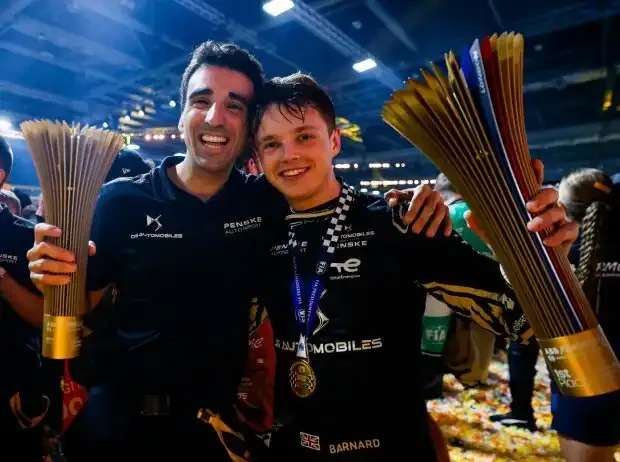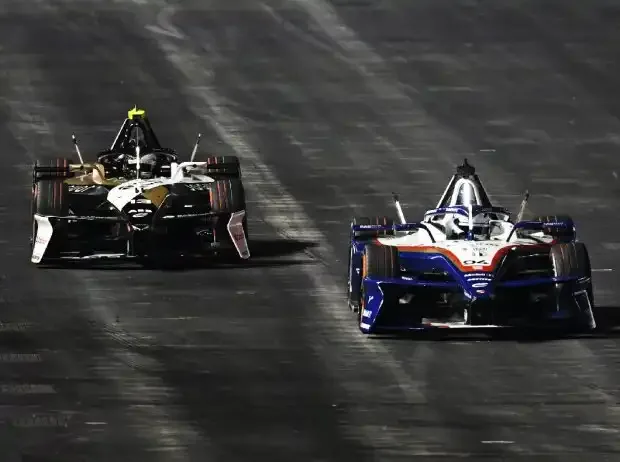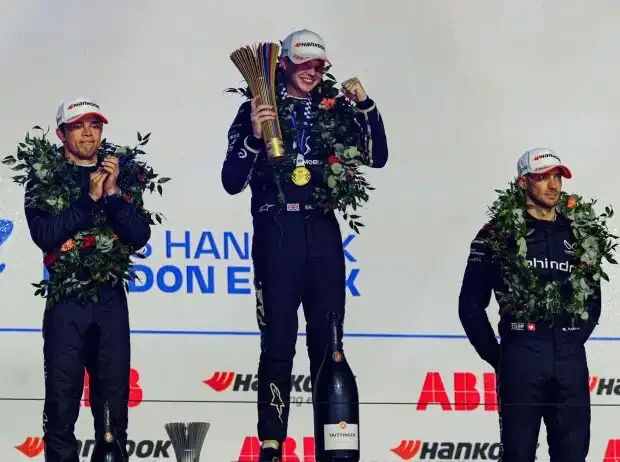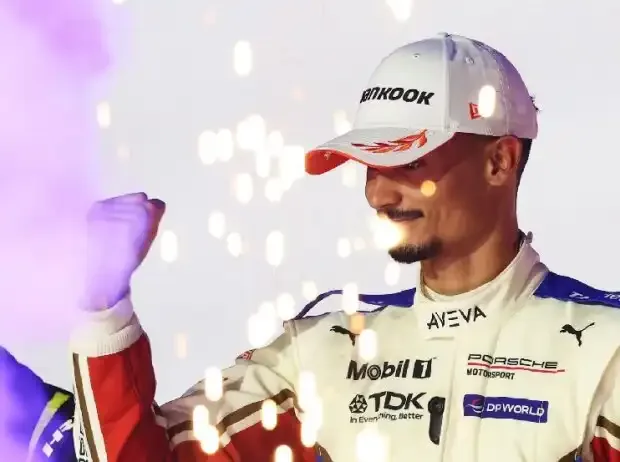



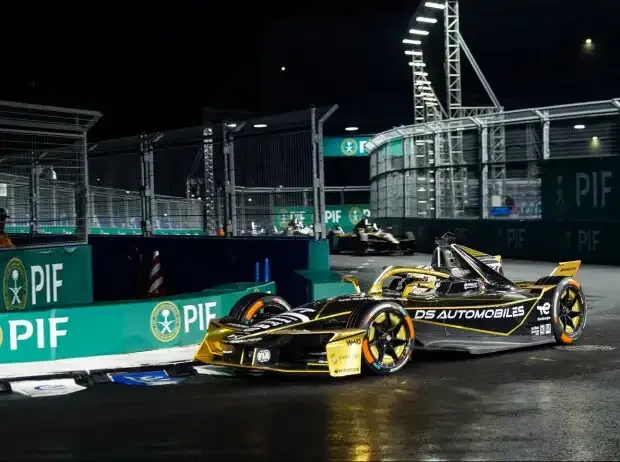
– There are days when things don’t go as hoped, and brave drivers are not rewarded. Although a podium finish – or even a victory – seemed within reach for young Taylor Barnard of DS-Penske in Sunday’s 2025/26 Formula E Tokyo E-Prix race, neither the weather nor the race progression favored him. Here are the facts.
Read more “Wants to dedicate victory to him”: Bortolotti with emotional message to Maximilian Paul
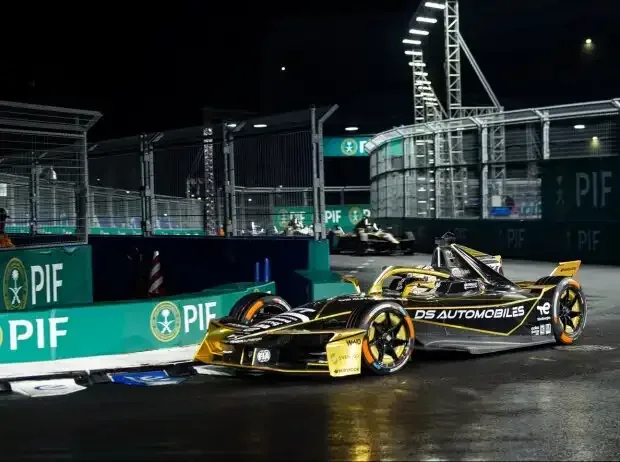
As so often this week in Tokyo, the sun shone in the morning, but the sky clouded over in the early afternoon. Sunday was no exception, as a thunderstorm darkened the sky. The heavy rain that poured down on the Tokyo street circuit meant that all participants had to be moved to a safer location than the pits, and also resulted in the cancellation of the weekend’s third free practice session.
It was only in qualifying – on a track that was in slightly better condition but still had wet patches – that the two DS-Penske cars were seen in action. In the first of the two groups, Taylor Barnard appeared confident.
After a very solid final lap, he finished third in that session, just seven thousandths of a second behind Mitch Evans’ Jaguar. In Group B, Maximilian Günther was also present. However, his best lap was disallowed due to exceeding track limits – always a delicate balancing act in a “time attack” session.
Barnard met Mitch Evans in the quarter-finals of qualifying. The duel promised pure excitement, with Barnard getting the most out of his DS E-Tense FE25. Without making a single mistake on the slowly drying track, he beat his opponent by more than half a second. In the semi-finals, he met another Jaguar, driven by Antonio Felix Da Costa. This time, however, Barnard failed to make up a slight deficit from Sector 1 and secured fourth place on the grid.
A Race Full of Drama
Converting a good starting position into a strong result is exactly what sets Taylor Barnard apart. For Maximilian Günther, who started the race from 14th place, good energy management can also make the difference, while both cars of the French-American team had shown good pace throughout the weekend.
This time, the race was 33 laps instead of Saturday’s 36, and drivers had eight minutes of Attack Mode available. However, the Pit Boost – which had been mandatory on Saturday – was not on the agenda. This forced the teams to completely rethink their strategy, especially as rain would once again throw a spanner in the works.
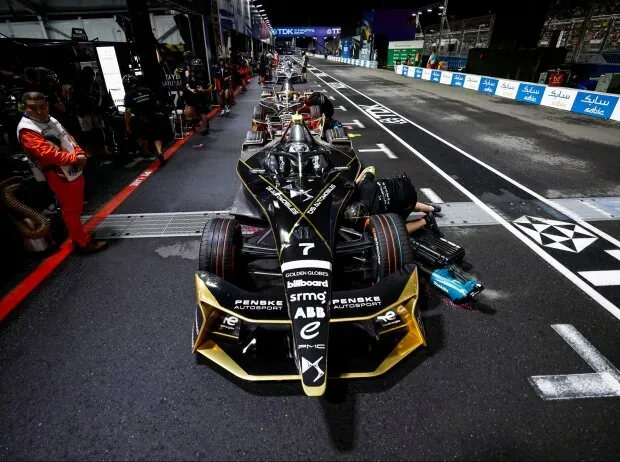
At the start, race control decided to run one lap behind the safety car. Everything proceeded normally. When the lights went out, caution prevailed, and everyone maintained their positions. Satellite data predicted a decrease in precipitation around 8:15 PM, and everyone waited for the best moment to activate the first of their two Attack Modes.
The DS-Penske drivers waited. Among the leading group, Barnard led by example in terms of energy management and settled into third place. His energy displays showed 72 percent, compared to 68 percent and 69 percent for the two leaders. The young Brit felt comfortable at the wheel of his DS E-Tense FE25.
Read more Vote now: Who were the best drivers in Budapest?
However, Pepe Marti (Cupra-Kiro) went off track, causing the race to run under “Full-Course-Yellow” for a few moments while the vehicle was recovered. When the race resumed, we were already halfway through, and the track was still drying. It was at this precise moment that Barnard managed to activate an Attack Mode without losing positions.
It was a clever move he used after making up a deficit of almost three seconds on Edoardo Mortara. First, he overtook the Mahindra driver, and then, in a very successful maneuver, Jaguar driver Da Costa, thereby taking the lead.
There were still 13 laps to go – 234 corners and almost as many opportunities to be attacked. The top 3 still had four minutes of attack mode available, and anything was still possible, but Barnard still had a two percent advantage in terms of battery charge.
Victory in Sight
With a two-second lead, Barnard kept an eye on his rearview mirror and watched his pursuers. Pressure mounted in the DS-Penske garage as a potential victory loomed. Never before had the young Brit come so close to his first Formula E win. But just as Da Costa and Mortara had to ease off the throttle to save energy, Oliver Rowland (Nissan) appeared out of nowhere and pushed his way into the leading group.
Barnard immediately took action and activated his Attack Mode to regain the lead. However, energy reserves gradually equalized, overtakes became more frequent, and the differing energy strategies disrupted the established order.
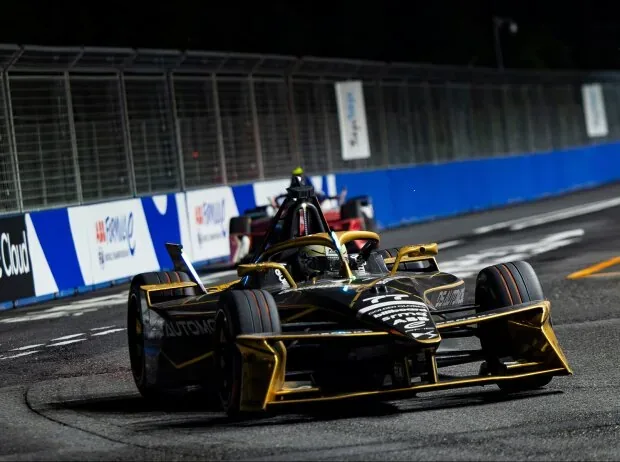
It was a crazy race, and two laps from the end, a multi-car collision prompted race control to wave the red flag. The cars still in the race returned to the pits to await the signal for a restart. In this, Barnard dropped back to 9th place, just ahead of teammate Günther.
These positions remained unchanged until the finish line, with Barnard’s skillful driving and the four places Günther had gained receiving only modest recognition. The next – and final – stop of the 2025/26 Formula E season will take place on August 15/16 in London.
Transparency note: This article was made possible with a production cost subsidy from DS Automobiles. DS had no editorial influence on the article.
Read more F1 Race Hungary: Lando Norris wins, Oscar Piastri retires