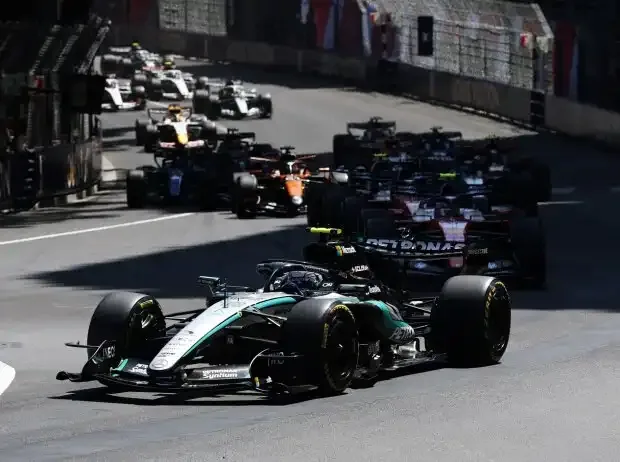








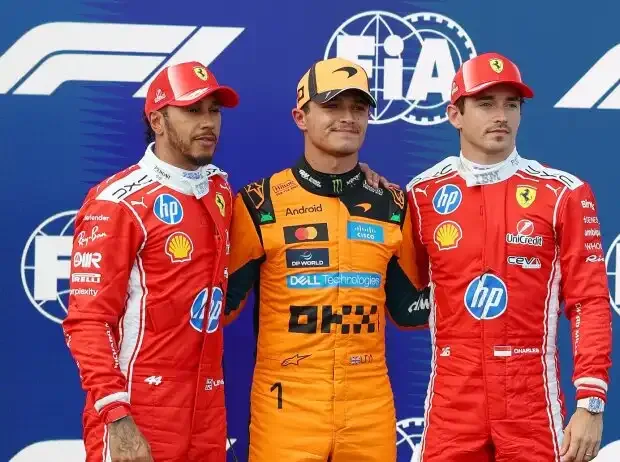
– It’s one thing who won the Hungarian Grand Prix. But under certain circumstances, it’s another which drivers delivered the best performance in Budapest. Because in Formula 1, it’s not just the driver’s performance that counts. But crucially, that of the car at his disposal, and of course, that of the team.
Read more F1 Race Hungary: Lando Norris wins, Oscar Piastri retires
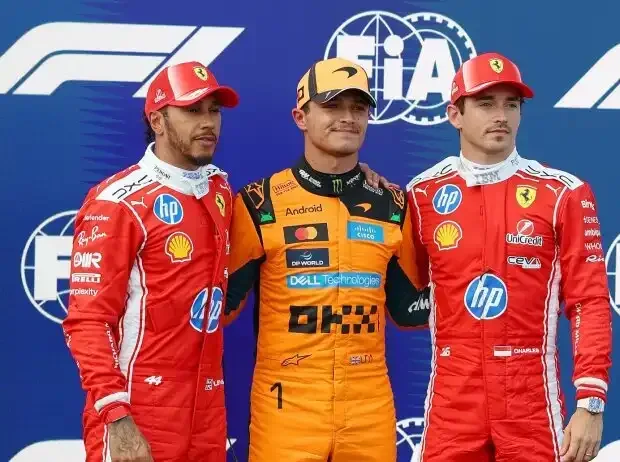
It is extremely difficult to consider the driver’s performance in isolation from other factors. Nevertheless, we dare to try. Our grading system consists of three pillars. Firstly: the fans. Our users now have the opportunity to rate the performances of all 22 drivers. Analogous to the school grading system from 1 (very good) to 6 (insufficient).
Secondly: the expert. Marc Surer, as in previous years, grades the performances of Max Verstappen & Co. And thirdly: the editorial team. We conduct our own small voting within our core Formula 1 team.
The three pillars then each contribute one third to the overall grade for the weekend. The result is the ultimate ranking – which can be wonderfully discussed!

Our format is inspired by the grades that, for example, football magazines award after each match. However, grading only as an editorial team was too subjective for us. To arrive at the most balanced judgment possible, we therefore ask for the help of our expert and our users.
Guide: How should you award your grades?
For orientation: For Grade 1, a driver should have achieved something very special. For example, in relation to his teammate. Grade 2 is a very, very good performance by a world-class driver, who is only missing one special element. Grade 3 and Grade 4 are good or bad average respectively – so actually still quite good!
Grade 5 is then given for rather poorer performances, for example, if a driver is clearly dominated by his teammate throughout the weekend or delivers an average performance and then causes an avoidable accident. Grade 6 should only be awarded in the “Brainfade” category – i.e., if a driver has done something particularly stupid.
Try to evaluate objectively! Of course, this is not always easy. But whether you are a fan of Max Verstappen or Fernando Alonso should not play a role in awarding the grade. No one will ever be able to completely detach themselves from personal preferences and prejudices. But at least trying to do so contributes to a fairer grading system.
Read more Formula 1 Live Ticker: Next penalty for Lewis Hamilton



Don’t be swayed by external influences! The grade should only reflect what the driver himself had control over. An example: Are degrading tires a driver or an external factor? If the tires degrade because the driver braked too late shortly before, this should negatively affect the grade. If the tires degrade due to a material defect, there should be no deductions.
Weight the race most heavily! Only there are points awarded. The performance on race day should account for about 70 percent of the grade. Qualifying 25. And the three free practices a maximum of five. A spin in free practice where a front wing flies off might cost a few minutes of practice time. One on race day might cost the victory.
What about a Sprint weekend? Then the weighting shifts a little. In the Sprint, the winner receives eight points. In the main race, 25. So one could say: Sprint qualifying and Sprint race should account for one third of the grade, qualifying and Grand Prix the other two thirds. And the only free practice is only included in the evaluation if something extraordinary happened there. For example, a crash that jeopardized participation in subsequent sessions.
Remember who is in which car! It’s easier to drive flawlessly with a Mercedes than with a Cadillac. This partly relativizes it when George Russell takes pole with an overwhelming lead and Sergio Perez spins. That might not have happened to him in a Mercedes. But …
… always ask yourselves: If two drivers were in the same car, who would perform better? Thus, one of the less talented drivers, even with a strong performance for him, might at most get a 3 or 4. Because in the same car, even on a good weekend, he would still perform worse than a Max Verstappen on a bad one.
Don’t take it too seriously! Of course, our grading system is an attempt to objectively classify driver performances. Ultimately, this is never 100 percent possible. Everyone evaluates things a little differently for themselves, and that’s okay. That’s why there are three pillars as a mutual corrective. Criticizing others for their opinion is fine. But it should always happen with the necessary respect! For example, in discussions within our community on social media.
Read more Only two top-15 results: Leo Rammerstorfer draws an interim conclusion
- Formula 1Formula 1 Live Ticker: The race in Hungary live now!
- DTMDTM Race Oschersleben 2: Bortolotti snatches victory after Manthey faux pas
- MotoGPFirst reactions from MotoGP stars to larger grid gaps
- Formula 1Formula 1 finds replacement for Bahrain: Malaysia returns after nine years
And now: Have fun grading! Click here for the voting!