

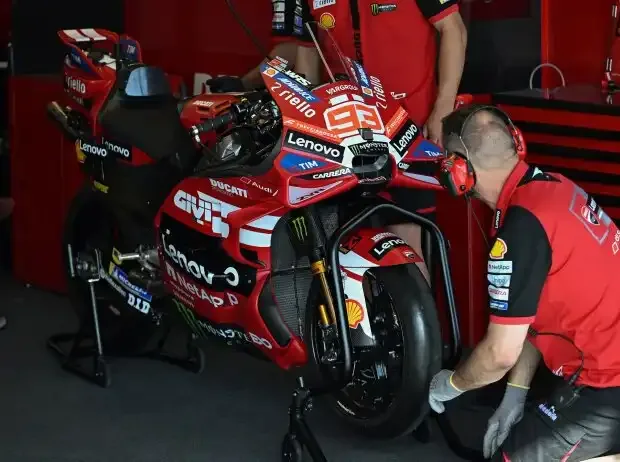
– MotoGP has changed significantly in recent years. Since all manufacturers work with a uniform electronics platform, there is often the impression that the importance of electronics has decreased.
Read more Nine races in eleven weeks: Insider warns of burnout in Formula 1
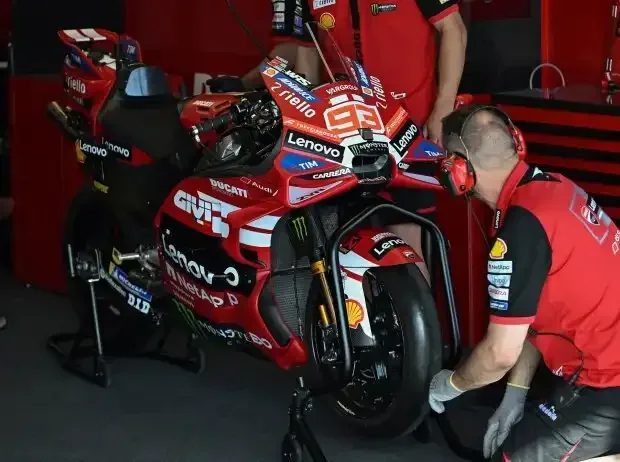
However, Ducati’s technical director Gigi Dall’Igna sees it differently: While the basic systems are the same for all manufacturers, the decisive difference arises from how well a team uses the available tools, interprets the collected data, and develops advantages for the motorcycle from it.
“It is important to have the right tools and the right software to input the best possible data into the uniform software,” explains Dall’Igna in an interview with MCNews. Although the hardware is standardized, the work of the electronics engineers has by no means lost its importance.
On the contrary: The ability to analyze data and derive concrete advantages for the motorcycle is now a central part of success on the track.
“The electronics engineers have a lot of work to do, and they have done a really good job in recent years,” emphasizes the Ducati technical director. This has also shifted the competition in the premier class.
So it is no longer just about who develops the most sophisticated proprietary electronics solution. Rather, it is crucial which manufacturer can interpret data faster and more precisely, develop strategies from it, and build a motorcycle that behaves as consistently and predictably as possible at the limit.
Simulation as the key to MotoGP development
A significant part of this development is simulation. For Dall’Igna, it is no longer just a supplementary tool. “It is now part of the development program.”
Since its beginnings about ten years ago, the software in this segment has developed massively. While there are still areas where the models need improvement, in many areas simulation already delivers very precise results and valuable feedback for the factory.
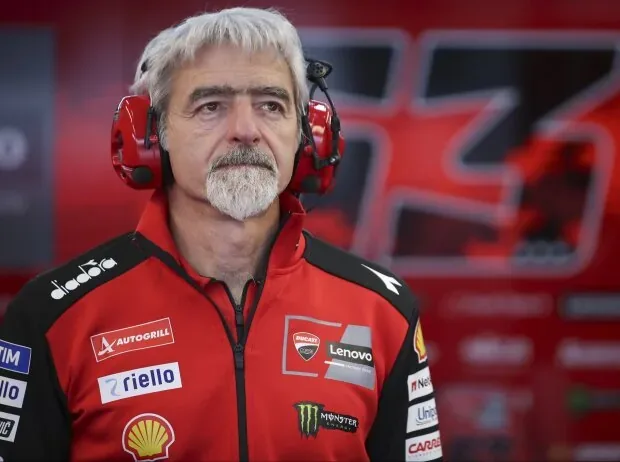
Especially for a manufacturer like Ducati, which has strongly shaped MotoGP technically in recent years, this digital development work is an important competitive advantage. Instead of relying exclusively on test days and real track trials, engineers can already examine numerous variants virtually before a new component even reaches the racetrack.
Battle for details: Engine braking, traction control, stability
When asked in which areas performance can still be found during a race weekend, engine braking is often mentioned. Dall’Igna confirmed its importance but warns against looking at just a single system in isolation.
“That’s true, but it’s not just about engine braking,” explains the Italian. Riders can also influence the behavior of the rear wheel, for example, via the rear brake. This gives them additional options to adjust the motorcycle while riding. “They can control the engine braking to some extent with their foot or thumb,” states Dall’Igna.
Engine braking is indeed an area Ducati works on intensively during a race weekend, but other factors such as traction control and the overall stability of the motorcycle are just as important. Every single area is important.
“Motorsport is incredibly close, and the battle between riders is extremely tight. You really have to work on the details,” explains the Ducati official.
Especially in a MotoGP era where tenths of a second decide victory or defeat, the smallest improvements in electronics tuning, tire management, or rideability can make a decisive difference.
Read more MotoGP before show appearance at the Formula 1 weekend in Austin
Lenovo as a partner: More than just data analysis
An important role in Ducati’s development work is also played by the collaboration with the technology company Lenovo. The partnership is becoming increasingly visible in the MotoGP project. But according to Dall’Igna, the greatest benefit is not just in analyzing rider data during a race weekend.
“We work very intensively with the Lenovo people, especially in the area of simulation,” he says. This is not only about preparation for individual races but about the fundamental further development of the motorcycle. Simulation is used intensively, especially in aerodynamics.
“We simulate many different fairings, various details, and different wing concepts to improve performance,” explains Dall’Igna.
Photo gallery: Dream in red: All Ducati MotoGP bikes since 2003
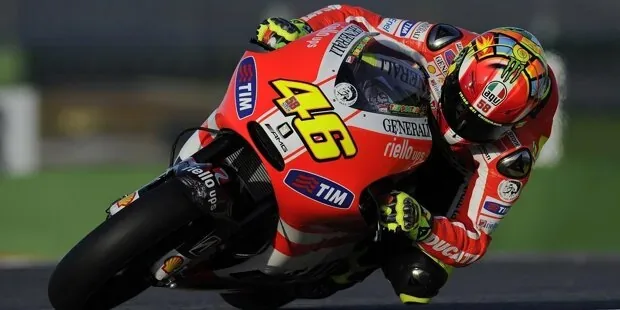
Ducati has also made great progress in tire management in recent years. An important point here is determining the optimal tire pressure.
“For example, we work intensively to set the starting pressure so that we finish the race within the rules but stay at the limit to get the best possible performance out of the tires,” explains Dall’Igna. Especially given the strict tire pressure controls in MotoGP, this area has become a crucial development field.
Artificial intelligence: Additional tool, not a miracle solution
Besides simulation and traditional engineering work, artificial intelligence is also gaining increasing importance at Ducati. However, Dall’Igna explicitly does not see AI as a replacement for traditional technical models but as a complement.
“We work a lot with artificial intelligence,” says the Ducati engineer. The Italian points to the advantages of the technology but also its limits.
“Some aspects of the motorcycle can be better understood with AI than with a normal physical model. In other areas, the physical model is better, and in some situations, AI is more precise.” The challenge is to sensibly combine the different methods.
The big challenge: Turning data into knowledge
With increasing digitalization, a new problem also arises: the amount of available data keeps growing. For Dall’Igna, one of the biggest tasks is therefore to organize this information efficiently.
“It is really important to organize the entire data flow between the racetrack and the people at home very well,” he says. Many engineers work off-track to interpret the collected information and derive concrete measures from it. A large part of the work therefore takes place before the insights are even implemented in reality.
“A lot of work has to be done before you start working in reality,” summarizes Dall’Igna. The statement shows how much MotoGP has changed.
- GT-World-ChallengeValentino Rossi interview: “I keep going as long as I am competitive”
- Formula 1Carlos Sainz: Why Spain is so successful in every sport
- Formula 1Nine races in eleven weeks: Insider warns of burnout in Formula 1
- MotoGPThe qualities that set Marc Marquez apart from all other MotoGP riders
The fight for victories is no longer decided only by bold technical ideas in the pit lane. Increasingly, the manufacturer who understands its data best, uses its simulations most effectively, and filters the decisive insights from millions of pieces of information wins.
Read more Valentino Rossi interview: “I keep going as long as I am competitive”