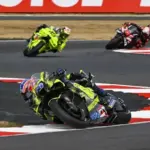


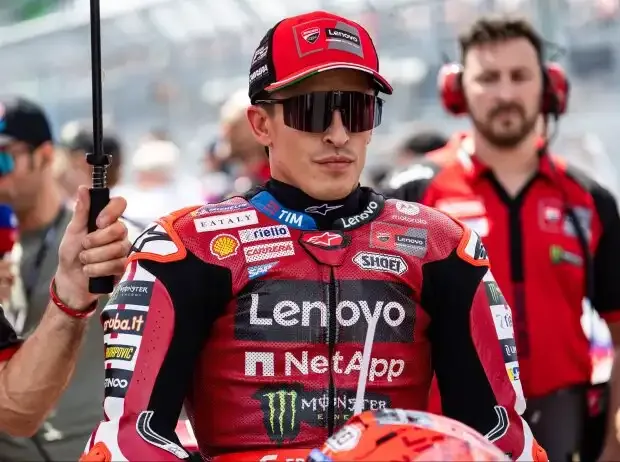
– Marc Marquez has been considered one of the most spectacular riders in MotoGP history for years. His aggressive riding style, extraordinary willingness to take risks, and uncompromising style have earned him numerous victories and world championship titles, but have also caused serious injuries.
Read more Inside Langstrecken-Streit Nürburgring (1/3): Participants and their goals
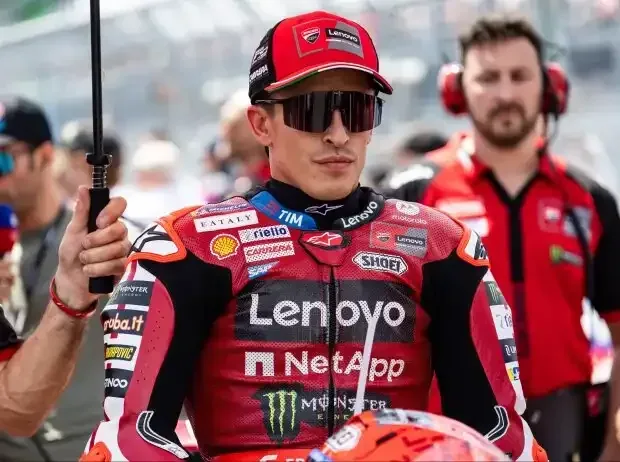
The Spaniard now knows better than almost anyone else that the fine line between genius and madness in motorsport is not decided by sheer fearlessness.
For Marquez, it is not about simply being the “craziest” rider on the grid. Rather, the decisive factor is to use this special form of courage correctly. “You often hear the phrase: Motorcycle riders are crazy. But the one who wins is not the craziest,” he says in the video podcast Tengo un Plan.
“The one who wins is the one who uses this craziness best,” the Spaniard knows, but also makes clear: A certain amount of recklessness is indispensable to succeed in MotoGP. “You have to have that point of craziness. Otherwise, you don’t get on a motorcycle at 350 or 360 km/h.”
Marquez between courage and control
The seven-time MotoGP world champion describes top-level motorcycle sport as a mixture of talent, hard work, and the right framework conditions. Only one of these is not enough to reach the world elite.
“You combine work with talent and the environment. Otherwise, you don’t make it,” says Marquez. Without the right preparation, support from the team, and the ability to handle pressure, even the greatest talents would not be enough. Especially in MotoGP, wrong decisions can be amplified by the enormous stress and expectations.
Photo series: The career highlights of Marc Marquez
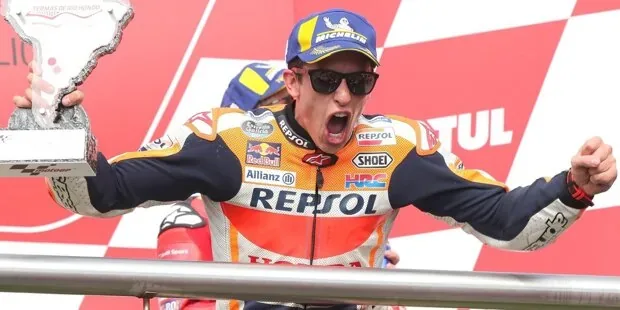
The Spaniard emphasizes that the term “craziness” is often misunderstood. It is not about blindly rushing forward or taking every situation to the maximum risk. Rather, a rider must learn when this risk is sensible.
“You have to have that point of craziness. But you have to use it well. Not just: Go, I push forward, and then whatever happens, happens,” explains Marquez.
Modern MotoGP demands athletes
Another point Marquez highlights is the enormous professionalization of the sport. While motorcycle racing used to be more influenced by talent and instinct, that is no longer enough today. “We are athletes,” the Spaniard makes clear. Above all, the physical strain is now enormous.
“Twenty years ago, the world of motorcycle sport might not have been as professionalized as other sports. But now it is like this: Either you are an athlete in motorcycle sport, or you won’t last a 45-minute race at the highest level.”
Read more David Coulthard compares FIA reaction to a steamroller
Today, MotoGP riders must not only be fast but also remain physically and mentally consistent throughout the entire race distance. Fitness, recovery, nutrition, and mental preparation are just as important to Marquez as pure speed on the racetrack.
Fruitless? Strength and weakness at the same time
Marquez’s view on the topic of fear is particularly interesting. From the outside, a MotoGP rider often appears as someone who knows no fear. But the nine-time world champion clearly distinguishes between everyday life off the racetrack and the moment when you are on the motorcycle.
“Off the racetrack, I see the dangers very easily,” he says. For example, when cycling: “When I ride my bike downhill, I see the dangers much more strongly.”
On the track, this perception was different for a long time. “One of my strengths and weaknesses was not seeing the fear. Not seeing the danger,” explains Marquez. That helped him master extraordinary situations but also led to him having to learn to deal with risk more consciously.
Injuries as a turning point for Marquez
Throughout his career, Marquez has repeatedly had to fight serious injuries. These experiences have changed his attitude towards risk. While his instinct was almost always focused on maximum attack earlier, the now 33-year-old learned over time to assess situations differently.
Photo series: The suffering path of MotoGP star Marc Marquez
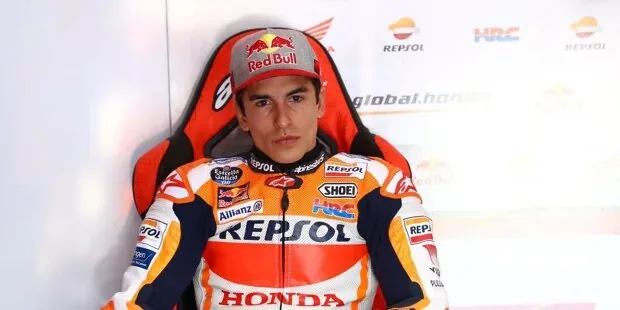
“My instinct was always to risk everything,” he admits. That applied regardless of whether it was a training session or a decisive world championship battle.
But exactly this handling of risk became a central learning process. “My entire environment has worked on this throughout my entire sporting career. And with age, I have gradually understood it better,” says Marquez.
However, his injuries had the greatest influence: “What made me understand it the most were the injuries. Because mentality was one thing, but through injuries, you learn,” the world champion shows maturity.
- 24h NürburgringInside Langstrecken-Streit Nürburgring (1/3): Participants and their goals
- MotoGPBeirer on KTM future: “The 850 needs extremely strong riders”
- Formula 1The last person you should ask about F1 graphics is George Lucas
- DTMGrasser confirms second Lamborghini for Nürburgring: Who sits in the cockpit?
MotoGP demands a rider who is willing to push boundaries but at the same time knows where those boundaries lie. For Marquez, this is exactly the difference between a fast rider and a champion: It is not the greatest craziness that decides, but the ability to use it at the right moment.
Read more More than just field fillers: Why Cadillac is happy despite zero points