








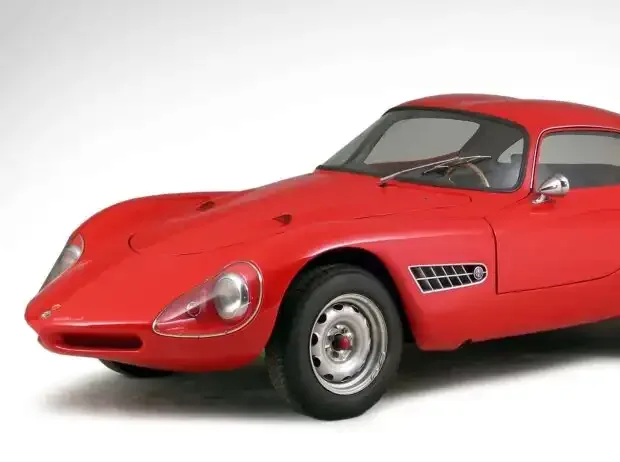
(Motorsport-Total.com/Motor1) – There are cars built to win races, and others that become symbols of innovation. The Abarth Alfa Romeo 1300 Berlinetta by Colani undoubtedly belongs to both categories.
Read more Would Lewis Hamilton’s planned one-stop strategy have worked?
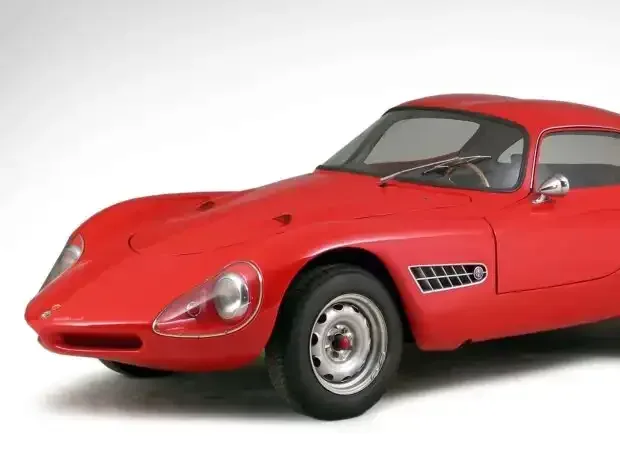
The extraordinary individualist introduced in 1959 combines the technical genius of Carlo Abarth with the visionary creativity of the German designer Luigi “Lutz” Colani. The result is a coupe with revolutionary shapes that was meant to challenge the wind even before it competed against its rivals.
The collaboration of Carlo Abarth and Luigi Colani
At the end of the 1950s, Carlo Abarth focused heavily on increasing the performance of small-displacement vehicles. Convinced that higher speeds are not achieved solely through more power, he devoted great attention to aerodynamics. His vehicles, often equipped with engines between 350 and 1,300 cc, set numerous international records thanks to their efficient bodywork.
For an even more ambitious project, he commissioned Colani in 1957 to develop an experimental body based on the platform of the Alfa Romeo Giulietta Spider. After an accident with an earlier Abarth-Alfa Romeo prototype, Colani completely redesigned the vehicle and shaped it into the famous 1300 Berlinetta, which was introduced in 1959.
The car immediately stood out with a look that clearly differed from the sports cars of that time. Colani implemented his “biodynamic” philosophy, based on soft, flowing, and nature-inspired forms.
Photo series: Abarth-Alfa Romeo 1300 Berlinetta (1959)
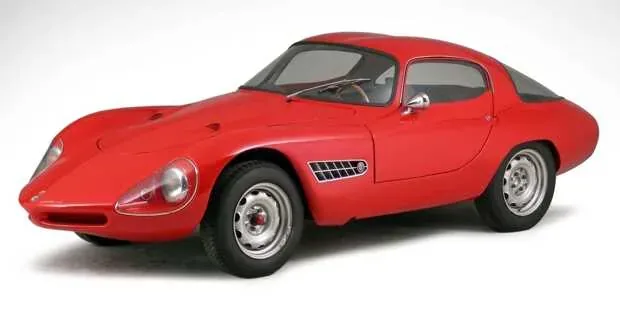
The front is characterized by a long, slender hood reminiscent of some solutions studied by Pininfarina, while the distinctive roofline with a double hood connects to Abarth’s sporty tradition. Even more innovative is the rear, designed to reduce turbulence and improve stability at high speeds.
Read more Appeal against Monaco result: This is why McLaren is lodging a protest
Special attention is also given to the vehicle’s underbody. Colani developed special solutions to optimize airflow, anticipating a design philosophy that would only become fundamental many decades later.
Amazing driving performance
The Berlinetta is powered by a 1.3-liter Alfa Romeo engine producing around 81 kW (110 hp). With a weight of only 780 kilos, this is enough for exciting driving figures. Thanks to the excellent power-to-weight ratio and the extremely aerodynamic body, the sleek machine reaches a top speed of around 210 km/h.
The Berlinetta also proves its driving dynamics at the Nürburgring, where it can complete a lap in under ten minutes.
However, the 1300 Berlinetta never went into series production. It remains a one-off, primarily created as a technology carrier. It is precisely this exclusivity that makes it one of the most fascinating concept studies in European automotive history.
- Formula 1New ADUO decision imminent: Red Bull’s hope for development
- MotoGPLuca Marini moves to Tech3: Italian receives MotoGP contract for two years
- Formula 1Mercedes emphasizes: Zandvoort team order was meant to help George Russell
- 24h NürburgringPorsche presents 911 Challenge as new entry-level model in motorsport
Alfa and Abarth today:
Abarth Grande Panda: Return of the combustion engine with power and bite?
Alfa Romeo shows first detailed shot of the new C-SUV
Read more New ADUO decision imminent: Red Bulls’ hope for development