







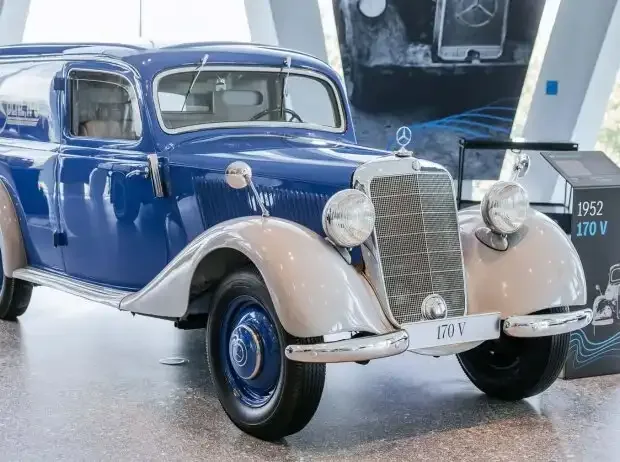
(Motorsport-Total.com/Motor1) – A distinctive color tone shaped the street scene in the 1950s and signaled quick help: the so-called “Mercedes blue.” This paintwork unmistakably stood for the Mercedes-Benz customer service. A particularly fascinating contemporary witness of this era is the Mercedes-Benz 170 V panel van of the W 136 series from 1952.
Read more September 10, 2006: Michael Schumacher wins in Monza — and retires
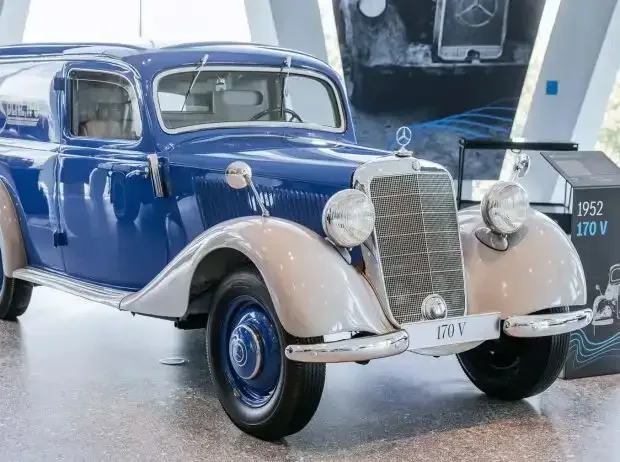
The stylish delivery van from Mercedes, which was used in Switzerland at the time, shares its colorful paint with historic icons like the racing car rapid transporter “Blue Wonder.” But the transporter impresses not only with its appearance but above all with its sophisticated construction and its extraordinary history as an extremely rare commercial vehicle.
Tailor-made body made of sheet metal and wood
The historic delivery van was designed to provide mechanics with plenty of space for heavy tools and spare parts. Behind the left-hinged rear door hides a well-thought-out box structure. Under the elegantly curved sheet metal, an invisible wooden substructure provides the necessary stability.
Inside the loading area, the wooden arches on the sides are connected by five slats each, reaching up to the wall of the driver’s cab. A loading floor covered with carpet offers a tidy surface and at the same time hides the compartment for the spare wheel as well as additional storage space.
Directly above the light gray painted front fender, a silver-colored plaque testifies to the traditional origin of the body. The inscription “Sindelfinger Karosserie. Daimler-Benz A.G.” around the Mercedes star stands for the high-quality in-house factory production, which was already established in the 1930s.
A functional and charming workplace
The customer service mechanics enjoyed a remarkable comfort for the time in the cabin. A continuous bench seat covered with light gray artificial leather and a color-coordinated covered transmission tunnel shape the interior. Precisely cut mats made of robust fabric protect the footwell around the pedals.
The driver’s view falls on a light gray painted dashboard, in the center of which the speedometer with odometer sits. It is flanked by a combined instrument for fuel gauge and oil pressure on the left and a clock on the right. Ivory-colored plastic control knobs add fine accents in the cockpit.
Read more Explained: Why the Spanish Grand Prix is now taking place in Madrid
Photo series: Mercedes-Benz 170 V “Customer Service” from 1952
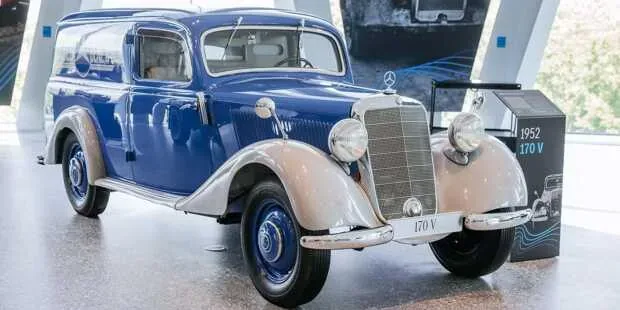
An exciting detail of the automotive transition period is shown by the turn signals, which are operated via the black horn ring in the steering wheel: While more modern-looking blinkers already light up at the rear, classic indicators with flashing function still fold out in front of the doors.
Only 35 built make it an exotic
The technical basis of the 170 V dates back to 1936. As one of the economically and strategically most important vehicles of the pre-war period, the model formed the foundation for the restart of series production under difficult conditions after World War II.
While initially very simple flatbed trucks and ambulances based on the W 136 were built from 1946, the demand soon changed noticeably. In the early 1950s, tradespeople and craftsmen preferred the efficient diesel engine for reconstruction. Over 500 units of the panel van version of the 170 D were produced in 1952.
The 170 V with gasoline engine, on the other hand, remained an absolute rarity. The 45 hp and up to 116 km/h fast petrol engine ran off the assembly line only 35 times in the same year as a panel van with Sindelfingen body. It is precisely this extreme rarity that makes the historic customer service vehicle a valuable relic of automotive history today.
Anyone who wants to see the special panel van with their own eyes still has the opportunity to do so until April 4, 2027, in Stuttgart. There, the vehicle is one of the highlights of the current special exhibition “130 Years of Commercial Vehicles” at the Mercedes-Benz Museum.
More vintage cars from Mercedes-Benz
Legendary: Mercedes 300 SLS meets SLR Stirling Moss for a driving appointment
Mercedes 280 SE (W116): This S-Class belonged to a First Lady
Read more Dacia Spring (2027): Seating test and all information about the new e-vehicle