







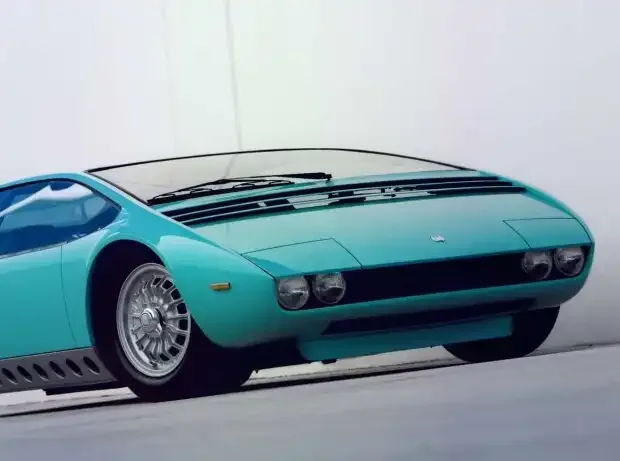
(Motorsport-Total.com/Motor1) – Introduced in 1968, the Bizzarrini Manta is one of the most influential concept cars in automotive history. It was the first project of the newly founded Italdesign company by Giorgetto Giugiaro and introduced a design language that would sustainably change the design of mid-engine sports cars.
Read more 2028 in Colombia? More confusion about IndyCar city race
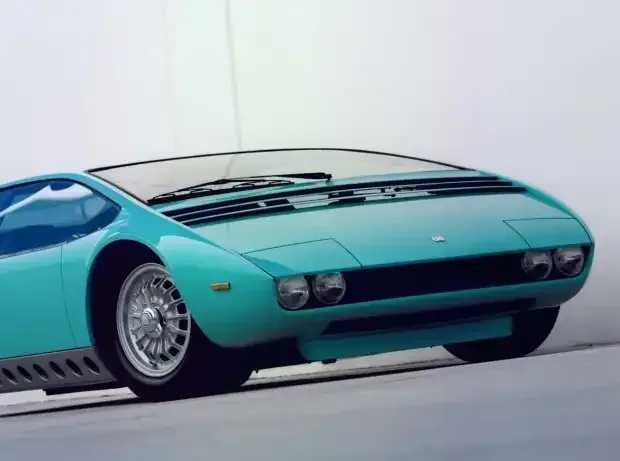
With its wedge-shaped silhouette, the three-seat cockpit with central driver position, the steeply inclined windshield, and a technical base from the racing car Bizzarrini P538, the Manta caused a sensation. And that was two years before Opel used the same name.
The history of the Bizzarrini Manta is closely linked to the founding of Italdesign. After stints at Fiat, Bertone, and Ghia, Giorgetto Giugiaro decided to take an independent path and founded the new company in February 1968 together with Aldo Mantovani, which would later become one of the most important automotive design centers in the world.
For the official debut at the Turin Motor Show 1968, Giugiaro wanted to create something fundamentally different from all vehicles shown until then. Time was extremely tight: just 40 days. Nevertheless, the team managed to complete a prototype that would go down in history.
The technical base
To limit time and costs, Giugiaro chose the chassis of the Bizzarrini P538 as the technical foundation, a competition vehicle developed by engineer Giotto Bizzarrini for endurance racing.
After rule changes in motorsport, the P538 had already ended its racing career at this point. One of the available chassis was therefore converted into the basis for the new study.
Photo gallery: Bizzarrini Manta (1968)
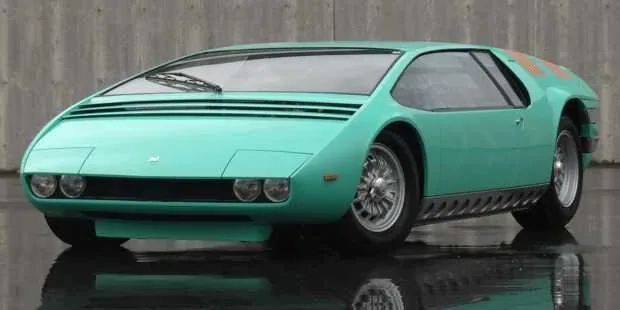
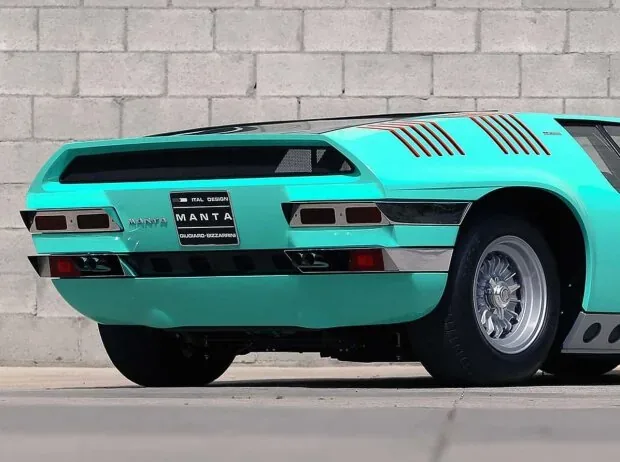
The tubular frame remains, as does the layout with a mid-engine in front of the rear axle. Behind the seats sits the powerful Chevrolet V8 with around 294 kW (400 hp). This engine is supposed to enable the Manta a theoretical top speed of nearly 330 km/h. An impressive figure for the late 1960s, but practically never reached.
A design that anticipates the future
The line of the vehicle runs almost continuously from the front to the rear, with a windshield inclined only 15 degrees, visually flowing into the roof. The dimensions are also unusual: 4.10 meters long, 1.86 meters wide, and only 1.05 meters high.
Read more Why a budget cap in the WEC is hardly feasible
However, the extreme inclination of the windshield brings a significant problem: visibility. Giugiaro found an equally simple and clever solution by integrating a second, almost vertical glass element below the main windshield. It is complemented by three narrow slits in the hood. This system improves visibility in city traffic without impairing aerodynamics.
The interior also completely breaks with conventions. Thanks to the considerable vehicle width, the Manta offers three seats arranged side by side: the driver sits centrally, the two passengers slightly set back on the left and right. A configuration later made famous by the McLaren F1 and revisited by Italdesign in 2008 with the Quaranta study.
A prototype in record time
The speed with which the Manta was created became almost legendary. In just 40 days, the wooden model, the shaped body parts, the welded frame, the assembled mechanics, and the finished paintwork were completed.
However, the rush prevented all systems from being properly completed. For several years, the Bizzarrini Manta remained a static prototype that was not fully functional electrically and mechanically.
The color also contributed to making it unforgettable. At the presentation, it wore a striking aqua green tone with turquoise hues and orange details. This was chosen to evoke the sea and the animal from which it takes its name. Later, it was painted red for an event in Japan, then silver for some Italdesign celebrations, before finally returning to its original color scheme after a careful restoration in the early 2000s.
Today, the Manta stands not only for the debut of Italdesign but also for a milestone in international automotive design. Many of its design ideas influenced decades of series production and cemented Giugiaro’s reputation as one of the greatest designers of all time.
More from Giugiaro and Italdesign:
Fiat Panda: A small giant turns 40 years old
Forgotten studies: Italdesign Lucciola (1993)
Read more Zarco rests in the top 10 at the MotoGP comeback: «My ego is well filled today»