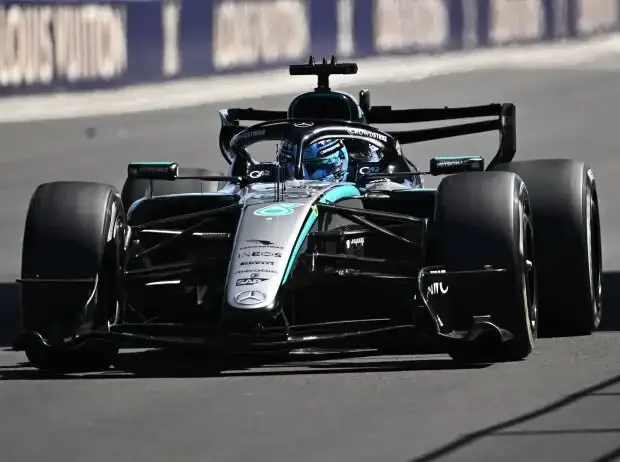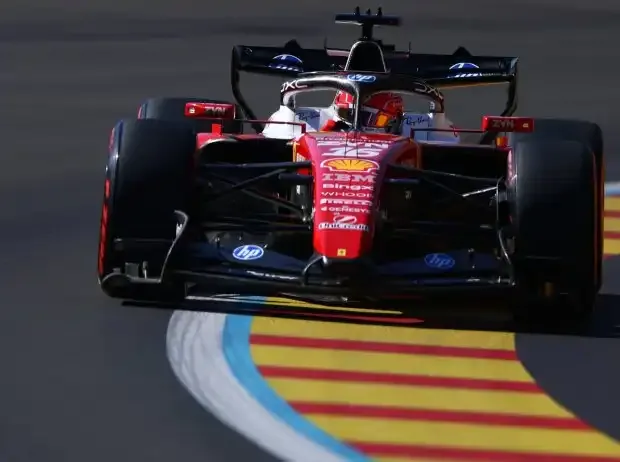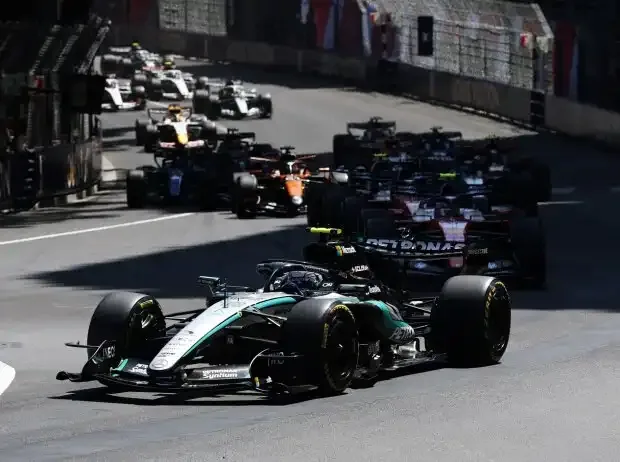


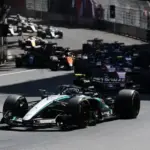



– The ruling of the International Court of Appeal (ICA) continues to cause waves in Formula 1. After Alpine successfully protested against a time penalty against Pierre Gasly, temporarily securing the Frenchman third place in Monaco, McLaren filed an appeal – and won before the ICA. Gasly subsequently lost his podium again.
Read more Mercedes 170 V (1952): Panel van with absolute rarity value

The case has now sparked fundamental debates: The FIA announced that it will thoroughly evaluate its legal processes, especially the Right of Review. At first glance, the system seems established, but opinions in the paddock about the need for reform and impartiality vary widely.
McLaren team principal Andrea Stella sees the turmoil as an opportunity for the sport. He welcomes the FIA using the case as a catalyst for change: “I think the FIA’s statement highlights very well that this case ultimately has something positive about it – simply because it prompts a reconsideration of how rules are interpreted and enforced.”
Stella sees three crucial levers for reform. First, the work of the race stewards must be protected and improved: “The stewards do an extremely difficult job. They have to make decisions under great time pressure. We as competitors know exactly what it means when time is a critical factor and the pressure rises,” he says.
As a second point, he calls for clearer thresholds for submitting a request: “We need to precisely define under which conditions a review request should be accepted and pursued – and when not.”
The third point the McLaren chief sees is the reliability of the data collection itself. It is about consistency in the application of measurement methods: “We measure an incredible number of things in Formula 1 – whether it is speed in the pit lane or the weight of the cars on the scales. I consider the reliability and uniformity of such measurement procedures an extremely important issue.”
Briatore only interested in composition
At Alpine, frustration over the ruling is naturally deep. Executive advisor Flavio Briatore does not hold back sharp criticism of the composition of the panel of judges and raises the question of their independence: “The original decision in Monaco came from exactly the same people,” he says. “The nice stewards Stella talks about were exactly the same people, and everything was handled exactly the same way.”
Photo series: Controversial: Ten race winners at the green table
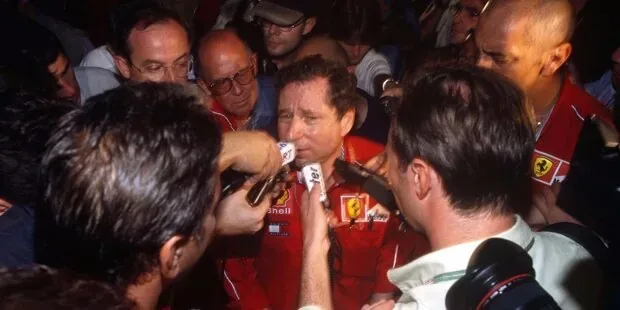
While he grudgingly accepts the sporting decision, Briatore sees a red line crossed in the composition of the panels: “What I do not accept, however, is that if you have a panel of judges, you need someone who is completely independent.”
Read more September 10, 2006: Michael Schumacher wins in Monza — and retires
“Our big question is simply: Why was someone connected to McLaren involved in this specific panel? It’s as simple as that,” the Italian fuels his accusation towards one of the judges.
Frederic Vasseur: “Robust procedure”
Ferrari team principal Frederic Vasseur takes a more diplomatic approach and does not want to engage in the independence debate: “I’m not sure I want to go down that path,” he waves off Briatore.
However, he clearly states his position on the mechanics of the Right of Review and defends the basic principle. It is not comparable to a regular appeal but an important safety net: “The right of review applies when new evidence is available.”
Photo series: Monza: Driver ratings by Marc Surer and the editorial team
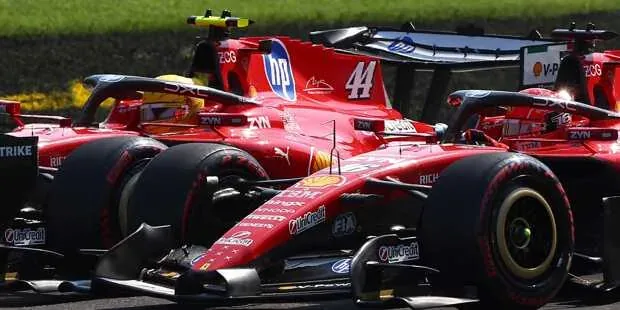
“When you are summoned to the stewards 30 minutes after the end of a session, you often simply haven’t had time to analyze all the data in detail – and the stewards are in the same position. That you can reopen the case a week later once new video data or telemetry is available, I consider a quite robust procedure,” he says.
Regarding the specific case of Gasly’s revoked podium, Vasseur appears torn between sporting harshness and rule compliance: “On the one hand, I can understand the frustration if you did not consciously exceed the limit to gain an advantage and then get penalized.”
“On the other hand, I also understand that a rule, once applied, must apply to everyone for reasons of fairness.”
Read more Explained: Why the Spanish Grand Prix is now taking place in Madrid