


– The venerable board game “Diplomacy” does not use dice. To achieve a position of Europe-wide dominance, players at the table must cooperate with each other – and then choose the optimal moment to stab their former allies in the back.
Read more Every beginning is hard: The first victories of Formula 1 racing teams
The underlying mechanisms of Diplomacy are brutally simple, the rulebook correspondingly concise. Conquest is determined by the sheer weight of army and navy units, not by the pseudo-random whim of a dice roll.
Hence the necessity for players to work covertly with and against each other, and the inevitability of betrayal. It is therefore not a game for wimps.
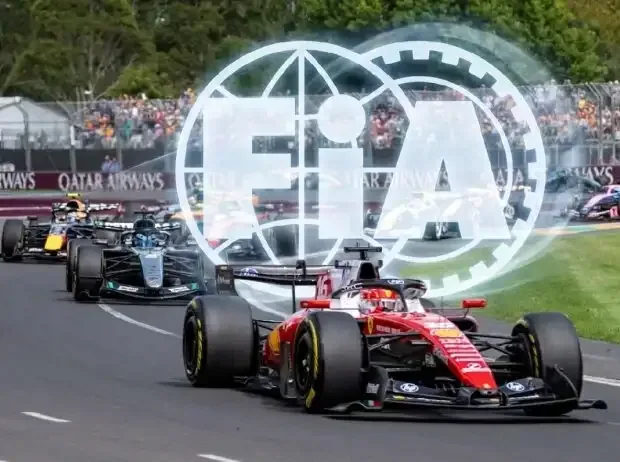
The rulebook of Formula 1, on the other hand, is downright Byzantine, but that is not solely the fault of those entrusted with creating and enforcing the rules. Too many actors are involved – and the inevitable result of trying to please too many people is a chaotic mess of compromises that satisfies very few.
Nikolas Tombazis, Director of Single-Seater Sports at the FIA, held a round table discussion for selected media this week ahead of the rule changes for the Miami Grand Prix. In doing so, he echoed the sentiments expressed by Formula 1 CEO Stefano Domenicali two weeks ago in an exclusive interview with Autosport.
Difficult Task for the FIA
Whether the similarities in wording were an unintended consequence of trying to present a united front with the commercial rights holder or not – it was a delicate diplomatic dance around the issue that the automotive manufacturers involved in Formula 1 have too much say in policy.
Formula 1’s sporting and financial ecosystem requires their involvement, but their priorities change faster than Formula 1’s regulatory framework can keep up.
The many peculiarities and controversies of the current 2026 season all stem from a decision made in the summer of 2022: committing to a mix of electric power and internal combustion engine power in a ratio of almost 50:50.
In the intervening years, Tombazis and his team had the thankless task of trying to make the impossible feasible. “It is true that the political landscape has changed. When we discussed the current regulations, the very involved automotive groups told us that they would never build a [new] internal combustion engine again,” he says.
“They wanted to phase it out and be fully electric by a certain year. Obviously, that didn’t happen. This is not to underestimate the importance of electrification worldwide, but it did not happen to the extent claimed.”
“Lesson learned”: Stefano Domenicali in the crosshairs of fans
In a later conversation with Italian media, Tombazis went a little further: “There was a strong push from several stakeholders towards significantly more electrical components,” he reveals. “And in my opinion, this potential for electrification was perhaps overestimated, which pushed for this 50/50 split.”
As an engineer, Tombazis is a fascinating interviewee due to the depth, detail, and nuance he brings. But it was inevitable that a quote like this would be picked out and then, taken out of context, circulated on social media as a kind of “smoking gun”.
It is well known that electrification in the automotive industry was considered inevitable in the summer of 2022, when the 50/50 principle was agreed upon. In the meantime, this has become less certain for various reasons.
The challenge for the rulemakers was to mitigate the inherent disadvantages that arise when so much energy has to be charged and discharged every lap.
From the outset, the prospect of cars running out of power in inconvenient places, and safety concerns due to large speed differentials, dictated the direction towards today’s scenario – a scenario in which drivers have less influence on vehicle performance than they should.
Too Much Power for Manufacturers
In the background, engine manufacturers have continued to play an annoying and disruptive role in the development of the 2026 regulations, even if this is a sentiment that neither Formula 1 nor the FIA will voice too loudly.
It is known, however, that various proposals regarding material choices for the internal combustion engine, for example to save weight and costs, were ultimately rejected by the manufacturers and their allied teams.
Here we encounter the problem of competitors having a say in shaping the rules, as the common good can be neglected in favor of establishing or defending a competitive advantage. This came up, albeit indirectly, in several areas of the discussion round.
“It is true that the entire energy management becomes more demanding when you have such a ratio of electrical energy to combustion energy and power,” says Tombazis.
Photo gallery: Formula 1 Fails: These rule changes were a flop
“We knew that from day one of these regulations, and I think we’ve worked to mitigate many of those compromises. One of the reasons we feel it wasn’t perfect from the start is that the cars are going a bit faster and have found more downforce than we expected. Therefore, the energy recovered during braking is slightly less than it normally would be.”
“So we have a slightly bigger challenge than we would have liked. We proposed a power reduction about a year ago, but it was rejected. The point then was that we wanted to wait for the first few races, which we have now done,” said the FIA man.
From this, it can be inferred that at least some of the reasons why the regulations are still effectively in a beta phase lie in the continued intransigence of the manufacturers. Again, it’s about defending competitive advantages.
Read more Denza Z Cabrio: Over 750 kW powerful electric sports car for Europe
ADUO: It’s getting complex – or not?
To enable manufacturers struggling with their competitiveness to catch up, Formula 1 has introduced the Additional Development and Upgrade Opportunities (ADUO) framework from this season. As expected, this has become a hotbed of intrigue, as the various engine suppliers lobby against each other.
Essentially, ADUO grants relief under the engine cost cap for additional research and development, as well as scope for upgrades, depending on the internal combustion engine’s performance deficit compared to the class leader. Measurements and upgrade windows are scheduled for specific intervals of the year.
And – surprise, surprise – this too seems to have been a process akin to herding a bag of fleas, with much haggling over what falls within and outside the measurement range. With cats, at least you can rattle the treat bag to get their attention and distract the conversation from back pressure and compressor sizes.
“The fact that engine performance is not just a single number was, of course, known,” says Tombazis.
Formula 1 before restart: Is better racing coming now?
“In spring 2025, we had quite long discussions with them; we offered to consider certain things like boost pressure, turbo diameter, or plenum operating temperature and the like. The unanimous position of the engine manufacturers at the time was that we should keep it simple.”
“The fact that it is the current horsepower measurement of the internal combustion engine was therefore accepted from the outset. I personally would be quite open to the idea of making the parameters a bit more complicated, but this discussion took place more than a year ago, and the result was quite clear.”
Perhaps this is a rare example of manufacturers doing the audience a favor by rejecting complications.
Does the driver have too little influence?
In every other respect, the excessive complexity of the current technical regime goes back to the basic concept. To meet the 50/50 split, there are too many rules: for example, the hidden subdivision of tracks into “zones” where different proportions of electrical power may or may not be used.
There are performance reasons for this, as teams and drivers rightly want to ensure that limited electrical assistance is used where it is most useful. A more urgent reason, however, is safety and mitigating the risk of cars suddenly losing electrical power at high speed.
The solutions Tombazis and his team have found for these mitigations are clever – but as many involved, including the drivers, have pointed out, they are stopgap solutions for a flawed basic concept. By limiting drivers’ ability to make a difference, Formula 1 represents a failure to understand the fascination of motorsport.
The fastest cars on the planet are only part of the appeal. Seeing the world’s best drivers demonstrate their artistry is what captivates the audience.
So much of this is now lost in the quagmire of varying deployment and energy modes. When Motorsport-Total.com compiles its post-race driver ratings, there are clearly those readers who view them through the lens of their fan affiliation and therefore tend to disagree.
But we genuinely try to rigorously analyze driver performance over a weekend.
What the current regulations have done is to confuse, obscure, or even disregard driver input. Analyzing onboards and telemetry data used to provide a very clear picture of individual skill and performance; today, this is obscured by the intervention of energy deployment and the software that allocates it.
Did this driver lose time in this particular corner, or did he accidentally trigger a reset of the power-limited mode while correcting a drift earlier and is now paying for it with a lack of electrical punch?
Honestly, that’s enough to make one lose the will to live – or, if not that, at least leave one on the verge of switching to “will-to-live-limited mode”.
Please, not a plaything of the manufacturers
These shortcomings are firmly embedded in the current regulations and will become more complicated rather than simpler. What we need for the next set of regulations is a “less is more” approach.
As with Diplomacy, simpler game mechanics make the competition purer. Formula 1 fans don’t want to see race results dictated by opaque algorithms and software wizardry, with the driver playing the role of a frustrated passenger. They come for the spectacle, the skill, and the killer instinct.
F1 expert reveals: THIS bothers me about Formula 1 2026!
That should be the starting point for the next regulations. Instead of setting an arbitrary ratio of electrical power, the focus should be on taking weight out of the cars and cost and complexity out of the engines.
This would make the category as a whole less susceptible to the whims of manufacturers, who, as companies, bend like reeds in the wind of market forces. They have had too much influence for too long.
The next Formula must be better. How about giving the rulemakers a chance to make that happen?
Read more 50 Stars for Miami: Cadillac unveils US design at the home game