




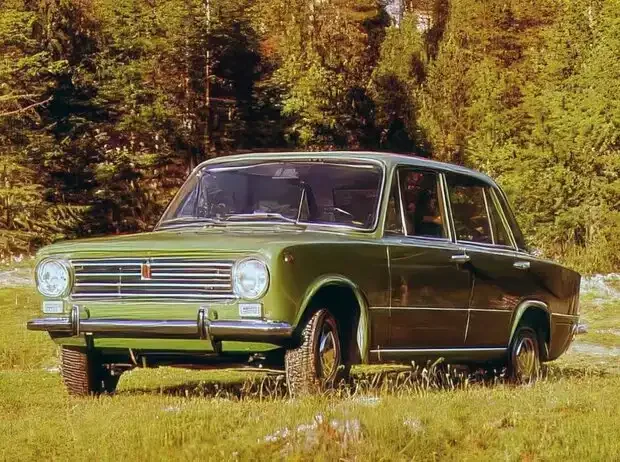
(Motorsport-Total.com/Motor1) – When we think of cars from Italy, sporty engines and elegant designs come to mind. But almost everyone associates this birthday child with Russia. The year is 1966. While the “Swinging Sixties” reach their peak in London, Fiat presents a sedan in March in Geneva that looks as straightforward as a freshly ironed white shirt: the Fiat 124.
Read more What is the «Jo-Jo Racing» that we will experience in Formula 1 2026?
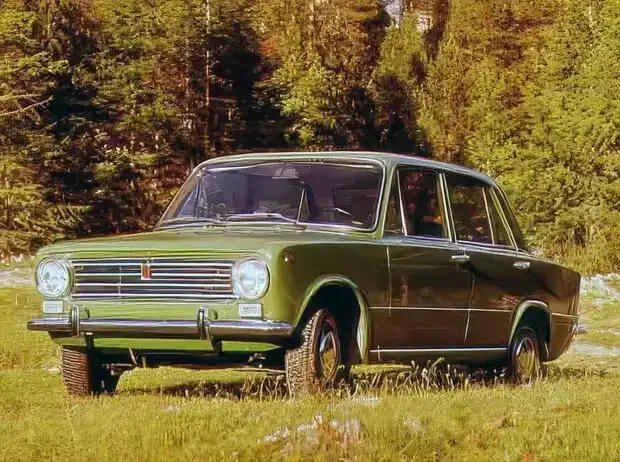
It is the successor to the venerable 1300, but it is much more than just a new model. It is the blueprint for the modern mid-size car and will conquer garages from Europe to Siberia as Europe’s “Car of the Year 1967” – initiated by a spectacular advertising stunt in which Fiat simply drops the car by parachute from an airplane.
Functionality as a Program
Let’s take a closer look at the anniversary model. The design of the 4.03-meter-long and 855-kilogram-light sedan (Berlina) seems almost radically functional today. Three-box design, sharp edges, lots of glass. No frills, no chrome tinsel. Also because a global licensing was already in mind. The simpler the sheet metal parts are to manufacture, the better.
Chief engineer Oscar Montabone is allowed to start almost on a blank sheet of paper here – only the fully synchronized four-speed gearbox is taken from the Fiat 1500. Under the sheet metal lies solid engineering: the 1.2-liter four-cylinder initially produces 60 hp (65 SAE hp). That sounds like little, but is more than enough for the just under 855 kilograms curb weight. Added to this is a classic rear-wheel drive, while front-wheel drive is initially left to the visually similar Autobianchi A111.
Thanks to a five-bearing crankshaft, the engine runs more smoothly than the rattling competition, while the moderate compression ratio of 8.8:1 also digests low-quality fuel without complaint. The cockpit exudes typical 60s charm: a skinny steering wheel, band speedometer (in the early base version), and a touch of hard plastic.
Photo series: Fiat 124 Sedan (1966-1975)
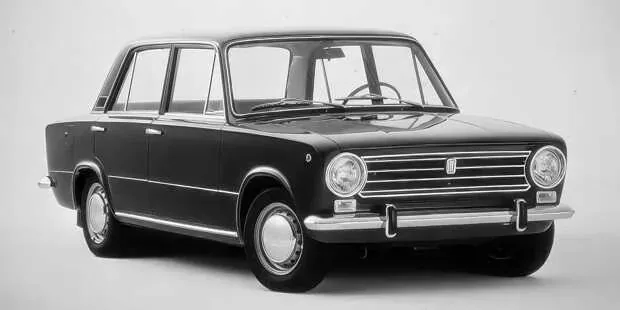
Exactly 1,035,000 lire initially cost the 124 sedan in Italy. It was 6,194 marks at the beginning of 1969 in the Federal Republic, slightly cheaper than a five-door Opel Kadett L 1.1 sedan with 45 hp. Customers received the Fiat 124 positively from the start. Already at the start of production, 200 units were produced per day, a number that rose to 600 by autumn 1966.
Conservative Looks, Sporty Engines
Those who like it a bit more daring reach for the “Special” from 1968. Here a 1.4-liter unit with 70 hp works, which stands out not only visually due to double headlights. The real revolution takes place at the rear: while the base has to make do with a three-link axle, Fiat equips the Special with a modern five-link rear axle with coil springs.
In 1970, the “T Special” follows (the T stands for Twin Cam), which brings the 80 hp dual overhead camshaft engine of the sports models under the conservative hood. Particularly advanced: disc brakes on all four wheels are standard on the 124. This provides braking values that Beetle drivers could only dream of at the time.
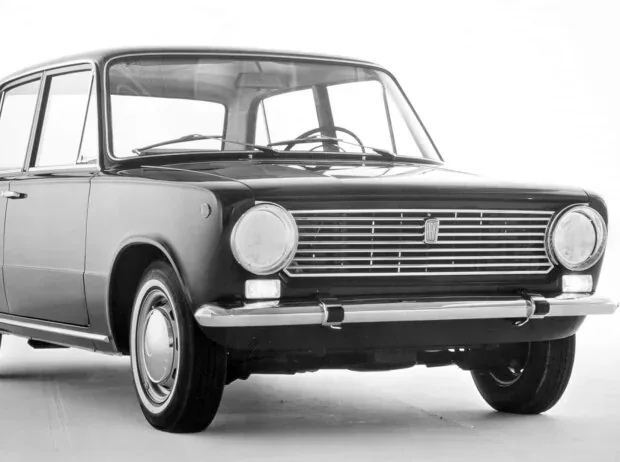
In November 1970, the vehicles of the first model update go on sale. The base model of the Fiat 124 receives a newly designed radiator grille with four horizontally arranged and chromed slats. The bumper guards are taken from the 124 Special. The revised rear now has larger taillights with reversing lights. To improve air circulation in the interior of all vehicles, ventilation slots are added to the C-pillar. A dual-circuit brake system with servo assistance increases safety. Inside there is wood veneer.
Read more Formula 1 shake-up in Miami: Piastri expects further changes
The Beautiful Siblings: Coupé and Spider
But the 124 is a shape-shifter. While the Berlina and the practical station wagon (Familiare, introduced in November 1966) serve everyday needs, Turin sends two derivatives into the race in 1966 and 1967 that still bring fans to tears today. The coupé, designed by Mario Boano, appears in three series (AC, BC, and CC) and offers genuine Gran Turismo flair for the people.
Even more legendary: the stunning 124 Sport Spider. It comes from the pen of Tom Tjaarda (Pininfarina) and uses the technology of the 124 in its sharpest form. Here the legendary Lampredi engines with timing belts debut – real high-tech for mass production. The range later extends to the 2.0-liter fuel-injected and the rare “Volumex” with supercharger and 135 hp.
A Car for the Whole World
The real trick, however, is the international career. The Fiat 124 is probably the most produced car in history when all licensed versions are counted. The best known is of course the VAZ-2101 (Lada), which mobilizes the Soviet Union from 1970 and, including all further developments, rolls off the line over 15 million times alone.
But the list of derivatives is long: Seat manufactures the 124 and the more luxurious 1430 variant in Spain.
Tofaş builds the “Murat 124” in Turkey, which is later affectionately called “Serçe” (Sparrow).
Premier keeps the car alive in India as the 118 NE (later as Diesel 137D) into the new millennium. Even Asia Motors (now Kia) assembled the Fiat between 1970 and 1975 in South Korea.
In Italy, production of the sedan ends as early as 1975 to make room for the 131 Mirafiori. The Spider, on the other hand, proves to be a long-runner and remains in the program until 1985, lastly as “Spider Europa” under the aegis of Pininfarina itself. In 2016, the name celebrated a brief comeback based on the Mazda MX-5, but the original remains unmatched.
What remains of the Fiat 124? It is the prime example of a sensible concept that was refined through clever variants. It is not as eccentric as a DS, not as conservative as an Opel Rekord, but exactly the golden mean. A real world car, reminding us today that driving fun does not always need 500 hp. A properly adjusted carburetor and a winding country road are more than enough. Only: first find a Fiat 124 sedan and NOT a Lada …
More from Fiat history:
Here stands the last built Fiat 126
Fiat Tempra (1990-1996): Do you still know it?
Read more Aprilia follows suit: 2027 prototype makes its track debut