





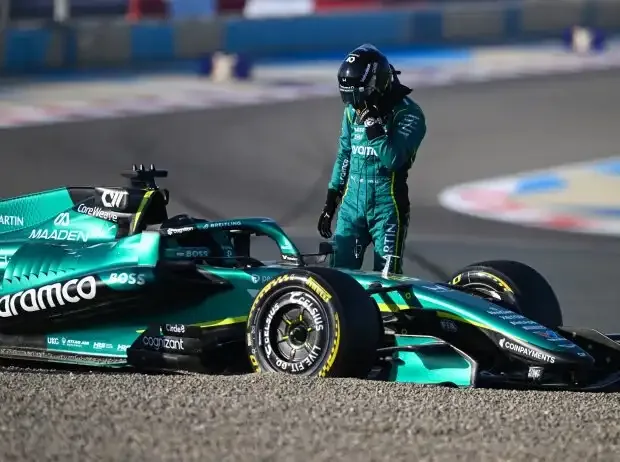
– Even before the first meter was driven in Melbourne, Aston Martin is already the main topic in the paddock of the 2026 Formula 1 season. After a disastrous winter test, Lawrence Stroll’s ambitious project starts the new era with a massive deficit – a circumstance closely linked to the bumpy start of engine partner Honda.
Read more FIA intervenes in Melbourne: What changes in qualifying now
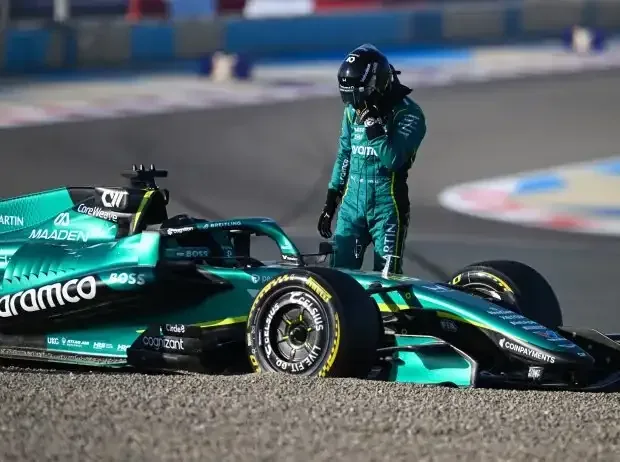
That the checkered flag at the season opener remains a pure utopia became more than clear on media day at Albert Park. But what exactly are the reasons for this, and how long could a possible turnaround take?
To say that the season has started badly for Aston Martin would be a massive understatement. The team missed the first days of the collective shakedown in Barcelona and already dampened expectations at the presentation of the design in Saudi Arabia.
Many problems, first solutions
In Bahrain, it became clear why: the problems are manifold. The Silverstone-based team was unable to complete the desired mileage, which meant that, unlike the competition in the Middle East, the racing stable was not even able to scrutinize the performance.
“GP2 engine” of yesterday, world champion of tomorrow? Aston Martin, Alonso and the big goal!
“During the test drives in Bahrain, unexpected vibrations occurred that caused damage to the battery components of the powertrain,” explained HRC President Koji Watanabe in Melbourne. “As a result, we were unable to achieve the originally targeted mileage.”
“The engineers from HRC and Aston Martin worked as one team to develop and evaluate several countermeasures. Based on extensive test bench trials, we have implemented the measure that we currently consider to be the most effective solution and which will be used starting this week.”
Drivers must endure vibrations
Honda does not want to reveal exactly what this measure entails in order not to disclose technical details of the 2026 engine. However, Adrian Newey did at least reveal: “What we have achieved for this weekend is a solution that we tested on the test bench over the course of the weekend. It has successfully and significantly reduced the vibrations introduced into the battery.”
The goal is to prevent the electrical part of the Honda engine from being damaged as quickly as in Bahrain. However, this is far from solving all the problems. In fact, Aston Martin already knows before the race weekend that they will not finish with both cars.
The reason: The chassis – and ultimately the drivers – are still absorbing the shocks of the vibrations, which means that the physical strain in the cockpit remains extremely high.
Early exit in Melbourne?
“You have to keep in mind: The power unit – the combination of the internal combustion engine and possibly also the MGU-K – is the source of the vibration, it is the amplifier. The chassis is the receiver in this scenario. A carbon chassis is an inherently stiff structure with very little damping. We have not yet made any progress in transmitting these vibrations into the chassis,” Newey explains.
The latter means that it would simply not be physically responsible for the drivers to complete a full race distance “Down Under.”
Photo gallery: The motorsport career of Adrian Newey

“These vibrations cause some reliability issues, falling mirrors and all those things we have to take care of. But the much more significant problem is that these vibrations are ultimately transmitted to the driver’s fingers. Fernando feels that he cannot drive more than 25 laps at a time without risking permanent nerve damage to his hands. Lance believes that he cannot drive more than 15 laps before this threshold is reached.”
Race one as a test
“We will have to severely limit the number of laps in the race until we have the cause of the vibrations under control and improve the vibrations at the source.”
Read more 24h Nürburgring 2026: Is Verstappen’s NLS start with AMG already confirmed?
On the first weekend, the main focus will therefore be on collecting data and looking for a structural solution, while at the same time ensuring that the health of the drivers is not endangered. In Melbourne, it’s all about the balance between these two aspects.
Due to these problems, the focus is still not on performance, and the question remains how competitive Newey’s first Aston Martin design actually is. A question that can hardly be answered based on pure lap times, although the star designer says he has an initial tendency. Regarding the chassis, he estimates the team to be the fifth fastest force in the field at best.
Delays in development
“My assessment would be that in terms of chassis performance, we are in this middle group, definitely behind the leaders. How big is the gap? I don’t know, but I guess it’s probably about three-quarters of a second, maybe a second.”
F1 expert reveals: THIS bothers me about Formula 1 2026!
This is due to the fact that Newey was only able to start work on the 2026 car with a three-month delay and the new wind tunnel went into operation much later than hoped. As a result, Newey focused on getting the basic aspects of the car – such as the suspension and the overall concept – right, after which there is still work ahead for the team aerodynamically.
“We have an aggressive development plan. With what we have already achieved in the factory based on this plan – if we had had the time to bring that here to Melbourne, we would be significantly further ahead than we will be at the weekend,” said Newey.
Vibrations must go
Before this potential can be exploited, the vibrations must be eliminated, and Honda still has to make significant progress on the engine side. The final question is in what timeframe this could happen. Honda itself does not yet have a clear picture of this – simply because the reliability problems are currently overshadowing everything.
“From Honda’s point of view, we have unfortunately not yet been able to operate the power unit at maximum speed. It is still too early to say what the performance is. Let’s understand the situation first,” Watanabe replied when asked about Honda’s performance deficit.
At first glance, these problems seem to lie primarily on the electrical side of the power unit, but Newey explains that in practice they are closely linked to the pure performance of the internal combustion engine.
The gap is large
“One of the problems with these regulations is: the less combustion engine power you have, the more you have to compensate for it by using electrical energy to make up for this deficiency. This means that at the moment when you really need the electrical energy on the straights, the battery is already empty – it becomes a self-fulfilling downward spiral.”
This means: Honda primarily needs more power from the internal combustion engine to reduce the drivers’ energy management problems. For the internal combustion engine, the regulations at least offer a safety net, the so-called ADUO system.
After every six races, the pure performance of the internal combustion engines is measured. Manufacturers that are more than four percent behind the best engine (a category Honda is very likely to fall into) receive two additional updates. Given the immense gap of the Japanese brand, several such steps seem necessary to reach a competitive level.
- Formula 1Premiere in Melbourne: Formula 1 introduces new starting procedure
- Formula 1FIA intervenes in Melbourne: What changes in qualifying now
- 24h Nürburgring24h Nürburgring 2026: Is Verstappen’s NLS start with AMG already confirmed?
- Formula 1Formula 1 World Champion 2026: Almost all TV experts agree
The first priority remains, however, to solve the vibrations and simply be able to complete a race distance – which will definitely not be the case in Melbourne.
Read more Victory and Tragedy: The Eventful History of US Teams in Formula 1