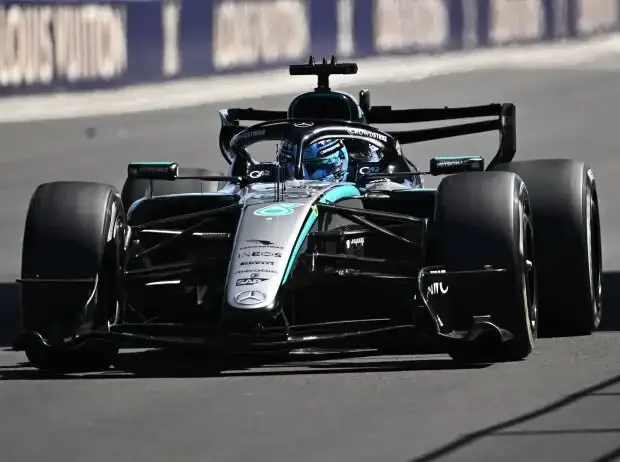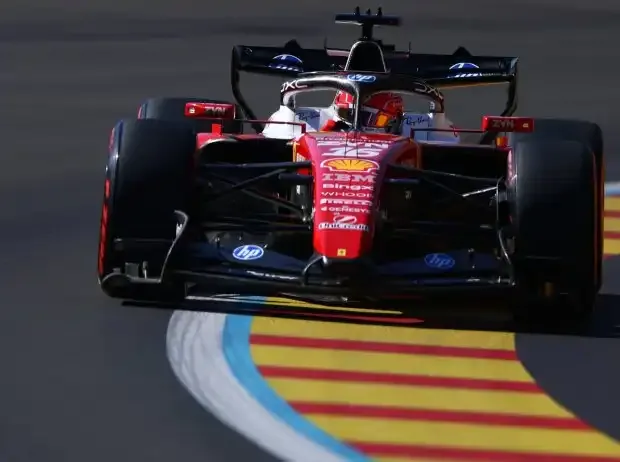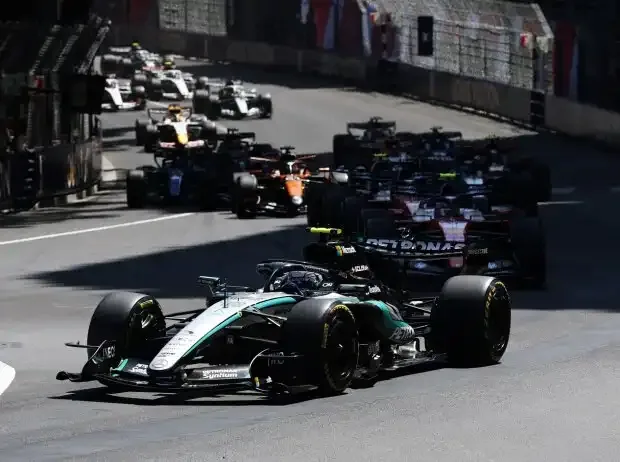



– Energy management is at the heart of Formula 1’s technical regulations for 2026. The decision to triple the power of the MGU-K compared to the previous year – albeit without an MGU-H and with a battery whose capacity has remained unchanged – presents the teams with a highly complex challenge.
Read more 24h Nürburgring 2026: Is Verstappen’s NLS start with AMG already confirmed?
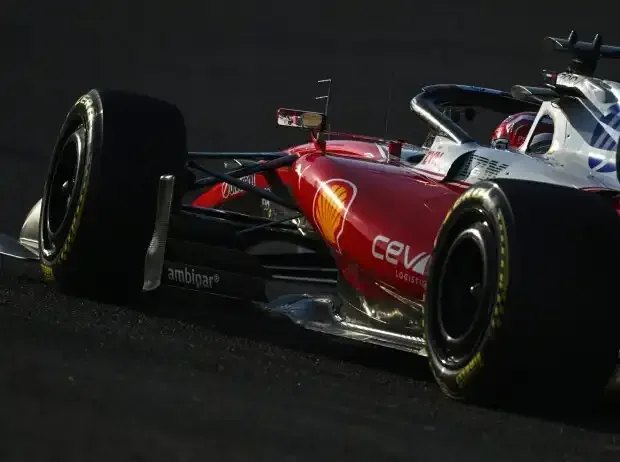
Even on a single qualifying lap, it requires a detailed analysis of when and how the energy is deployed.
With an available power of 350 kW and the same battery capacity, there is a risk, especially on demanding tracks like Melbourne, that drivers will run out of juice on the straights if management is incorrect. In the race, this scenario will be almost inevitable, but in qualifying, the situation is different.
The FIA was aware that on some tracks there is a risk that drivers will not push to the limit in order to recover energy – for example by lifting off the throttle earlier (“lift-and-coast”) to maximize battery charge.
In certain situations, it would actually be more advantageous to lose a few km/h at the end of the straight (where air resistance weighs more heavily than pure power) to charge the battery, instead of staying full on the throttle and ending up with an empty battery.
Three different profiles for practice, qualifying, and race
The underlying idea is simple: sacrifice a little in high-speed sections where the time loss is low to recover energy for later sectors.
If this compromise is calculated precisely, it could still provide a lap time advantage. The problem: there was a risk that these extreme tactics would be repeated constantly in qualifying – exactly at the moment when the drivers should actually be going absolutely to the limit.
For this reason, an article was added to the regulations a few months ago that allows the FIA to further reduce the limit of recoverable energy during a qualifying lap.
F1 expert reveals: THIS is what bothers me about Formula 1 2026!
This is intended to prevent drivers from using lift-and-coast even on a fast lap. This clause has now been activated by the federation for Melbourne – one of the most demanding tracks for energy management, as almost 70 percent of the lap is driven under full load, but there are relatively few braking zones.
For the race, the FIA has already decided to lower the recovery limit from 8.5 to 8 megajoules per lap. In free practice, it remains unchanged at the maximum value permitted in the regulations.
“This limit may be reduced to 8 MJ at competitions if the FIA determines that the maximum recoverable energy per lap attributable to braking and partial load phases does not exceed 8 MJ,” states the 2026 Technical Regulations.
Race, normal lap: 8.0 MJ
Race, Overtake mode: 8.5 MJ
Qualifying: 7.0 MJ
Free practice: 8.5 MJ
Outlap (not in race): 8.5 MJ
Only 7 MJ recovery per lap in qualifying
In qualifying, however, this limit is lowered even further, from 8.5 to 7 MJ, to avoid extremely tactical recovery methods on a flying lap.
Read more Victory and Tragedy: The Eventful History of US Teams in Formula 1
“This limit may be further reduced for Sprint Qualifying and Qualifying sessions at competitions, but not below 5 MJ, if the FIA determines that the strategies for complying with the previous limit [of 8.5 MJ] are excessive,” the regulations state.
This means that at the end of the straights, there will not only be less super-clipping – moments where the MGU-K works against the internal combustion engine while the driver is still full on the throttle – but drivers will also be less tempted to use lift-and-coast, simply because the recoverable amount is lower.
F1: Australian Grand Prix (Melbourne) 2026
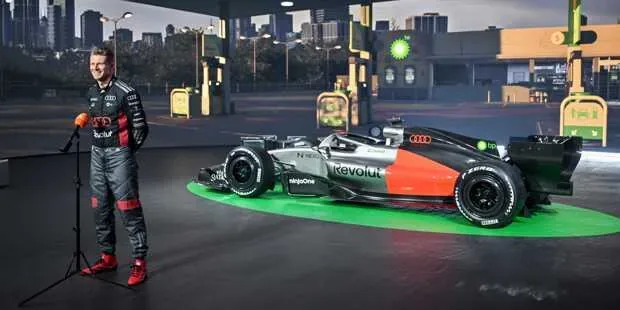
The current regulations stipulate that drivers may only recover 250 kW during super-clipping, not the full 350 kW of the MGU-K. In contrast, when lifting off the accelerator, recuperation is allowed at the maximum power of 350 kW.
Therefore, in certain situations – especially in the final meters before a hard braking zone where hardly any time is lost – some drivers would have tended towards lift-and-coast.
Sections for energy saving in focus
The only moments when drivers can utilize the full 8.5 MJ per lap are in Overtake mode, in practice, and on outlaps, although a clarification is necessary here.
The outlaps on which 8.5 MJ are allowed refer to practice and qualifying, so that drivers can start their flying lap with a fully charged battery. In the race, however, the limit of 8 MJ per lap also applies immediately after a pit stop.
Since Melbourne features full-throttle sections of over 3,500 meters, the FIA has prescribed a maximum power reduction rate of 50 kW/s to prevent sudden drops in speed on the straights.
However, there are exceptions: the federation has signaled that teams can refrain from using energy between Turn 11 and Turn 13 in the final part of the lap. There, a drop of more than 150 kW is allowed to save energy for sections where it is more useful.
However, this increased need for energy recovery compared to the previous year could cause significant traffic problems for some teams.
“Yes, because to charge the battery on the outlap in certain sectors, you have to drive slowly, but on some straights, you have to go full throttle. If you then have to let someone pass on that straight – where you should actually be going full speed – you’re done, right?” says Haas team principal Ayao Komatsu.
- Formula 1Premiere in Melbourne: Formula 1 introduces new starting procedure
- MotoGPDucati debacle in Thailand: Tardozzi speaks of “four slaps” at once
- 24h Nürburgring24h Nürburgring 2026: Is Verstappen’s NLS start with AMG already confirmed?
- Formula 1Formula 1 World Champion 2026: Almost all TV experts agree
“So in qualifying, there really is a lot of potential for a disaster. But that’s exactly why free practice is so important to me: you have to simulate this situation as well as possible. You can’t just arrive in Q1 and simulate qualifying for the first time there! What is the best compromise? That’s a huge aspect. It’s going to be a real challenge.”
Read more Formula 1 World Champion 2026: Almost all TV experts agree