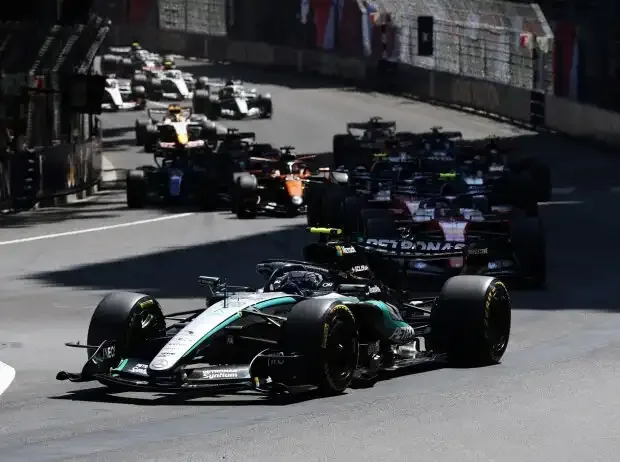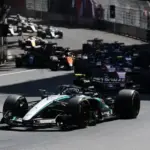
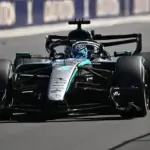


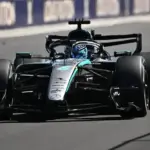
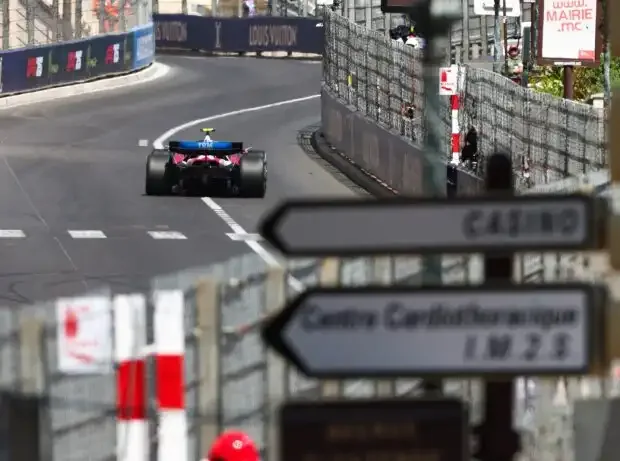
– Monaco is one of the most iconic events on the calendar – a timeless challenge spanning more than 70 years of racing history and welcoming a revamped Formula 1 this season.
Read more Lada Samara (1986): From Soviet Compact to Rally Satellite
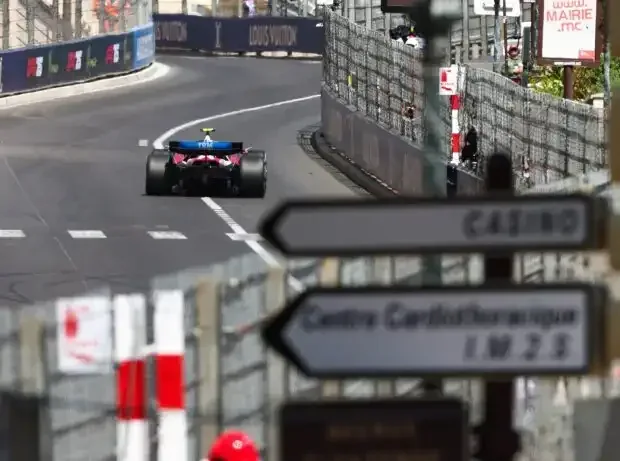
While the driver remains firmly at the center of the spectacle, the new technical regulations introduce key elements that will have significant impacts on safety and the teams’ approach to setup.
The first core point is that the FIA will not allow the use of active aerodynamics on any section of the entire lap. For the first time this season, drivers will therefore not be able to open their wings either in qualifying or in the race – not even on the start-finish straight, where it was allowed last year.
This is a deliberate decision based on a series of criteria to minimize the risks associated with activation.
Generally speaking, the FIA defines activation zones only on track sections where the car is not operating at the grip limit. In other words: these are points where the tires are not subjected to maximum lateral or traction loads, such as in the middle of a corner or at the corner exit.
The goal is to ensure conditions under which the wings can be safely deployed without compromising the car’s stability – even at the end of a stint on worn tires.
However, two further criteria come into play, starting with the minimum duration of the activation zone, which must be more than three seconds. This requirement prevents extremely short activations that would only increase the driver’s workload without providing a noticeable advantage in terms of performance or fuel efficiency.
Last year in Monaco, drivers held the rear wing open with DRS on the start-finish straight for just over five seconds, reaching around 290 km/h. Now, however, the 350 kW MGU-K delivers a significantly greater power boost during the acceleration phase, allowing the cars to accelerate faster to high speeds.
Since flipping the wing does not provide a real advantage and given the risk of approaching the braking zone of turn 1 too quickly – where an uneven track surface requires maximum downforce to prevent locking the front tires – the FIA has decided to disable the straight-line mode.
Special mapping results in lower top speed
However, this is not the only safety measure being introduced. Given the potential of the current power units with such a strong electric motor, some Grands Prix, including Monaco, will receive a specific engine mapping called “Rev1,” which sets an alternative limit for the MGU-K’s power curve.
Read more With special paint: McLaren celebrates 1,000 Formula 1 races
This intervention pursues two combined goals: preventing excessively high top speeds in areas such as the start-finish straight, the tunnel section, and the climb towards the casino, where drivers reached around 290 km/h last year, while simultaneously reducing the approach speed before critical corners like Sainte Devote, where the runoff area is tight and the risk of ending up in the barriers is high.
Photo gallery: Formula 1 teams with at least five wins at the start of the season
In Monaco, the maximum power is not reduced and remains at 350 kW, but the derating phase is modified. At other Grands Prix, the electric motor can deliver 350 kW in standard mode up to a speed of 290 km/h before gradually reducing the available power – to 250 kW at 310 km/h and to 0 kW at 345 km/h, unless teams opt for earlier clipping for energy-saving reasons.
In Monte Carlo, however, the cars deliver 350 kW only up to a speed of 200 km/h before entering the derating phase: at 270 km/h, the MGU-K’s power drops to around 100 kW, and at 300 km/h its contribution falls to zero.
Overtake mode also adjusted
This is purely a safety measure and not a result of energy issues, also because Monaco, thanks to the numerous braking zones that allow efficient battery recharging, is not a demanding track for energy management.
As a result, the overtake mode has also been revised, but according to a different principle. At other Grands Prix, the overtake mode allows the 350 kW to be maintained longer than in the standard mapping – namely up to 335 km/h – before power falls to 0 kW at 355 km/h.
Big setback for Russell: Does missing Canada cost the championship? | F1 Montreal 2026 race

In Monaco, however, the MGU-K stops delivering maximum power still at 200 km/h, just like in the standard Rev1 mapping, but the derating curve is less steep.
In practice, this means: while the standard mapping provides about 150 kW from the electric motor at 260 km/h, the overtake mode delivers almost 100 kW more.
Obviously, the teams have known about this for a long time: the FIA provides them with all technical specifications, including the allowed zones for active aerodynamics, at least four weeks before the event so that the teams can prepare for the weekend through simulations in the factory.
Read more 1,600 hp: Bugatti W16 Mistral one-off honors the Little Prince