

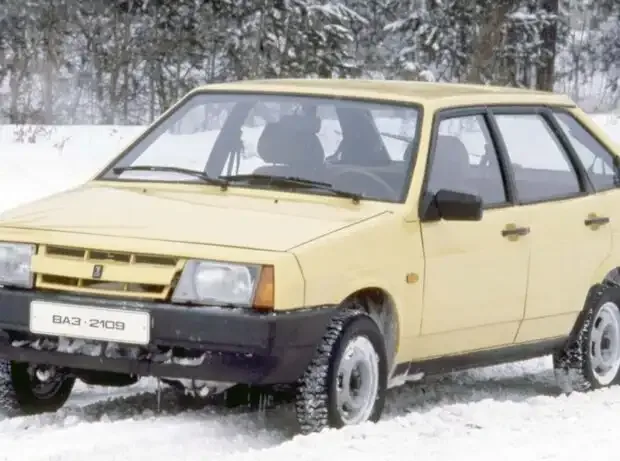
(Motorsport-Total.com/Motor1) – The Lada Samara is one of those cars that ultimately represents an entire era. Puristic, robust – but surprisingly modern for the Soviet Union of the 1980s. The compact marked a turning point for the Russian manufacturer.
Read more With special paint: McLaren celebrates 1,000 Formula 1 races
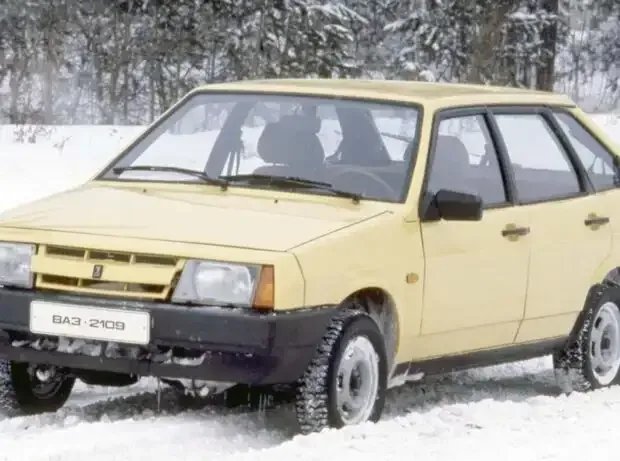
And then there is another side of this Lada that is less well known: the Samara EVA. A rally version that tries to connect to the myth of Group B with unusually advanced technical solutions.
Porsche as a development partner
Also known internally as BA3-2109, the story of the Samara begins in 1984. It is first presented to the public as a front-wheel-drive two-door hatchback. For AvtoVAZ, the car is a revolution, as until then they were accustomed to much more conventional concepts derived from the Fiat 124.
But now everything changed: transversely mounted front engine, modern chassis design, five-speed manual transmission, and carefully designed aerodynamics with a drag coefficient of 0.36 (comparatively low for the time).
At launch, the range includes three gasoline engines: a 1.1-liter with 55 hp (40 kW), a 1.3-liter with 65 hp (48 kW), and a 1.5-liter with 75 hp (55 kW). All units are simply constructed, operate with carburetors, but benefit from a cylinder head developed with Porsche’s involvement.
This small detail naturally makes one attentive regarding the technical ambition. The driving experience is down-to-earth, the setup rather firm. The Samara stands out positively for its good stability.
Read more 1,600 hp: Bugatti W16 Mistral one-off honors the Little Prince
Further development and rally excursion
In the domestic market, it is initially called Sputnik; for export, the Russians choose the name Samara. From 1986, Lada also arrives in Western Europe, where the compact stands out due to its low price and decent equipment. However, simple materials and limited comfort hinder success compared to Western competitors.
In 1992, the range is expanded with the notchback version (21099), followed by visual and technical updates in subsequent years. In 2000, a more distinct facelift brings changes to the front, interior, and engines, which are now equipped with electronic fuel injection.
Production continues for a long time, surviving the difficult period after the end of the Soviet Union. It only ends in 2013 for the long-runner.
At the same time, the Samara shows a rather unknown side in motorsport. The EVA project is created as a rally prototype with a tubular space frame, centrally placed turbo engine, and around 300 hp (221 kW). The bodywork still follows the series model.
The EVA was supposed to be the Soviet answer to the highly tuned Group B rally cars. But Lada was too late. The dream bursts with the end of the racing series, which was deemed too dangerous. But the idea survives. The technical legacy is used in later projects like the Samara T3, which competes in the Paris-Dakar Rally.
Read more June 2, 1996: When Michael Schumacher became the «Rain Master»
More stories from the Lada universe:
New Lada Niva revealed: Similarity to Duster, but not a Dacia
Forgotten studies: Lada X1, the Soviet Fiat Multipla