



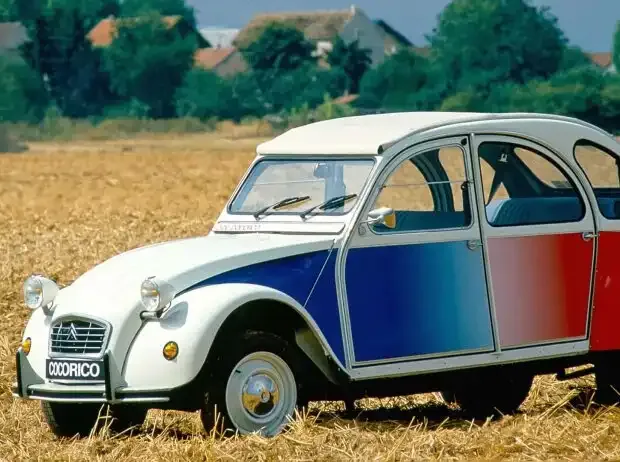
(Motorsport-Total.com/Motor1) – Which car symbolically represents France? Clearly, the Citroën 2CV aka “Duck”. A special edition of the “Döschewo” crowned it all 40 years ago. Allow me to introduce, the 2CV Cocorico
Read more 600 kilometers in Silverstone: Soon also training sessions for Mini at Alpine?
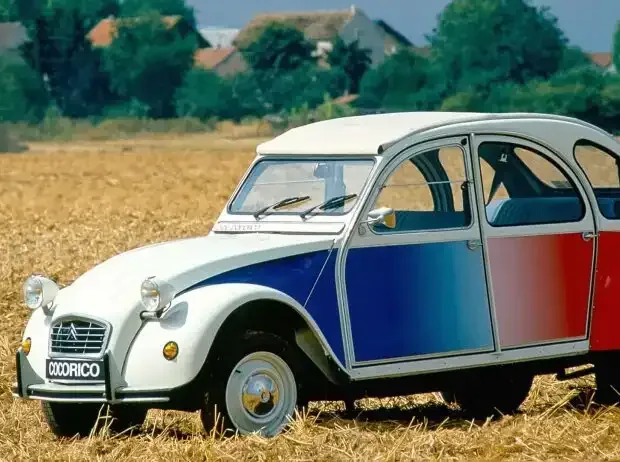
Citroën is currently preparing the return of the historic 2CV model as a purely electric vehicle, a near-production study is to be shown in October 2026. In this context, the brand refers to one of its historic special editions of the Duck, the 2CV Cocorico presented in 1986. This vehicle evolved over the decades from a contemporary special series to a sought-after variant on the classic car market.
The original 2CV was designed to provide simple and affordable mobility for a broad segment of the population. Throughout the production period, the manufacturer repeatedly launched various special models to attract new buyer groups. The 2CV Cocorico holds a special position here, as its creation is closely linked to the 1986 Football World Cup in Mexico.
France was one of the favorites of the tournament at the time, which prompted designer Serge Gevin to create a suitable vehicle concept. Although the French national team was eliminated in the semifinals against the Federal Republic of Germany, the company management decided on series production of the design. The vehicle was launched in October 1986 in a limited edition of 1,000 units on the French market.
Photo series: Citroen 2CV Cocorico (1987)
For the sales version, direct references to football were removed and instead the French national colors were brought into focus in the design. “Cocorico” is the French “cock-a-doodle-doo” and was meant to bridge to the Gallic rooster, one of France’s symbols. (As “Footix,” the rooster became the mascot of the 1998 World Cup in France, and a rooster can also be found on the windshield of the electric R5…)
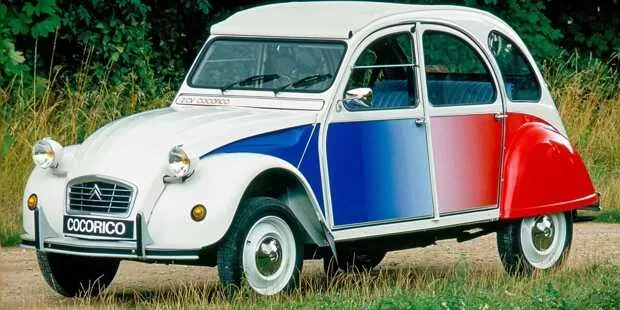
Visually, the 2CV Cocorico differs significantly from the regular series models. The body was delivered in the base color white (Blanc Meije) and featured a large gradient in blue, white, and red on the sides. Additional accents were set by red rear fenders in the shade “Rouge Vallelunga” as well as side air deflectors on the hood in “Bleu Cocorico”.
Read more Bortoleto is fed up with the ongoing debate about Formula 1 rules
A white fabric roof, white wheels, stainless steel hubcaps from the Dyane 6 model series, and red model lettering characterized the exterior appearance. Inside, special blue seat covers called “Tep Jean Bleu Sodalite” were used.
Technically, the special model was based on the then entry-level version 2CV 6 Spécial. The well-known air-cooled two-cylinder boxer engine provided the drive, generating 29 hp from a displacement of 602 cubic centimeters. The vehicle had an unladen weight of under 600 kilograms and was equipped with the typical soft suspension.
More Duck content:
Time travel: On the road in the Citroën 2CV
Citroën 2CV Charleston: Premiere 40 years ago
- Formula 1Why Mercedes and McLaren rely on different gearboxes
- MotoGPSurprising turn: One-bike rule for 2027 close to failing
- Formula 1Lewis Hamilton criticizes increasing software dependency in Formula 1
- MotoGPTechnical problems: KTM applies for permission to open engines
The limited series was sold until March 1987 at a gross price of 36,100 French francs. Although demand remained rather low during the official sales period, the 2CV Cocorico is now considered a rare collector’s item due to the low production number and specific appearance.
Read more Aston Martin and Thiim on DTM title course: Personnel coup as key?