


(Motorsport-Total.com/Motor1) – The Volkswagen Group is making deep cuts. According to recently published plans, they want to reduce complexity and variety in the product portfolio, align products, technologies, and development even more regionally to the markets, adjust capacities in the production network to market expectations, and streamline structures and the portfolio of holdings.
Read more Rio de Janeiro as favorite for launch event for MotoGP season 2027
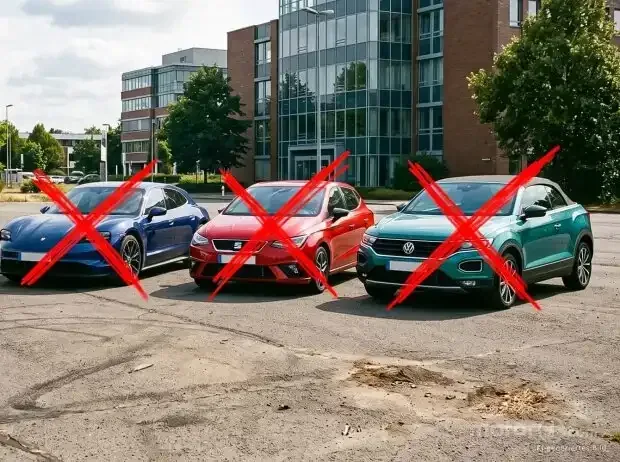
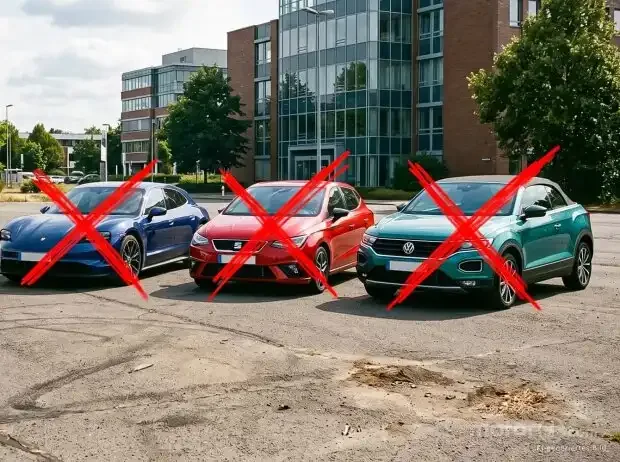
This means: The closure of German plants and job cuts are not unlikely. However, there are no concrete details yet. What is certain is that the model range will be gradually reduced by up to 50 percent and will focus on the most attractive market segments.
At the same time, the VW Group is reducing its annual production capacity to only nine million vehicles. This is a huge difference compared to the pre-Corona times when the company was still investing heavily to expand capacities to around 12 million cars. Since the pandemic, Volkswagen has already cut production by two million units and now wants to cut another million.
The offering complexity (for example, the number of possible equipment options) will be reduced by up to 75 percent. This will focus investments and development resources on the products and technologies that provide the greatest added value for customers and the highest value contribution for the Group.
This is primarily a task for sales. They will evaluate which equipment options are in low demand. The same applies to entire model series. Nevertheless, let’s take a look at which models could disappear in Europe. Note: could, because at this point these are all just speculations. Let’s start alphabetically.
Audi
The ranks are thinning at Audi as well: after the discontinuation of the TT, R8, and Q8 e-tron in recent years, the Ingolstadt-based company recently also said goodbye to the small car A1 and the city SUV Q2. However, a new A2 e-tron based on the VW ID.3 Neo is entering the program.
Also coming are a new Q7 and for the first time a Q9. In general, Audi’s SUVs are successful, but the Sportback variants of the Q3 and Q5 could become savings targets. A successor to the Audi A8 now also seems questionable. Possibly the Q9 will be assigned this role. The super sports car Nuvolari can be neglected; its 499 units have probably long found their enthusiasts. Speaking of sports: a new TT is uncertain, maybe Audi will connect here to the Porsche 718 electric to create economies of scale.
Bentley
“We have been profitable for the seventh consecutive year,” said Bentley CEO Frank-Steffen Waliser when presenting the 2025 financial figures. The British are currently preparing for the launch of the Torcal, an electric SUV. The luxury brand achieved sales of 2.6 billion euros in 2025. Deliveries fell by five percent, while sales only dropped by one percent. The reason is stronger demand for high-margin derivatives and individualized Mulliner models. The Bentayga remains the best-selling model, supported by the market launch of the Bentayga Speed.
Cupra
Cupra has only existed as an independent brand for a few years. But the results are impressive: in 2025, Cupra celebrated the sale of its millionth vehicle worldwide and achieved a total of 328,800 deliveries across all markets, an increase of 32.5 percent compared to 2024 (248,100). Nevertheless, the days of the now eight-year-old Cupra Ateca are likely numbered. The future of the Cupra Leon is open; the popular Formentor received a facelift in 2024. New impulses will come from the fully electric Raval, which is closely related to the VW ID. Polo.
Lamborghini
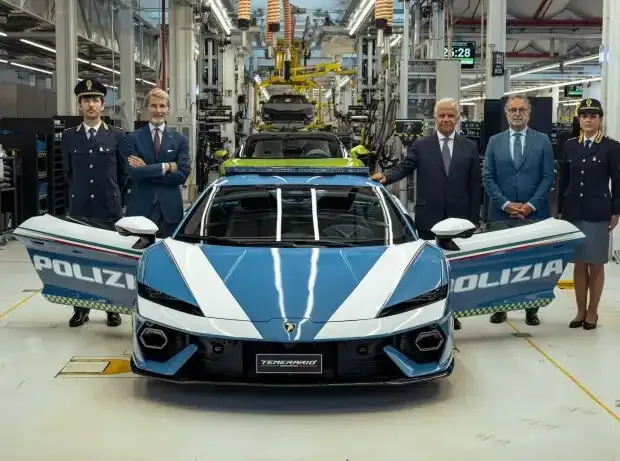
Temerario, Revuelto, Urus: Lamborghini has only three model series in its portfolio. And also very good numbers in the balance sheet. A cash cow that probably won’t be touched. CEO Winkelmann does not plan a purely electric model series in the near future.
Porsche
Speaking of cash cows: Porsche makes a lot of money from the 911, which is why there are now countless special models. In addition, company head Michael Leiters confirms that there will never be a purely electric 911. Porsche retired the 718 Boxster and Cayman last October and will end production of the original Macan with combustion engine at the end of this month.
Photo series: Porsche 911 GT3 S/C (2026)
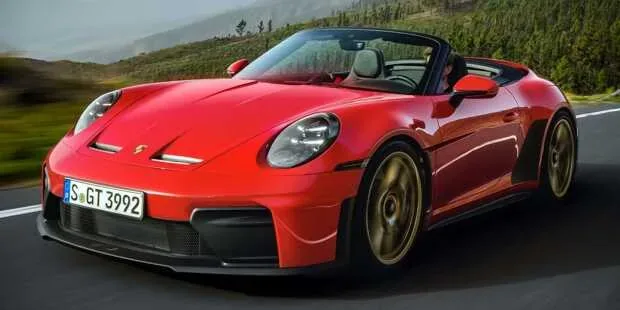
Worldwide, Porsche sells five times more 911s than Taycans. In the USA, the Taycan Sport Turismo and Cross Turismo have already been withdrawn from the market; other parts of the world are likely to follow. The electric successors to the 718 series will come, but like the new Macan, they will probably be supplemented by a hybrid. The future of the Panamera and the planned extra-large SUV remains uncertain. The electric Cayenne Coupe is still too new; its older combustion engine counterpart could become dispensable.
Read more Francesco Bagnaia uses MotoGP summer break directly for surgery
Seat
Seat celebrated its 75th anniversary with 257,400 units sold. A decrease of 17 percent compared to 2024, reflecting the industry’s widespread difficulties. The Spanish brand’s model range is outdated, but Arona, Ibiza, and Leon still sell well. In an interview with the British magazine Autocar, Seat board member and Volkswagen brand chief Thomas Schäfer said: “We are not letting Seat die. We just have to decide on the future of the brand.” According to Schäfer, Seat is “fine until 2028 or 2029.” What happens after that is unclear.
Skoda
For Skoda, 2025 was extremely successful and brought new record figures for the automaker. Thanks to a significant increase in sales, worldwide deliveries rose to a total of 1.04 million vehicles, with the Octavia, Kodiaq, Kamiq, and Fabia remaining the most popular models.
In the electric sector, the Elroq established itself as the strongest force with 110,000 units sold. This sales success pushed the company’s total revenue up by 9.1 percent to 27.8 billion euros. Currently, Skoda is launching the two electric cars Epiq and Peaq. The Czechs are also scoring well in Germany and are the strongest import brand with an 8.6 percent market share.
A candidate for discontinuation is the Scala, while Fabia and Kamiq could be absorbed by the Epiq in the long term. The Vision O has already provided a preview of the electric Octavia successor, which will not appear before 2029.
Volkswagen
The Volkswagen brand currently has an 18.4 percent market share in Germany. But also 17 model series. Ergo, the lawnmower will be used particularly heavily here. It is already certain that the VW Touareg and the compact van Touran have been discontinued. The T-Roc Cabriolet will follow them to the scrapyard in 2027. There are armament orders pending for the Osnabrück plant.
Most SUV model series can be considered secure due to their popularity. At most, cuts will be made in drives and equipment. Only the Taigo could disappear. Three models have been the core of VW for over 50 years: Polo, Golf, and Passat. But their production has been or will be relocated. The Polo now comes from South Africa, the Golf from Mexico starting in 2027, and the Passat is produced together with the Skoda Superb in Slovakia.
We suspect that the VW brand cannot afford duplicate structures in a vehicle class in the long term. This means: the current combustion Polo will not get a successor but will be replaced in the long term by the electric ID. Polo. Similarly with the future ID. Golf and ID. Passat. However, not before 2030, only with the Polo perhaps earlier.
Until then, the variety of drives in combustion engines will be modified. In the UK, the Golf diesel has already been discontinued. German customers will still be allowed to keep the diesel; its share in the Golf here is about 16 percent. In 2026, a full hybrid will come for the first time in the Golf and T-Roc (whose new edition no longer has a diesel), which could replace the diesel in the long term. The Passat, important in fleet business, is likely to diesel for a longer time.
And the commercial vehicles? They are already cooperating with Ford. A long-term end for the Multivan and the ID. Buzz could simplify the currently confusing Bulli lineup.
- MotoGPWhy Alex Marquez and “Diggia” are switching from Ducati teams to KTM
- Formula 1Is the super-intermediate now coming in Formula 1?
- MotoGPFrancesco Bagnaia uses MotoGP summer break directly for surgery
- Formula 1Mental coach explains: This is why Verstappen will put pressure on Red Bull
More from Audi and VW:
Audi Nuvolari: Stroll through London before Goodwood
The VW brand is launching ten new models in 2026. We show them
Read more «That breathes new life into an athlete»: Zarco trains for comeback