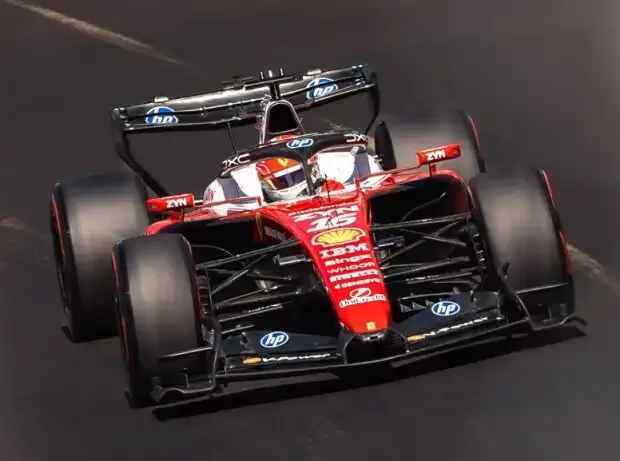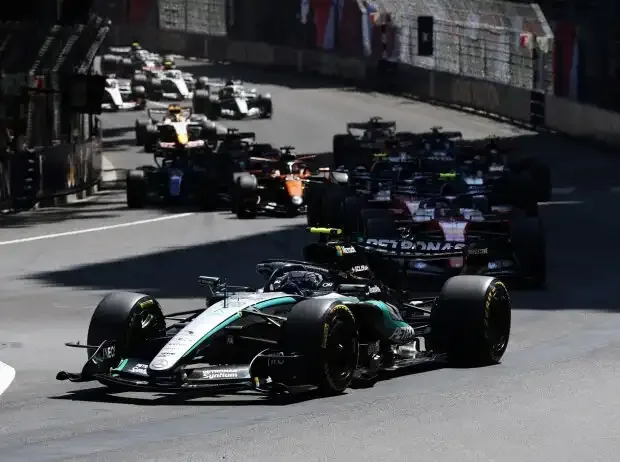


– Turning the clock back four months to the start of the 2026 season, the world of Formula 1 looked completely different than it does today. Kimi Antonelli had not yet won a race, Toto Wolff was still trying to convince everyone in the paddock that Red Bull would be “the absolute benchmark,” and Cadillac had not yet completed a single official Formula 1 kilometer.
Read more Where will Oliver Bearman race in 2027: Haas, Ferrari — or maybe even Red Bull?
Much has changed – but one thing has not. Before a race weekend, most media rounds in the paddock still revolve around the topic of energy management. Much to the frustration of many involved – including the drivers. At least the topic was somewhat less in focus in recent months after the FIA made adjustments. However, this was mainly due to the track layouts. On circuits like Miami, Monaco, or Montreal, there were enough opportunities to recharge the battery.
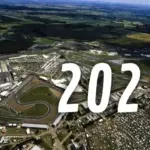
At Silverstone and Spa-Francorchamps, energy management is now back in the spotlight. The reason is obvious: both tracks consist mostly of fast corners and long straights. There are hardly any opportunities for energy recovery.
The irony of the whole situation: these are actually the tracks for which Formula 1 cars are built. The places where these vehicles really come to life, as drivers repeatedly emphasize. How often have we heard that Formula 1 cars are actually not made for street circuits and only show their true potential on classic race tracks with fast corners?
Unfortunately, the reality in 2026 looks completely different – almost the opposite. Or, to put it more precisely: what was said still applies to the chassis. The new suspension regulations are by no means bad; in fact, compared to the ground-effect era, they probably represent a step forward. But the restrictions on the power units overshadow this positive impression on many tracks where Formula 1 should theoretically be able to play to its greatest strengths.
Before Spa, I was reminded of the question I asked Lando Norris in China. At that time, I wanted to know if the challenge of the most legendary Formula 1 corners would change this year.
What Norris said in China
In his answer, Norris immediately referred to Spa-Francorchamps: “You won’t see who has the biggest balls in Pouhon anymore,” said the reigning world champion with a grin. “You won’t experience that anymore. Instead, you’ll see who lifts at the right spot and gives just enough throttle so that the battery isn’t overly stressed.”
“The driver can still make a difference by using the power unit to its limit. But that is a completely different kind of challenge than simply seeing who can go through Pouhon at the highest speed.”
Why McLaren is now playing ALL its cards!
It is no coincidence that Norris mentioned Pouhon specifically. Eau Rouge/Raidillon has been taken flat out for years without problems. That’s why many drivers in the ground-effect era spoke about Pouhon with special reverence – the fast double-left corner that, according to Lance Stroll, fills a driver with adrenaline every time, no matter how often they have driven it. Except in 2026.
Is Alonso’s Formula 2 warning justified?
The Spa experience will change in two ways this year. First, the challenge of brave corners like Pouhon disappears – just like the high-speed sections Copse and Maggotts-Becketts at Silverstone, which Fernando Alonso called a “charging station.”
Even more significant, however, is the energy management over the entire lap. Several drivers have already expressed concerns about this before Spa – foremost Alonso: “You can’t use energy on all the straights. If you use everything from turn 1 to turn 5 at Spa, then it’s over for the rest of the lap,” explains the two-time world champion.
“That’s why you have to save some there to be able to use energy between turn 14 and the Bus Stop chicane. But if you use the energy on these two straights – which is actually the optimal strategy – then you drive the entire second sector, about a minute long, completely without deployment. And if there is no deployment left at all, we must not forget that this year we have significantly less power than last year. Even less than a Formula 2 car.”
Without support from the MGU-K, this year’s Formula 1 cars produce around 540 hp from their combustion engines. According to official figures, the Mecachrome engines of Formula 2 produce about 610 hp.
Read more Nico Hülkenberg ends speculation: This is how clearly he speaks about his Audi future
Over a complete lap, Formula 1 cars will of course not be slower than Formula 2 vehicles. Alonso’s statement refers exclusively to certain sections of the second sector, not to the overall lap time.
In addition, drivers in 2026 often portrayed the situation particularly bleakly – including at the media day in Silverstone. In practice, however, reality seemed somewhat less dramatic than the worst fears. Apart from the yo-yo racing in the sprint race and the unusual Mercedes trick in qualifying.
McLaren and Williams expect “significant” superclipping
However, it is not only the drivers who are concerned about Spa. The teams are also looking at the race weekend with great skepticism. In the team preview for the Belgian Grand Prix, McLaren even calls Spa with the 2026 cars “a shock to the system.”
“The Belgian Grand Prix will be incredibly demanding from an energy management perspective. It is by far one of the tracks on the calendar where the available energy is tightest,” explains Neil Houldey, Technical Director for Applied Engineering at McLaren. “We expect a significant amount of superclipping. This will put both the car and the drivers to a tough test.”
This superclipping is expected, among other places, on the approach to Les Combes at the end of the Kemmel Straight and later on the lap towards Blanchimont. Especially on Friday, however, it is likely to vary from team to team where and to what extent the available energy is used.
Williams also expects a real battle of the batteries in the Ardennes and has already explained where the biggest weaknesses of the track lie in 2026: “Spa is by far the most energy-sensitive track we have raced on this season,” says Williams’ Chief Race Engineer Paul Williams.
“The approach to Eau Rouge can be varied through a compromise between deployment profile, energy efficiency, and the setup-related advantages in ride height on the climb.”
“We expect to use the entire energy window: full energy storage at turn 1, empty by turn 5, then full again at the exit of turn 14 and completely depleted again by turn 18. This results in a significant energy deficit in the second sector, so superclipping is likely both with little and with a lot of fuel on board.”
“Spa definitely shouldn’t be interesting like this”
This assessment from Williams aligns with Alonso’s warning. Using the available energy on the Kemmel Straight and later again towards Blanchimont and the Bus Stop chicane seems the most logical strategy. At the same time, this could make the second sector a particularly painful section.
While Spa 2026 certainly offers room for different deployment strategies, and analyzing the data after the first practice sessions will undoubtedly be interesting, let’s be honest: Spa, still one of the most legendary race tracks on the calendar, definitely shouldn’t be interesting like this.
At least the balance will shift slightly back in favor of the combustion engine next year. Ironically, Spa will not be on the calendar in the new rotation system then. The only bright spot: when Formula 1 returns to Belgium in 2028, the ratio between combustion and electric drive will be 60:40. Hopefully, analyses like this will then finally be a thing of the past.
- Formula 1Why Lando Norris is penalized ten grid places in Belgium!
- MotoGPWhy Alex Marquez and “Diggia” are switching from Ducati teams to KTM
- MotoGPMotoGP concession system: Ducati relegates, Aprilia promotes
- Formula 1Nico Hülkenberg ends speculation: This is how clearly he speaks about his Audi future
However, the reality of 2026 looks completely different. The most legendary tracks in Formula 1 turn out to be its biggest problem cases. That is a sobering conclusion. The pinnacle of motorsport must learn from this. Not just for the coming years, but permanently.
Read more Audi A3 (1996-2003): The more upscale four-door Golf turns 30