







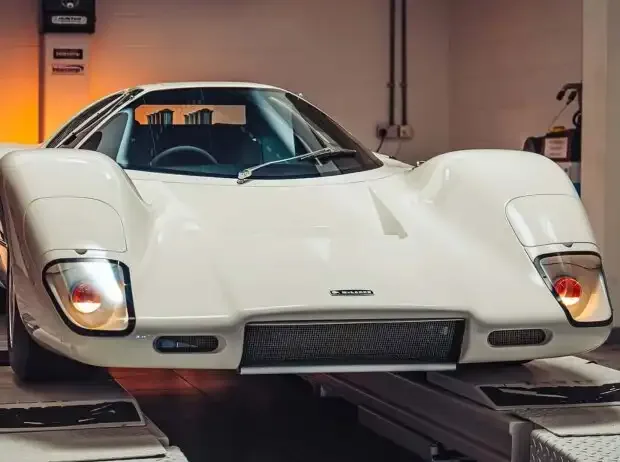
(Motorsport-Total.com/Motor1) – When legendary McLaren road cars are mentioned today, most think of the F1, P1, or W1. However, the story actually began back in the late 1960s. With the M6GT, company founder Bruce McLaren wanted to prove that the technology of his successful race cars could also be transferred to the road.
Read more «Nervous than when racing»: Franco Colapinto is looking forward to the World Championship final
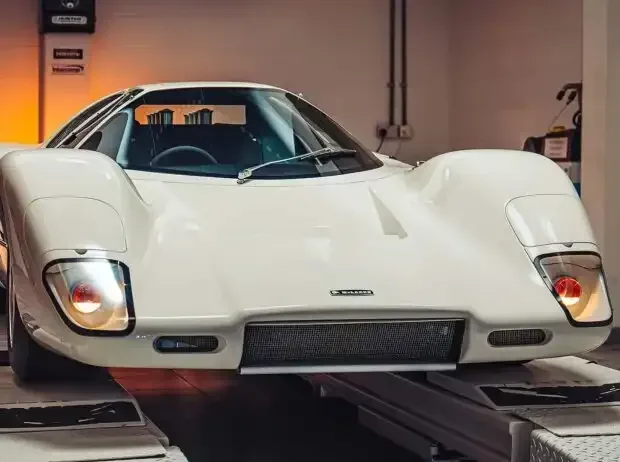
Now McLaren Special Operations (MSO) has faithfully brought this almost forgotten chapter of the company’s history back to life. The restored M6GT will make its public debut at the Goodwood Festival of Speed 2026.
The M6GT was much more than a one-off. Bruce McLaren used the first prototype himself as an everyday vehicle for appointments and racing events. His idea was a uncompromisingly light road sports car with racing technology, mid-engine, distinctive butterfly doors, and an aerodynamically shaped body. However, after Bruce McLaren’s fatal accident in 1970, the project disappeared into a drawer. It was only about 25 years later that the legendary McLaren F1 revived many of these basic ideas.
Restoration down to the smallest detail
For the new edition, MSO delved deep into the company archives. The body was created using the original molds, which were rediscovered in the UK. Historical drawings, photographs, and reference vehicles served as templates to stay as close as possible to Bruce McLaren’s original vision.
The base is a contemporary chassis of an M6A CanAm race car, which was carefully restored. Numerous components could be refurbished, while others had to be completely newly manufactured as custom parts. Even invisible structural parts such as roll bars, rear frame, or wiring harness were handcrafted by the specialists.
Read more Data Analysis: How Much Slower Formula 1 Is in 2026 Compared to the Previous Year
Technically, McLaren also remained true to the original. Behind the seats works a small-block V8 in historically correct specification with the characteristic “Camel Hump” cylinder heads and a matching transmission from that era. The chassis consists of original M6GT components, for which some long out-of-production inch-sized bearings had to be sourced.
Even seemingly minor details received special attention. Closed aluminum rivets were used according to historical models, as they are still mainly used today in aviation. In the cockpit, there is a hand-turned walnut gear lever and green vinyl seats with period-appropriate finishing. Even the special windshield was newly created based on digital scans of the original.
Origin of McLaren road cars
The one-off is painted in the specially developed color “Colnbrook White.” The name recalls the former company headquarters near today’s Heathrow Airport, where Bruce McLaren developed his vision of a road sports car. The combination of cream-white paint and green interior simultaneously picks up the color scheme of his first Formula 1 race car from 1966.
For McLaren, the restoration is more than just an exhibit. It marks the start of a new heritage collection from McLaren Special Operations and creates a direct link between the CanAm race cars of the 1960s and today’s super sports cars of the brand. The M6GT impressively shows that the basic idea behind modern McLaren road cars was already born more than half a century ago.
Read more Tenth World Championship Title Within Reach: This is What Marquez Had to Fight and Suffer For