





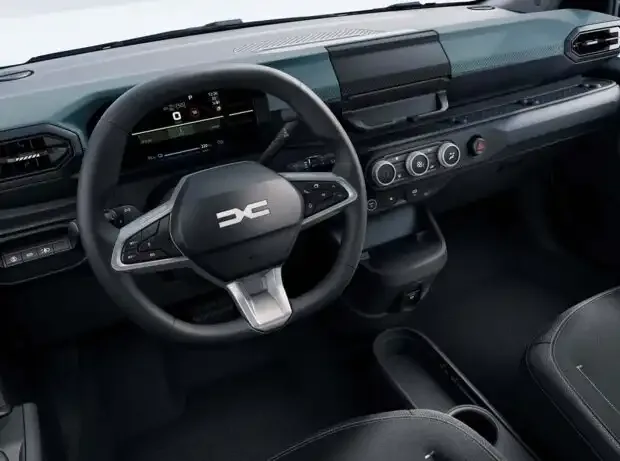
(Motorsport-Total.com/Motor1) – The Dacia Spring forgoes a fixed infotainment screen in the center console in its cheapest trim level. Instead, the integrated Media Control system allows you to fix your own smartphone in a holder and control navigation or music via steering wheel buttons. This pragmatic omission reduces hardware costs and relies on technology the customer already owns anyway.
Read more Arvid Lindblad confident after crash: «I am allowed to make mistakes»
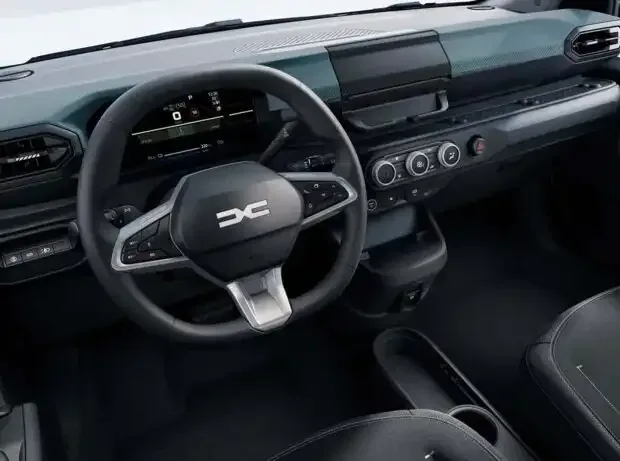
With the base Spring, the smartphone can be connected to the car – effectively becoming the infotainment system. Why spend money on another display when you already have a functioning one in your pocket?
It is a typically pragmatic Dacia solution. The entry-level Spring comes with the Media Control system, which uses the smartphone for navigation, music, radio, calls, and other multimedia functions. There is a dedicated holder for the phone on the dashboard, while important functions can be operated via buttons on the steering wheel without constantly tapping on the device. In other words: Dacia has not forgotten the infotainment screen. The brand has just decided that you should bring it yourself.
And before anyone thinks this is a radically new idea developed specifically for the second Spring generation: Dacia has been doing this for some time. Media Control has been available for several years in entry-level versions of other models as well. The idea is always the same: keep the cockpit simple, use hardware the customer already owns, and do not charge extra for a screen they might not even need.
2027 Dacia Spring base model without central display
The concept without a central screen is not new
Dacia did not invent this principle; Volkswagen had a similar solution many years ago with the up!. Fiat also handles things similarly with the Panda without a central display. Of course, there are disadvantages. If you lose the smartphone, the battery is dead, or it is left at home, the infotainment system suddenly disappears as well. And understandably, some buyers will prefer a screen integrated firmly into the dashboard.
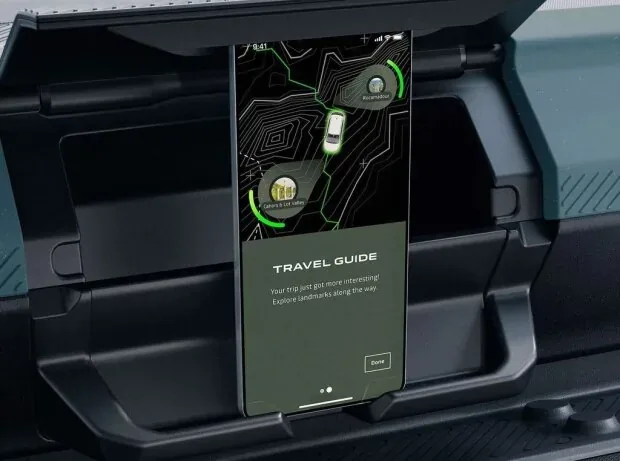
For an affordable electric car, Dacia’s approach is refreshingly honest. The industry has made displays bigger, more numerous, and harder to avoid for years. Dacia basically says: You already have a screen. Use it. It also prevents the Spring’s interior from becoming the next rolling electronics exhibition.
For buyers who prioritize an affordable electric car over a huge display in their field of vision, this does not even have to be a compromise. Speaking of affordable: For Germany, the Romanians had not announced prices at the time of this text’s publication. However, the new Spring starts in France at €17,900, with the next higher trim starting at €19,400.
Those who stick with the base model save €1,500 and still get quite a bit of equipment. The seven-inch digital instrument cluster is standard, as are electric front windows, air conditioning, electric parking brake, and electrically adjustable exterior mirrors. What looks like alloy wheels at first glance are actually 15-inch steel wheels with two-tone hubcaps.
Read more MotoGP Misano 2026: Marc Marquez triumphs after Bezzecchi crash
Back to basics
The missing screen is not the only change inside, as the base model also forgoes the start button and instead uses a classic key. Both trims have rear pop-out windows instead of sliding ones – a solution the Spring shares with its technical twin, the Renault Twingo. We suspect the upcoming Nissan Pixo will adopt an identical concept, as it is based on the same platform as the Spring and Twingo.
Since it is a car sold in the strictly regulated EU, the Spring comes with numerous safety and assistance systems: lane keeping assist, lane departure warning, camera-based fatigue and attention monitoring, traffic sign recognition, hill start assist, and tire pressure monitoring system. The list goes on, as Dacia also equips the entry-level Spring with automatic headlights and automatic emergency braking including pedestrian and cyclist detection.
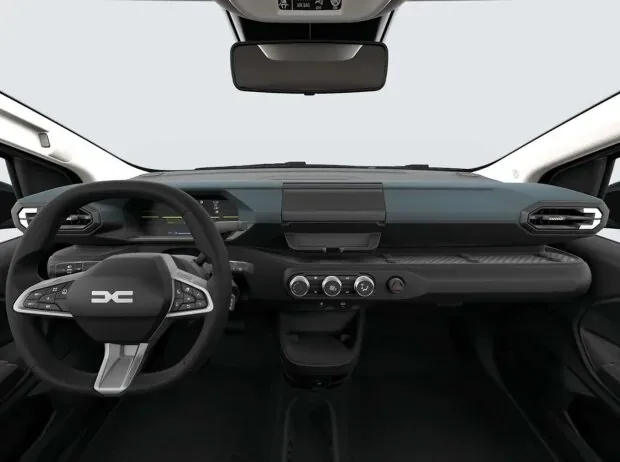
The more expensive version additionally offers a 10-inch touchscreen, larger 16-inch wheels, a rearview camera, keyless entry, a start button, and other extras like USB-C ports. Options include heated front seats, faster charging with 50 kW, and Vehicle-to-Load (V2L) to power external devices. The front trunk is also listed as an extra, although Dacia probably means the cover over the compartment – the opening itself is already present.
Motor1 says: In 2026, it almost feels rebellious for a car not to have a central screen. While manufacturers install displays wherever possible, Dacia chooses the refreshingly simple path and tells customers: Use the screen you already have. Sure, those expecting a cockpit dominated by a huge touchscreen won’t be impressed. But that’s not what the Spring is about. It is meant to be affordable – and omitting non-essential hardware is exactly the right way to keep the price low.
The bigger question is whether buyers will actually accept this compromise. The next higher trim is not much more expensive and brings several other improvements besides the screen. I have the feeling most will choose the better-equipped version.
All display, or what?!
Study shows: Passenger displays are not as popular as car manufacturers think
Mazda: Large screens distract drivers less than buttons
Read more DTM Race Sachsenring 2: Dörr wins in chaos ahead of Preining, penalty for Engel
Source: Dacia