








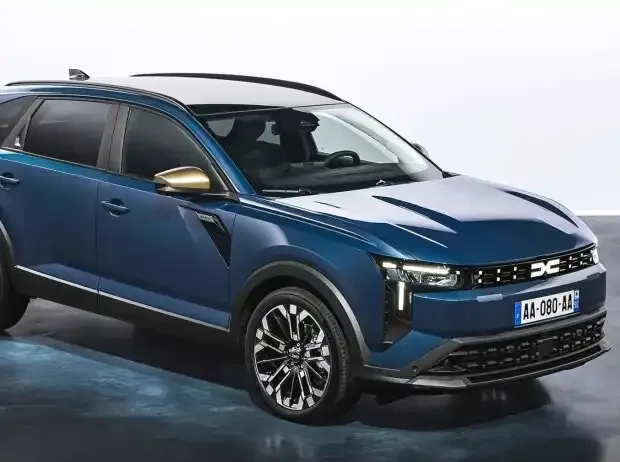
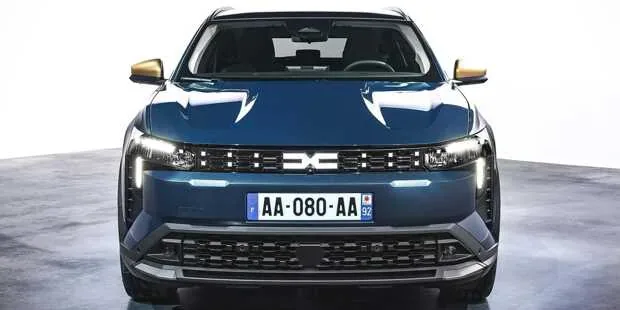
(Motorsport-Total.com/Motor1) – As already announced in March 2026 during the presentation of its strategy plan for 2030, Dacia is expanding its offering in the C-segment with the Striker. As a new alternative to SUVs, the Striker is intended to enable the brand to reach new customers in both the private and business customer sectors.
Read more Pirelli: Why a makeup race in the Middle East would be difficult
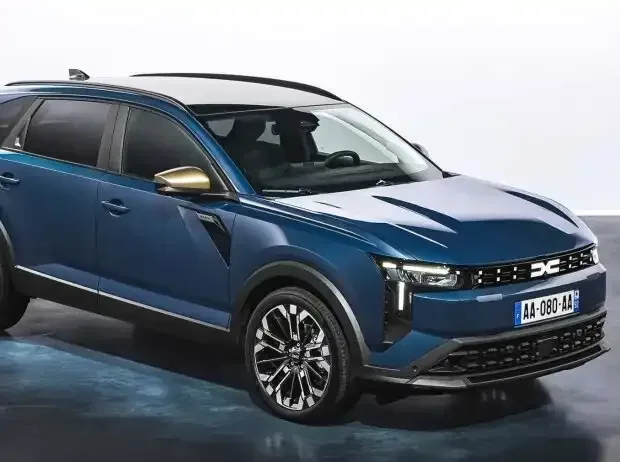
The Striker was developed to complement the Bigster model. The goal is to increase the share of the C-segment in total sales from 20 percent to 33 percent by 2035. The name “Striker” is universal in the sense of “scoring a hit” or “hitting the target.” Think of the “strike” in bowling.
Interior
The dashboard of the Dacia Striker is characterized by a horizontal design and is divided into three functional levels. The level closest to the occupants uses textile surfaces and, for the first time, the sustainable material Starkle, which extends to the front doors for a coherent overall impression. The second level houses physical switches for the most frequently used controls.
The third, more rearward level houses the displays, including a standard digital instrument cluster called LightVisio, which presents driving-relevant data as a floating 3D image via optical reflection, as well as the standard 10.1-inch central touchscreen. Depending on the equipment, a navigation system is standard there.
Depending on the equipment, the infotainment system offers connected navigation with real-time traffic information, eight years of map updates, and an Arkamys 3D sound system with six speakers as Media Display or Media Nav Live. Horizontal air vents echo the T-shaped light signature of the exterior. The cockpit also integrates cable routing between the glove compartment and center console as well as an ice scraper hidden behind the door when closed. Ice scraper? Greetings from Skoda …
Photo gallery: Dacia Striker (2026)
The high center console offers modular storage solutions such as a 6.7-liter compartment under the armrest, an optional sliding drawer, and removable cup holders. Using the YouClip system with up to nine attachment points, accessories such as a new bottle holder, a blanket with playmat function, or a multipurpose net can be flexibly fixed in the passenger compartment.
The interior offers space for five people and can be equipped with a panoramic glass roof made of multilayer, low-emission glass in the Extreme trim and optionally in Journey, which improves thermal and acoustic comfort. Targeted noise insulation is also supported by aeroacoustic optimization, sound-absorbing materials, and thicker glass for the windshield and front side windows. Comfort and safety are enhanced by the Autohold system, standard for the first time at Dacia from the Expression trim, as well as fog lights with cornering function.
To meet the European safety standard GSR2, all versions come factory-equipped with an automatic emergency braking system with vehicle, pedestrian, cyclist, and motorcyclist detection, traffic sign recognition with speed warning, rear parking sensors, emergency brake light, lane departure warning with lane keeping assist, advanced driver fatigue detection, emergency call system, and adaptive cruise control.

An optional ADAS package expands the scope to include a blind spot warning, automatic emergency braking when reversing, a safe door opening warning system, emergency braking at intersections, rear cross-traffic alert, and a surround-view camera. Through the My Safety function, the driver can individually preconfigure preferred assistance systems and activate them collectively at vehicle start.
The luggage compartment has a capacity of up to 600 liters in the normal state. The hands-free Easy Trunk Opening system, standard in the Journey trim and optional for Extreme, automatically opens the electric tailgate with an acoustic and visual signal as soon as the user stands briefly behind the vehicle with the key. The standard two-part luggage compartment cover can be stowed in a compartment under the loading floor when not in use.
The Extreme and Journey variants also feature a three-part, two-level adjustable loading floor that divides the trunk, creates a flat loading surface with folded rear seats, and is reversible thanks to a carpet and a plastic side. The 60/40 split rear seat can be folded down via two handles from the trunk or via straps from the rear seats using the Easy-Fold system.
Drive/Motors
First: According to the manufacturer, the Striker weighs around 1,400 kilograms and has a drag coefficient (cW) of 0.29. It is available with four electrified powertrains; there is no diesel.
The Striker Mild Hybrid-G 140 combines the autogas technology with a 48-volt mild hybrid system and a six-speed automatic or manual transmission as a bi-fuel LPG drive. The hybrid system supports the 1.2-liter three-cylinder turbo engine during start-up and acceleration, while braking energy is automatically fed into a 0.8 kilowatt-hour battery.
In LPG mode, CO₂ emissions decrease by an average of 10 percent compared to a pure gasoline engine. The gas tank is space-savingly installed under the trunk floor, so the loading volume remains unaffected. Switching between gasoline and autogas occurs either automatically or manually via a switch on the dashboard.
Read more «It would be an honor»: Norris talks about Le Mans with Valentino Rossi
As another option, the Striker Hybrid 155 offers a classic full hybrid drive. This consists of a 1.8-liter four-cylinder gasoline engine with 109 hp, two electric motors with 49 hp, a high-voltage starter generator, a 1.4 kilowatt-hour 280-volt battery, and a clutchless multi-mode automatic transmission.
The transmission has four gears for the combustion engine and two stages for the electric drive. Thanks to efficient recuperation, the vehicle always starts electrically and can cover up to 80 percent of city driving time without the combustion engine, resulting in CO₂ emissions below 100 grams per kilometer.
The Striker Hybrid 150 4×4 offers all-wheel drive, combining a 1.2-liter mild hybrid gasoline engine with 140 hp and 230 Newton meters of torque at the front axle with a six-speed dual-clutch transmission including steering wheel shift paddles. At the rear axle, a decouplable electric motor with 31 hp and 87 Newton meters of torque is used, which has a two-stage automatic transmission.
This setup provides high torque at low speeds off-road and ensures the consumption of a front-wheel drive vehicle when decoupled. Pure electric phases occur via the front axle and account for up to 60 percent of driving time in urban environments, while the all-wheel system remains in standby mode in Auto, Eco, and Snow modes and automatically engages up to a speed of 140 km/h when needed.
At maximum load of all motors, the system output is 150 hp. Five driving modes are available for different surfaces: Auto, Eco, Snow, Mud/Sand, and Off-Road. Additionally, a hill descent control, standard in the Extreme trim, regulates speed on slippery slopes constantly between 3 and 30 km/h.
Equipment and Prices
There is no official price list yet. According to Dacia, base prices are expected to start below 25,000 euros. For comparison: The Bigster starts at 23,990 euros in Germany. Factory accessories for dog owners will also be available, as well as a roof box. The names of the trim levels are known from current Dacia models.
The Striker Essential offers all essential features of its segment: 17-inch steel wheels, roof rails, Media Display with 10.1-inch central screen, connected services and smartphone mirroring, 7-inch LightVisio digital instrument, manual air conditioning, rear parking sensors and rearview camera, electric windows front and rear, and more.
The Striker Expression offers higher comfort: like Essential plus 17-inch alloy wheels, dual-zone automatic climate control, electric parking brake with Autohold, high center console with armrest, electrically folding exterior mirrors, air vents and two USB ports in the rear, and more.
The Striker Extreme is designed for outdoor use: like Expression plus 18-inch alloy wheels, exterior and interior accents in Copper Brown, panoramic glass roof, keyless card, washable Microcloud TEP plastic upholstery, rubber floor mats and trunk mat, 10-inch digital instrument, Media Nav Live system with 10-inch central screen and connected navigation, Arkamys 3D sound system with six speakers, hill descent control, and more.
The Striker Journey stands for the joy of traveling: like Expression plus 18-inch alloy wheels, electric tailgate, keyless card, high center console with armrest, electrically adjustable driver’s seat, heated front seats and steering wheel, Media Nav Live system with 10.1-inch central screen and connected navigation, Arkamys 3D sound system with six speakers, wireless smartphone charger, and more.
The order start for the Striker is expected in Germany in October 2026. The market launch is planned for December.
The Striker’s Competitors:
Opel Astra: This is the cost of the major facelift for 2026 (Update)
BYD Seal 6 DM-i Touring (2026) in test: Is the China station wagon worth it?
Read more Williams in crisis? Vowles speaks frankly about the development