







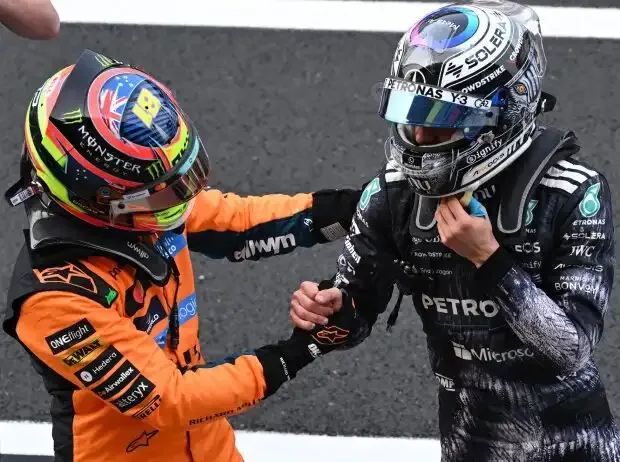
– In reality, Oscar Piastri was robbed of a potential victory at the Formula 1 race in Japan by the safety car, but the McLaren driver secured the win in the driver ratings from Motorsport-Total.com – incidentally, not ahead of the actual race winner Andrea Kimi Antonelli, but ahead of an underdog.
Read more Formula 1 live ticker: How big is the Red Bull gap?
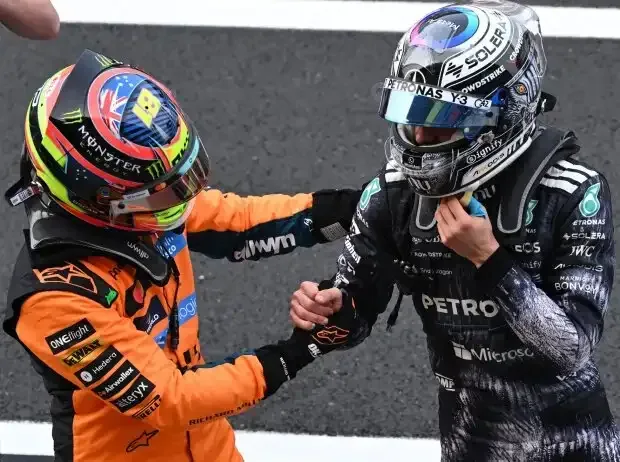
Piastri’s success was unchallenged with an average rating of 1,21, as the Australian was the only driver to receive the top mark of 1 from both the editorial team and Formula 1 expert Marc Surer. After two non-participations, the Swiss expert credited Piastri with “a strong qualifying and a perfect race.”
The editorial team did not award any other 1, but Surer gave a second one: to Pierre Gasly. “What a perfect performance from him in qualifying and the race,” he commented after Gasly’s seventh place, where he also kept Max Verstappen at bay. With a rating of 1,66, he therefore finished second in the rating rankings behind Piastri.
Why Antonelli did not get the top mark
The actual race winner Andrea Kimi Antonelli, on the other hand, was “only” third. Although the Italian received the best rating from the readers with 1,56 (Piastri received 1,64), because both Surer and the editorial team only gave a 2, he had to settle behind Piastri and Gasly.
Japan Data: Why Antonelli would have won even without the safety car!

“For pole and victory I usually give a 1 …,” Surer noted, but for the botched start, which was his own fault and for which Toto Wolff wanted to send him back to driving school, the ex-driver deducted some points.
That and the fact that, unlike teammate Russell, he did not make his way back through the field as quickly, was also the reason the editorial team denied him the top mark.
Close race for sixth place
Speaking of Russell: He was basically rated with a 3 throughout and still managed to finish sixth behind Charles Leclerc and Esteban Ocon. However, the dethroned championship leader could very well have left the weekend without any points.
Because between sixth place (Russell 2,99) and eleventh place (Hadjar 3,04) there was only 0,05 rating points. Since the editorial team and the expert rated all drivers there with an average of 3, it came down to the readers’ rating here.
And there, only 0,15 rating points separated Russell’s 2,97 and Hadjar’s 3,12 – so voting can be worthwhile and make a difference!
Photo gallery: Suzuka: The driver ratings from Marc Surer and the editorial team
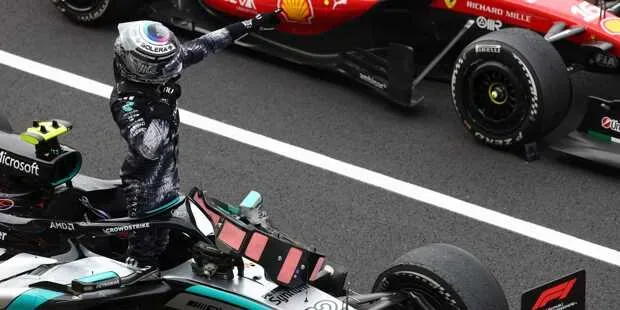
Max Verstappen also received a 3 from both Surer (“Qualifying bad, but he was able to make up for it somewhat in the race”) and the editorial team, but because the readers penalized him more heavily, the Red Bull driver – like Nico Hülkenberg in 15th – remained without points.
Currently, the Dutchman is only in 13th place overall with six points from Australia.
Last in the Japan rankings was Franco Colapinto, who was penalized with a 5 by Surer and the editorial team and was only rated better than Lance Stroll (4,40) by the readers with 4,20.
Read more Mattia Binotto: Solving the starting problem at Audi is top priority
In the overall standings, Russell defended his lead ahead of Leclerc and now Gasly. Antonelli, however, is only one point behind the Frenchman and the equally pointed Hamilton in fifth place. Piastri, Norris, and Ocon were able to score for the first time in Suzuka, meaning only the two Cadillac and Aston Martin drivers as well as Alexander Albon are still on zero points.
How transparent is the driver performance in 2026?
How the editorial team discussed the driver ratings after the Japanese Grand Prix will be a topic on Monday evening from 20:30 in the call-in show “Live bei Scheuren” on the Formel1.de Twitch channel. Host Kevin Scheuren invites users to join personally via Zoom and chat with him about the Japanese Grand Prix and Formula 1.
FIA reaction to Bearman crash: Will anything be changed? I F1 Japan 2026
After the race weekend in Japan, there are enough topics for a varied evening: the increasing influence of AI in the sport, the growing frustration of drivers and fans against the new regulations, Max Verstappen and the dismissal of a British colleague on Thursday, and much more. And we want to clarify the question of whether you even still like Formula 1 this way? For that, you have to be there, dial in, and make your voice heard.
Click through: How Surer rates the 22 drivers!
How Marc Surer rates the other drivers can be read in detail in an expanded photo gallery. In this photo gallery, both the Formula 1 expert and the editorial team justify their ratings for each of the 22 drivers individually. So that users can hopefully understand even better from now on how the driver ratings came about.
By the way: Many users want more transparency from the editorial team when awarding ratings. This is why we have decided to publish the individual ratings of our editors in a separate table. For the overall editorial rating, which makes up pillar 3 of the system, the editorial team agrees on a common full rating in a conference.
In this conference, which has become a fixed program item for us every Monday morning after Formula 1, things sometimes get heated when different opinions clash. And we collect arguments that speak for or against a better or worse rating.
How we award our ratings
The idea behind our rating system is to evaluate performances over a weekend and especially in the race with marks (1 = Very good, 6 = Insufficient). External influences that the drivers cannot control themselves should be excluded. And so that it’s not just the editorial team evaluating subjectively, as is the case with football magazines, we have created a total of three equal pillars with the readers and the expert.
And this is how we calculate:
We determine the average from the average rating of Motorsport-Total.com users, the rating by expert Marc Surer, and the rating by our editorial team. Our driver ranking results from this average value. We only display one decimal place, but for the calculation, we use all decimal places. These partially invisible decimal places determine the order of the ranking for two drivers in the event of a supposed tie in ratings.
The ratings of individual editors:
We are often asked how our editorial ratings come about. All editors of our Formula 1 team first submit their ratings individually. In an editorial conference on the morning after the Grand Prix, we then exchange views and agree on common editorial ratings, which usually (but not always) reflect the average of the individual editor ratings. When determining the editorial ratings, discussions sometimes get heated. The goal is to agree on common driver ratings that every editor can live with.
Award for Driver of the Year:
Based on the overall ratings of a race weekend, we distribute points for the 2026 annual standings. Analogous to the points