






(Motorsport-Total.com/Motor1) – The fear of an expensive battery defect is still the biggest obstacle for many drivers when switching to an electric car. Although most manufacturers offer generous warranties of eight years or 160,000 kilometers, the uncertainty about the actual capacity loss in everyday use remains. So which models are real long-distance runners and still retain most of their range after long use? To clarify this question with hard facts, a look at a comprehensive evaluation of almost 10,000 practical tests now helps.
Read more Timo Glock about Mick: City circuit problems explainable, oval shape «very good»
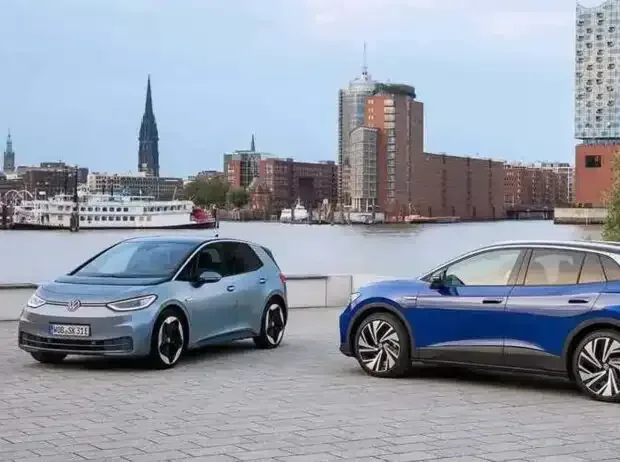
Carla, a Swedish provider of used electric cars, has analyzed almost 10,000 battery tests of Swedish electric cars. The tests were conducted by Carla itself between 2022 and 2026: The provider performs battery tests on all offered electric cars.
The analysis determined the average battery condition (State of Health, SoH) after 100,000 kilometers as a percentage of the original battery capacity. The battery tests were carried out using the battery diagnostic software from Aviloo. To obtain meaningful data, only models with a sufficiently large number of tests are considered.
| Model | SoH after 100,000 km in % | |
| 1 | Kia e-Niro – 64 kWh | 97.25 |
| 2 | Hyundai Kona – 64 kWh | 97.18 |
| 3 | Kia EV6 – 77.4 kWh | 95.95 |
| 4 | Volvo XC40 Recharge – 69 kWh – CATL | 94.70 |
| 5 | Polestar 2 – 78 kWh – CATL | 94.35 |
| 6 | BMW i3 – 120 Ah | 93.77 |
| 7 | Polestar 2 – 78 kWh – LG Chem | 93.53 |
| 8 | Tesla Model 3 – 60.5 kWh – CATL – LFP | 93.34 |
| 9 | Audi e-tron 50 – 71 kWh | 93.02 |
| 10 | Audi e-tron 55 – 95 kWh | 92.93 |
| 11 | Skoda Enyaq iV – 77 kWh Software 3.x.x | 92.88 |
| 12 | Tesla Model 3 – 78.8 kWh – LG Chem – new software | 92.83 |
| 13 | Tesla Model S – 96 cells | 92.80 |
| 14 | VW ID.4 – 77 kWh | 92.77 |
| 15 | Skoda Enyaq iV – 77 kWh | 92.60 |
| 16 | Tesla Model X – 96 cells | 92.52 |
| 17 | VW ID.4 – 77 kWh Software 3.x.x | 92.27 |
| 18 | Tesla Model Y – 78.8 kWh – LG Chem | 92.18 |
| 19 | Audi Q4 e-tron – 77 kWh | 92.18 |
| 20 | VW ID.3 – 58 kWh | 91.79 |
The 20 best models shown still offer over 90 percent of the original battery capacity after 100,000 km, some even over 95 percent. The study also shows that battery life depends not only on the model (and its thermal management) but also on the battery chemistry and the battery manufacturer. For example, the Tesla Model 3 with the LFP battery from CATL still offers 93.3% of the battery capacity after 100,000 km, with the battery from LG Chem 91.5%, with the 77.8 kWh battery from Panasonic 89.8%, and with the 52.4 kWh battery from Panasonic 88.2%.
Read more Lando Norris: Am better than 2025, but the results don’t show it
Almost all models are no longer offered in the tested configuration, but the table provides clues for anyone looking to buy a used electric car.
More on the topic of battery life:
Three rules to maintain the range of your electric car
Charging AI is said to increase battery life in electric cars by 23 percent
In summary
You read it again and again: You have little to worry about regarding the battery life of an electric car. More of a problem is that the range of new electric cars has increased significantly in the last ten years – and with it the demands. That used cars rarely reach the range of new models is therefore probably more due to technical progress than premature aging of the batteries. The study by Carla supports this statement. At least the 20 best vehicles still offer over 90 percent of the original capacity after 100,000 kilometers.
Read more Verstappen and Red Bull: «It would be best for both sides if …»
Source: Carla.se via KoreanCarBlog