


– Exactly one year ago yesterday, Christian Horner was dismissed as team principal of Red Bull Racing after 20 years at the helm. Since then, Laurent Mekies has been installed as the new team principal, the team experienced a resurgence in the 2025 season, in which Max Verstappen narrowly missed the fifth world championship title by just two points, and the team ushered in a new era with Red Bull Ford Powertrains.
Read more Formula 1 drivers and cars at the Goodwood Festival of Speed 2026

However, there were some stumbling blocks along the way: from Yuki Tsunoda’s demotion and Isack Hadjar’s promotion to the notoriously difficult second cockpit alongside Verstappen, to the loss of key personnel to competitors, and an unhappy Verstappen who is contemplating his future with the team and in Formula 1.
So, is Red Bull in a better or worse position than twelve months ago? Our international editors share their opinions.
The growing pains under new leadership should pay off
Jake Boxall-Legge
When a Formula 1 team undergoes a leadership change, a new team principal often wants to change the way the team works. Since Red Bull was under Christian Horner’s leadership for 20 years, his leadership style and expectations for the team’s working practices had long been deeply embedded in the halls of the Milton Keynes factory. It takes a long time to change these habits.
After Horner’s dismissal and the subsequent succession by Laurent Mekies, it was little surprise that Mekies wanted to take a different approach.
A Formula 1 car might be the best analogy for this: it is possibly designed to work in a certain way—based on feedback from a previous driver to get the best out of their characteristics and abilities. Putting a different driver with a completely different driving style in it might make it difficult for them to drive the car at the limit.
For over two decades, Red Bull was set up to operate under a very specific type of leadership. Now that the team is being asked to work with a different approach, it exposes weaknesses and redundancies in the system.
That is not a bad thing, nor is the fact that some of Red Bull’s key figures took the exit route last year. Realistically, a team cannot expect to keep its key personnel forever. Red Bull is undoubtedly going through a painful metamorphosis, but it is one that had to happen at some point anyway.
Pain now or pain tomorrow? That was the choice, and Red Bull chose to take the hit in the present.
Red Bull existed for years in a largely unchanged state; when this produced a winning car, that was great, but the performance drop-off over 2024 and 2025 highlighted the shortcomings—those shortcomings that were exposed when McLaren (which had gone through the same problems in the 2010s) finally found the right ingredients in Woking.
Wins show what a team is doing right; losses show what it is doing wrong.
“Someone tried to forcibly get rid of Horner” | Interview Ralf Schumacher
And the situation looks like this: Red Bull’s old wind tunnel was outdated, the team relied too much on certain employees and still relies on Max Verstappen to mask the material’s deficits. It had to wean itself off many aspects that covered its weaknesses.
So, is Red Bull better off without Horner? Probably in the long term. If the team had kept its former ruler, it would likely have continued in the same way as in the past two decades and perhaps remained comfortable enough to overlook mistakes.
By following Mekies’ vision, the team must choose a new approach. This may be uncomfortable and temporarily accompanied by a performance drop as team members adjust to their new environment, but it is done in the name of securing the future.
It may not feel like Red Bull is moving forward right now, as the Formula 1 world demands immediate success. But the teams that have endured had to go through countless rebuilds, and now it is Red Bull’s turn to pick up the trowel.
It is like this: if a bird poops on your windshield and you don’t care enough to clean it, your brain eventually adjusts to ignore the spot. It takes someone from outside to point out that there is actually bird droppings on your car.
Red Bull in a tougher spot, but not because of the leadership change
Ronald Vording
Looking at the current situation, the challenges Red Bull faces are greater than a year ago. Max Verstappen was also unhappy with the car’s performance back then, but the team still managed a remarkable turnaround. Such a recovery is highly unlikely this year, as Verstappen himself admitted in Silverstone.
On the chassis side, the team can only make limited improvements after the big upgrade packages in Miami and Spielberg, while Red Bull seems to lack power in the electric area of the power unit.
Mekies openly admitted on Sunday that Red Bull has problems on tracks that demand a lot of electrical energy. This means that after Silverstone, Spa and Monza could also become similar challenges.
There is no short-term solution, as Red Bull currently leads the FIA ranking in combustion engines. This means the manufacturer has no claim to an ADUO token and thus cannot modify the hardware of its power unit.
Taken together, these factors make it extremely difficult for Red Bull to turn the season around as they did last year.
However, these problems cannot be blamed on Mekies. The political turmoil of last year made changes inevitable, with Christian Horner ultimately having to step aside if Red Bull wanted to keep the Verstappens.
Given this leadership change and the political reality at the time—in which Verstappen spoke positively about Mekies—it was logical that he would stay for 2026, even if this decision complicated his position in the driver market.
Photo gallery: Rise and fall of Christian Horner at Red Bull
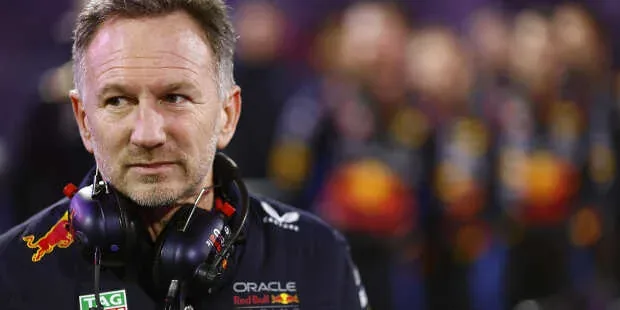
Mekies came with a refreshing approach and was widely praised for his engineering background, which led to largely positive feedback from the team in his first months in office.
Life in F1, however, brings highs and lows—even for the most successful team principals in the paddock—and this is probably the first crisis Mekies has had to manage at Red Bull.
Performance remains below expectations, quick fixes are not in sight, and then there is Verstappen’s frustration, which he does not hide publicly. Verstappen has always been straightforward with the media—which the international press appreciates—and in Canada and Austria, he openly stated that the team did not listen to him.
This is remarkable, as Mekies has repeatedly called Verstappen the “most important sensor” in the car.
While Mekies cannot be blamed for the disappointing performance in 2026 and the limited options for a quick turnaround, it will be fascinating to see how Red Bull’s new leadership handles the current situation.
In many ways, this seems to be the most challenging phase the Milton Keynes team has experienced since the Frenchman took the helm twelve months ago.
The Max Verstappen factor will shape the narrative
Filip Cleeren
It depends on whom you ask. Amid all the technically oriented solutions Laurent Mekies has brought to the team, there are also those who will miss Horner’s influence.
Mekies was credited with bringing an unbiased mindset to the team—a more engineer-driven approach that found solutions to some of the biggest problems of the 2025 car. He also brought a certain calm back to the team after a turbulent power struggle split the leadership into factions.
At the same time, Horner brought strong leadership, and his freedom to run Milton Keynes as he saw fit (which ultimately contributed to his downfall) also protected the team from interference from Red Bull Austria.
I still need to be convinced that his successor Mekies is granted the same leeway and that the tough Red Bull CEO Oliver Mintzlaff lets the team operate as freely as Red Bull did before.
A disappointing start to 2026, coinciding with the familiar rumors about Max Verstappen’s future, certainly does not reduce the pressure on Red Bull’s leadership.
The narrative of a “brain drain” around the team has been built up, as many key people have either left the team or are about to leave. The team denies this and points to its enormous personnel depth.
It is true that Red Bull’s Formula 1 team employs over a thousand people in Milton Keynes and that departing leaders like Gianpiero Lambiase and Paul Monaghan are a handful of high-profile names known to the media and public, while their undoubtedly talented successors, if they come from within, are unknown.
Read more MotoGP Training Sachsenring 2026: Marc Marquez Fastest at the End
But even if the team is right in saying it has the necessary personnel depth and continues to attract numerous high-profile resumes of talents wanting to work for the squad, there is at least a perception problem here. Landing a few coups in the transfer market would help in this regard.
Red Bull’s biggest plus was the performance of its first own power unit—at least the combustion engine, which was rated the most powerful on the grid. This had significant effects on the ADUO upgrade system, from which Red Bull now appears to be excluded.
Did the FIA make a mistake there? Or was Red Bull caught cold because it did not play the political game as well as Mercedes and especially Ferrari? If you listen around the Formula 1 paddock, both opinions are represented. If the latter is true, it would be a harsh lesson for Horner’s successor.
One should keep in mind that it takes time to overhaul a huge company like a top Formula 1 team. Frederic Vasseur took over Ferrari at the start of 2023, and it took until 2025 to bring in some key new arrivals, and until this season for those changes to really show effect.
Mekies will need a similar amount of time to put his own stamp on Red Bull Racing.
Ultimately, the same applies to Mekies today as it did to Horner back then: how the team handles the Max Verstappen factor and manages a possible departure will determine the narrative about his leadership.
At the moment, the team is neither better nor worse off
Oleg Karpow
Even if we think back to where Red Bull was a whole calendar year ago, there is no huge difference. The upswing came in the second half of last season when Red Bull finally gave Max Verstappen the tools to take on the McLaren drivers in the title fight, but the middle part of the year was also not particularly strong.
This season is much tougher, and Red Bull will need a miracle to stay in the title fight. As it stands, Verstappen’s team is not in the fight. But is that enough to explain the organization in crisis? Not necessarily.
With the major regulation changes, it was inevitable that the balance of power would be shaken up. Coincidence or not: the two teams that had the most reasons to continue developing their 2025 cars deep into last season are the ones falling behind.
Not only is Red Bull struggling this year, but so is McLaren. One could argue that the Papaya team has fallen behind partly because of its customer status. But Red Bull also had to build a completely new engine program from scratch and has done much better than almost anyone expected.
At his appearance in the Silverstone paddock, Christian Horner explicitly emphasized how proud he is of the work of Red Bull Powertrains, which he was significantly involved in building—and there is no reason why he should not be. However, to claim that his departure is already noticeable would be premature.
It is still largely the same organization with the same processes and systems. Like any well-built organization, it can continue to operate without being overly dependent on a single person. The real test of Red Bull’s personnel depth will come in the next few years, not now.
Photo gallery: The factors that led to Horner’s exit at Red Bull
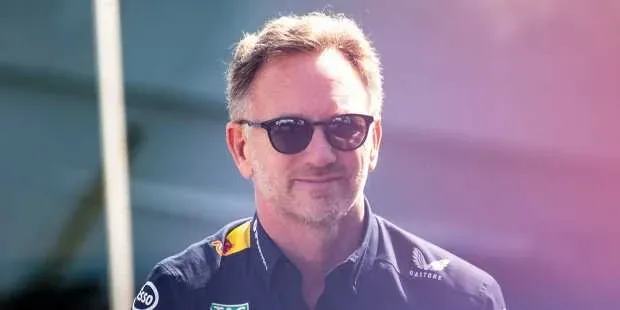
The departures of leadership figures, including Horner, will require others to make the necessary adjustments to the team’s systems and tools as they adapt to the ever-changing environment of Formula 1.
This year’s slump was always within the realm of possibility given the circumstances Red Bull found itself in—fighting for the drivers’ title until the end of last season while simultaneously building an engine department from scratch. With or without Horner, this would always have been a challenge.
Laurent Mekies’ task now is to ensure that Red Bull continues to adapt in the right direction, especially as it enters a completely new era as an engine manufacturer. However, the final judgment on his leadership will only be possible in 2027 and beyond.
The power struggle continues—maybe Horner wasn’t the problem after all?
Ewan Gale
When the news broke like a bomb that Christian Horner was being shown the door by Red Bull, curiosity was high about which direction the team would take.
The change paid off at the end of the season at least insofar as Laurent Mekies came in as team principal and his engineering-focused leadership helped turn things around. In close collaboration with Max Verstappen, this led to a late title charge at the end of the season.
But at the start of the new season, amid further high-profile departures, there were plenty of challenges. And although the fear of a power struggle was a decisive factor in Horner’s downfall, there is little sign that these tensions have disappeared.
While a dry spell on the track is completely normal in the lifecycle of a Formula 1 team—just look at Mercedes, Ferrari, and McLaren—the constant sniping behind the scenes cannot be attributed to a successful collective.
“Looking forward to going home”: Verstappen rages after horror Saturday I F1 Silverstone 2026
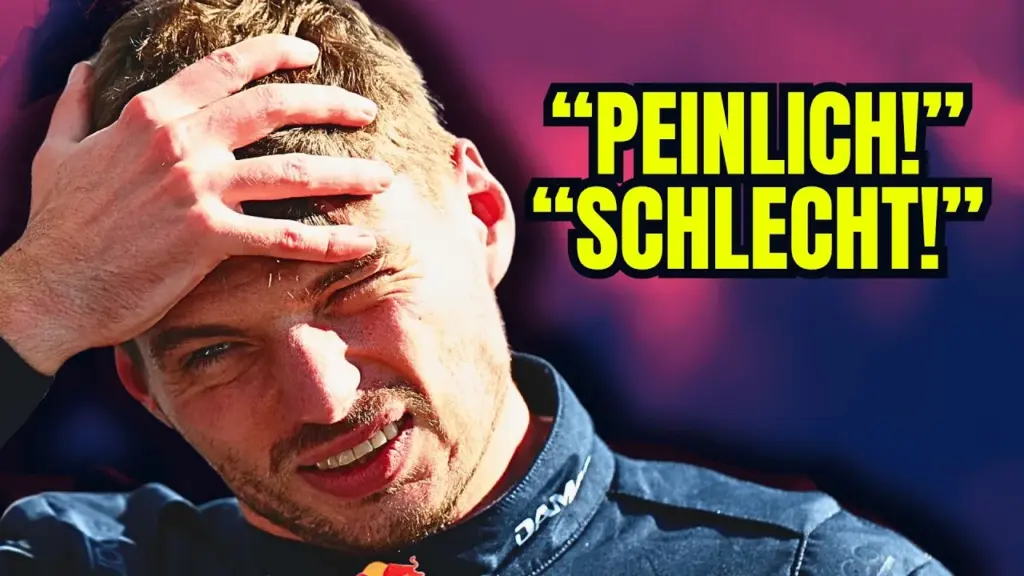
Verstappen’s future is the subject of constant speculation: will he leave Formula 1, move to McLaren, or Mercedes, or somewhere else entirely?
These speculations have at least in the past been largely driven by his personal circle. Since this seems to continue seamlessly under Mekies’ leadership, perhaps Horner wasn’t the problem after all?
A big plus since Horner’s departure is the fact that Isack Hadjar has been able to operate on par with Verstappen, giving Red Bull two competitive cars instead of just one. The Frenchman has broken the curse of the second cockpit that has hung over the team since Pierre Gasly was replaced by Daniel Ricciardo in 2019—a curse that probably would not have been lifted under Horner’s leadership.
But has anything really changed in Milton Keynes? One has to say: not really.
Too early to judge, but the first signs are not positive
Haydn Cobb
Yes, I am getting splinters because I am sitting on the fence. Sometimes a whole year is enough to bring about a profound change in a Formula 1 team. A positive example: Alpine. A negative example: Aston Martin.
However, looking at the matter in detail and with nuance, thousands of factors play a role in how Red Bull stands one year after Horner’s departure. The new engine program, one of Horner’s lasting legacies in the team, was probably almost too successful as it positioned itself at the top of the performance tables and was outsmarted by rivals in the ADUO rankings.
At the same time, the entire power unit package can hardly be called best in class, even if the measurements of its V6 turbo output more power than the rest.
Apart from this political hot potato, the engine project has had an encouraging start—especially compared to the other brand-new programs from Audi and Honda. The fine-tuning in these early stages now aims to fix drivability and shifting issues that Max Verstappen complains about so regularly.
The team is still a top team, and although it has slipped to fourth place in the balance of power (compared to second place at the time of Horner’s departure), it is within striking distance of McLaren, Mercedes, and Ferrari and has the potential to strike back.
However, there is a prevailing feeling that the qualities for the turnaround that almost gave Red Bull the fifth world title for Verstappen last year are not present under the new regulations this year.
Photo gallery: The era of Helmut Marko at Red Bull
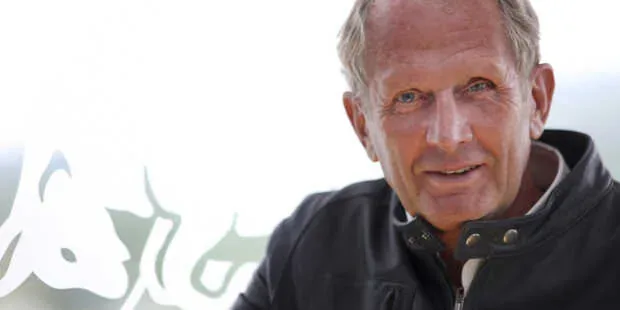
A twitching, fluttering rear wing has put the team in the spotlight, while Verstappen does not hide his dissatisfaction with the team and disagreements over decisions at race weekends—such as his desire for a pit lane start, which Red Bull opposed in Silverstone.
Verstappen has become the all-dominant center of the team (not that he wasn’t before), but with Horner, Adrian Newey, and co. gone, everything now revolves solely around the four-time champion.
Whether he has the patience to wait for an upswing or even still wants to stay in Formula 1 will largely determine Red Bull’s short- to medium-term future.
Horner’s dismissal aimed to calm internal relations, but it has not stopped the hemorrhage of high-profile personnel being poached by rival teams. In the last twelve months, it was announced that chief race engineer Gianpiero Lambiase is moving to McLaren and chief engineer Paul Monaghan is about to switch to Cadillac.
Red Bull also said goodbye to Helmut Marko in the winter—but that was voluntary, not forced.
- MotoGPMotoGP live ticker Sachsenring: Marc Marquez unbeatable!
- MotoGPMotoGP Sachsenring 2026: Marquez equals an Agostini victory record
- MotoGPPit Beirer comments on Vinales: “It’s not a nice situation”
- MotoGP“Karma does not exist”: Marc Marquez on clavicle fracture at Bezzecchi
The signs for this year look worse compared to last year. If the team also loses Verstappen, it would be the end of an era as an absolute top team. However, if the squad manages to convince Verstappen to stay and shows signs of recovery again, then perhaps it is better off than twelve months ago.
Read more MotoGP live ticker Sachsenring: Marc Marquez tops Friday practice