



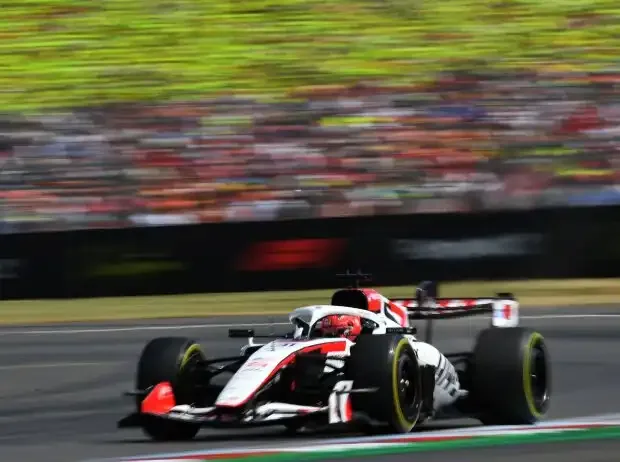
– At the beginning of the season, Haas was considered the positive surprise of Formula 1. After strong performances in Melbourne and Shanghai, the US team even temporarily led the tight midfield and seemed able to hold its own against competitors like Racing Bulls, Alpine, Audi, or Williams.
Read more After horror crash: Should safety at Norisring be improved?
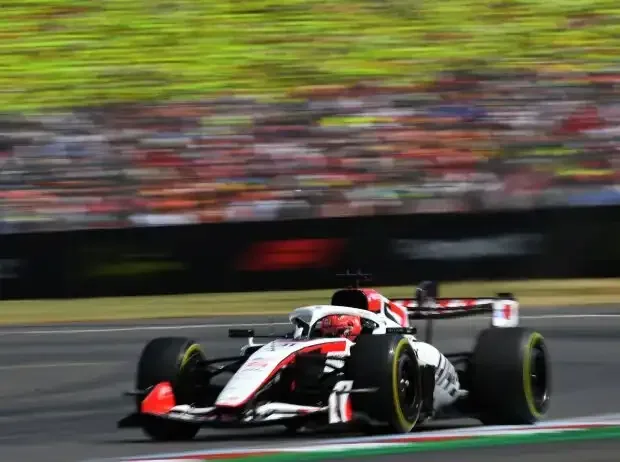
But only a few months later, the picture has completely changed: While Racing Bulls, Alpine, and Audi have now clearly pulled away, Haas is only fighting with Williams for the back positions and only has outsider chances for points.
Team principal Ayao Komatsu makes no attempt to sugarcoat this development. On the contrary: The Japanese openly admits that Haas has lost ground in the development race – but at the same time contradicts the statement that their own updates have failed.
The trigger was an assessment from Audi, according to which some teams this season had simply been overtaken by the competition and their further developments had not brought the desired effect. Komatsu, however, only partially agrees with this analysis.
“Yes, we were out-developed”
“The first statement is absolutely fair,” says the Haas team principal. A look at the competition is enough to recognize that. “If you look at Racing Bulls: Hats off. Their updates were impressive.” Especially the large underbody upgrade enabled the Italians to make a decisive leap.
“I don’t remember exactly if it was in Miami, Montreal, or Barcelona. But when they brought the new underbody, you immediately saw the progress.” Komatsu now also counts Audi among the teams that have overtaken Haas in development.
“They have been very fast for a long time now. So it’s true: We were out-developed.” Especially compared to the first phase of the season, this difference is now clearly noticeable. While Haas was initially regularly the fastest midfield team, they now lack pace against Racing Bulls, Alpine, and Audi on almost every track.
The updates still work
However, the second part of Audi’s statement is not true from Komatsu’s perspective. “I don’t think you can say our updates didn’t work.” On the contrary: The new parts delivered exactly the performance Haas had expected.
“We brought new components in Montreal. If we look at what these parts delivered, they worked exactly in the areas we expected.”
The actual problem lies elsewhere entirely. “When we talk about a lack of performance, it has nothing to do with our upgrade package.” Because this weakness has accompanied the team since the beginning of the season. “It has existed since Bahrain, since the test drives. Nothing has changed about that.”
More downforce – but not usable
Komatsu describes the core problem of the car very clearly. “The upgrade brought more downforce.” But exactly this additional downforce cannot be used effectively on every track. “The downforce is there. But is it really usable? Not necessarily.”
Depending on the track layout, the problem manifests itself to varying degrees. This also explains the team’s extremely fluctuating performances. “In Melbourne and Shanghai, the characteristics of our car perfectly matched the track.” As a result, the weaknesses were almost completely hidden. “These tracks emphasized our strengths and concealed our weaknesses.”
Only Miami revealed the weaknesses
However, as the season progressed, this picture changed. “From Miami onwards, our weaknesses became visible.” Since then, Haas has understood the problem better and better. “Our understanding has now improved significantly – even much better.”
Read more Lewis Hamilton: Disappointment in Spa is on me!
However, that doesn’t change the fact that the cause lies deep within the vehicle concept. “It’s the fundamental handling characteristics of this car.” The timing of this realization was particularly annoying. “Unfortunately, we only recognized this from about race five onwards.”
By that time, many development decisions had long been made. For Komatsu, this leads to a clear lesson. “I want to develop the team in such a way that we recognize such problems in the future already at the first race or even during testing.”
Especially under the budget cap, one cannot afford to develop in the wrong direction for months. Therefore, it’s not just about building better updates, but also about drawing the right conclusions from the available data more quickly.
Budget cap? Haas doesn’t even reach it
Komatsu addresses another problem surprisingly openly. When asked whether Haas is now at least operating at the budget limit, the team principal answers without hesitation. “No. I wish we were.” In fact, Haas cannot utilize the allowed budget cap to this day.
“That is one of my most important tasks: To finance this team in such a way that we can even work at the budget limit.” The fact that Haas has fallen behind in the development race is therefore explicitly not a criticism of the employees. “Our people are fighting with both hands tied behind their backs”
Komatsu therefore defends his team with clear words. “Our people are honestly doing a fantastic job.” Anyone who knows the size and resources of Haas knows exactly what this team achieves every day. “Anyone who knows Formula 1 and knows how small our team is understands this statement.”
He has no doubts about the competence of the employees. “Our people are very capable. They work together excellently, communication works, and we have a culture without blame. I simply haven’t been able to give them enough ammunition so far.”
“The start of the season was actually not sustainable”
In retrospect, Komatsu even re-evaluates the strong start to the season. The fact that Haas, despite its limited resources, led the midfield at the beginning of the year was actually exceptional. “What our people achieved at the beginning of this season was completely unexpected.”
Especially in the first year of the new regulations, such a start to the season was hardly realistic. “You cannot expect the smallest team in Formula 1 to consistently perform at this level.”
Without a grid penalty: Could McLaren have won in Belgium?
Therefore, the later decline was ultimately no surprise. “That was simply not sustainable for us in the long run.” The team principal therefore primarily holds himself responsible. “I have to ensure that this team generates more revenue and gets better working conditions.”
- Formula 1Aston race director says thank you: “Good that you journalists helped us”
- MotoGPJorge Martin and Ai Ogura: This is how they explain their move to Yamaha
- Formula 1After all: McLaren brings Macarena rear wing to Hungary
- Formula 1FP1 Hungary: Three Formula 1 regular drivers sit out
Because only then can Haas permanently keep up with the larger competitors. “We have the right people. We have the right drivers.” Komatsu is convinced of this. “If we give them the right opportunities, we will come back.”
Read more Lewis Hamilton: Overtakes will be 2026 “not as satisfying anymore”