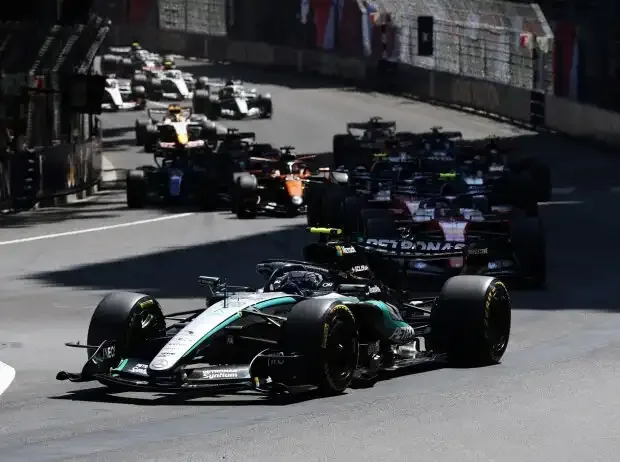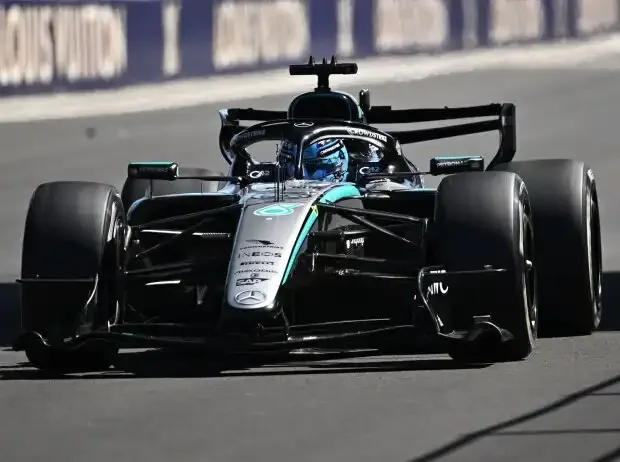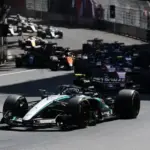
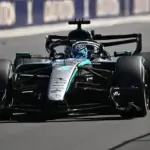





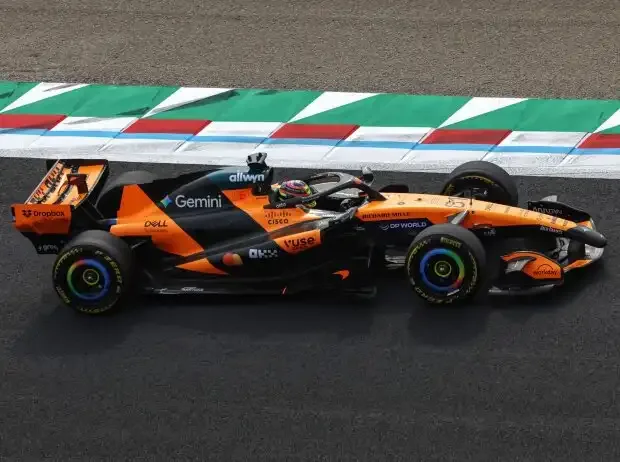
– McLaren believes that the initial adjustments to the power unit regulations for the upcoming Miami Grand Prix should eliminate the need for drivers to “lift-and-coast” in qualifying.
Read more ADAC gives guarantee until well after 2030: «DTM safer than pension»
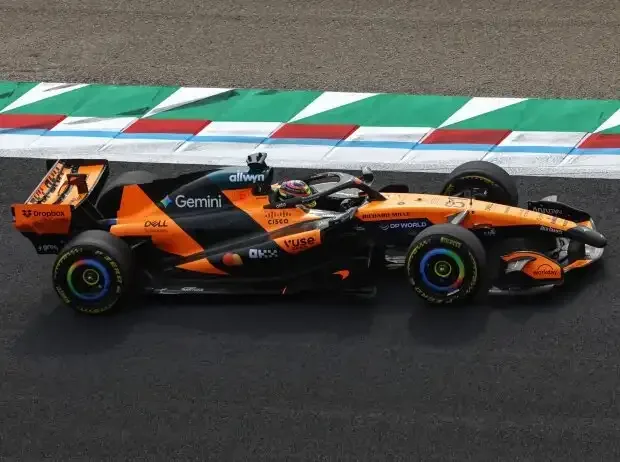
Formula 1 officials used the April break to revise the controversial 2026 regulations, which severely impacted qualifying and raised safety concerns due to increased speed differences between cars.
Drivers have so far been unable to use their natural driving style to push to the limit in qualifying, as the 2026 cars suffered from energy deficits due to the near 50-50 split between combustion power and electrical energy.
To achieve the optimal lap time, a lot of unusual behavior was required to charge the battery, including early lifting on the straights and coasting through fast corners. Drivers were even penalized for driving faster through corners, as they ran out of energy sooner on the subsequent straights.
The two most important measures to improve qualifying were the increase of the super clip limit from 250 to 350 kW and the reduction of the energy recovery limit from eight to seven MJ.
Drivers should have a “more natural feeling”
According to Mark Temple, McLaren’s Head of Performance, these changes should eliminate the need for lift-and-coast in a flying lap. “The biggest impact [of the rule adjustment] is from the drivers’ perspective,” explains Temple.
“The idea is to get rid of some of the things drivers don’t like in qualifying – the car coasting into a high-speed chicane for a long time, instead of staying full throttle and then braking harder, which feels more natural.”
Formula 1 before restart: Is better racing coming now?
“There are two aspects to this. One is what we call ‘lift-and-coast’, which should no longer occur in qualifying. The driver lifts off the throttle, coasts into the braking zone, and then brakes.”
“Now we have a situation where this is more efficient and controlled by the powertrain, allowing the driver to stay full throttle and the power unit to recover energy. The straight mode remains active, so the car brakes less aggressively.”
“Additionally, drivers have a more natural feeling of going directly from full throttle to braking, without this intermediate phase. Furthermore, the total duration and length of individual super-clip or coasting phases are significantly reduced. If something like this still occurs, it will only be to a very small extent,” says Temple.
Qualifying “much closer” to the past again
He expects that while energy management in 2026 will still bring peculiarities in driving style, he believes these will be more in line with what drivers were used to in recent years under previous regulations.
Read more New Aprilia Aero: Technical Director jokes about “grab handles” on the RS-GP26
“It is actually much closer to examples we have seen in past years, such as tire management or some fuel management,” he explains. “This will ensure that qualifying feels significantly more natural for the drivers.”
Photo gallery: F1 Migratory Birds: The Top 10 Most Extreme Job Hoppers of Modern Times
“It remains a formula where you want to use the available energy in the most efficient places, which differs somewhat from previous years where you could ignore it and not worry about the power unit and available energy.”
“However, in previous regulations, there were also situations where fuel management had a very significant influence on how one drives the car and competes in races – sometimes more strongly than electrical energy management,” emphasizes Temple.
“In recent years, however, fuel management no longer played a major role, but only a minor one in the race. So there are still some aspects that remain, but the more abstract things like this inefficient lifting and the desire to get back on the throttle – i.e., things that were particularly unnatural – should disappear or at least be largely reduced.”
Stella announces further changes
McLaren team principal Andrea Stella emphasizes that the series should remain open to further adjustments if necessary. At the same time, the FIA, the world motorsport governing body, is testing a so-called “low-power start detection system” to reduce the risk of slow starts from the grid.
“I think the changes for Miami are a positive step in the right direction,” said Stella, explaining: “There are already further measures planned to further improve the package introduced for Miami.”
“I think Formula 1 as a community should remain open: once we observe the effects of this package of changes, we will learn more about the new regulations and may need to make further adjustments.”
“We should have the openness and proactivity to analyze and implement these improvements,” says Stella. “And finally, some hardware changes should also be considered, rather long-term, so that we can choose the operating point of the power unit in such a way that fewer compromises are required from the chassis or driver’s perspective.”
“We believe this is possible, and we think all stakeholders should engage in this discussion with a willingness to contribute,” explains the McLaren team principal.
Read more Fernando Alonso on retirement: «Hopefully not the last season»