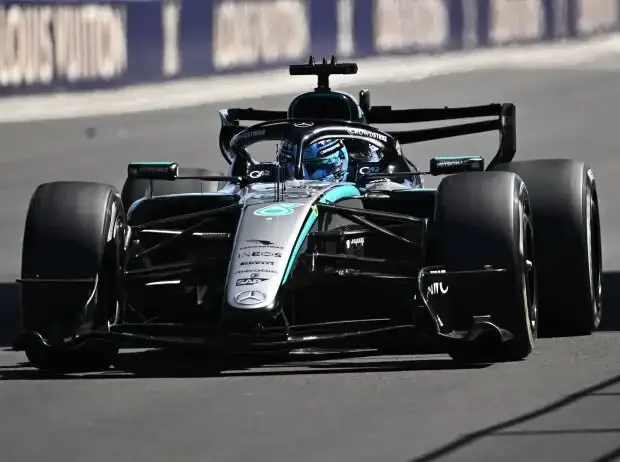










– It took half a season for McLaren, the team that won the last two Constructors’ Championships, to find its way back under the new Formula 1 technical regulations to where it sees itself.
Read more Pirelli: Development of the «Super-Intermediate» continues

Inefficient downforce generation compared to other top teams and an insufficient understanding of how to operate the complex new power units were the decisive factors holding McLaren back.
A limitation in generating this downforce is embedded in the design of the MCL40. It is one of the elements the team wants to change next year.
The technical regulations for 2026 prescribe shorter, narrower, and lighter cars: the maximum wheelbase was shortened from 3,600 to 3,400 millimeters, the width reduced from 2,000 to 1,900 millimeters, and the minimum weight lowered from 800 to 768 kilograms.
Since McLaren expected difficulties in meeting this weight limit, the team opted for an even shorter wheelbase, reportedly only 3,250 millimeters. This posed numerous challenges for the team when packaging wiring, cooling, and other additional systems.
Why McLaren built a shorter car in 2026
Furthermore, the short wheelbase proved to be a limiting factor when McLaren tried to generate more efficient downforce, as less ground area is available. “We built a shorter car because it is lighter,” explains Neil Houldey, Technical Director for Engineering at McLaren.
“We knew the regulations would present a very, very big challenge regarding weight,” he emphasizes and adds: “That gave us a good head start and allowed us to achieve performance in other areas.”
“Performance often brings a little extra weight here or there. That allowed us to add some performance because we saved weight at the start,” says Houldey, who reveals: “As we developed the car further, we were able to remove a bit more weight.”
“Next year, we will therefore ultimately have a longer car. From an aerodynamic perspective, this provides a bit more footprint area on the floor. The further we developed the floor, the better it seems to be manageable.”
Photo gallery: Mid-season reports: The best Formula 1 drivers at the summer break

“At first, it looked like shortening the car wasn’t such a big penalty in lap time. Do we believe the wheelbase is a decisive factor? Absolutely not. It’s about small details. But if you look for small details everywhere, you take them with you.”
“Besides, we look at everything on our car. Of course, we also look at everything on other teams’ cars and get inspired by that. But ultimately, in my opinion, we will have a car that differs significantly in its design from our current vehicle.”
“But nothing revolutionary. We simply look for performance as usual throughout the year by trying different things,” says Houldey. Another reason for the planned changes is the package of regulation adjustments scheduled for 2027.
What changes the FIA plans for 2027
With this, the FIA wants to limit some of the unexpectedly large advances certain teams have made and at the same time close various loopholes. Especially in the diffuser area, many teams were extremely creative and used aerodynamic geometries that allegedly served as floor mounts.
The rear wings will also be about 20 millimeters flatter. The rectangular extensions that many teams have added to achieve a similar effect to a Gurney flap will be banned. These elements, known to teams as “Hanger Flaps,” exploit the wording of the current regulations.
Read more Grasser appeal against disqualification: Verdict realistic before the DTM title final?
These allow up to three “rotating mounts” outside the standard reference area to enable the movement of the upper element of the rear wing into and out of straight-line mode.
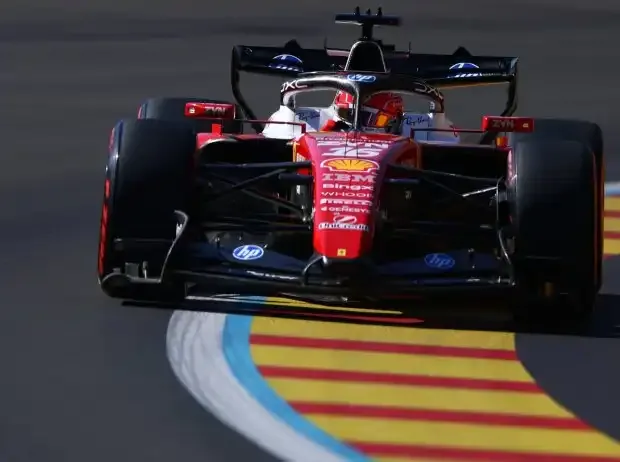
The winglets mounted on the exhaust, which Ferrari used particularly effectively, will also disappear as part of a broader cleanup around the diffuser area. At the same time, the number of allowed flow influencers at the front end of the floor will be reduced from five to three.
Why McLaren is now playing ALL its cards!
In this area, the length of the plank containing the “skid blocks” will also be shortened from 900 to 600 millimeters. This shortening affects the front part, the so-called “bib,” which protrudes below the nose tip and plays a role in influencing the airflow under the vehicle.
While the visual differences will not be immediately noticeable to laypeople, these seemingly subtle changes will significantly impact aerodynamic development as they open new possibilities for vehicle setup.
The plank basically determines the car’s ground clearance: if it is too low, it wears excessively when the car bottoms out, which can lead to disqualification—as happened to McLaren with both cars last year in Las Vegas.
By shortening the bib, theoretically, a lower ground clearance at the front axle becomes possible. This has effects beyond optimizing a larger angle of attack. Simply put: the closer the front wing is to the ground, the stronger the low-pressure area generated beneath it.
What is still on McLaren’s “to-do list”
“Of course, we want to run as low as possible at the front axle,” explains Houldey. “Generally, we are still in this situation. On some tracks, you are limited either by the wear of the ‘skid blocks’ or by the car bottoming out. That sets the ground clearance at the front axle.”
“Since the bib is now shorter, the ground clearance at the front axle can possibly be reduced a bit, bringing the front wing closer to the ground. That could influence how stiff the front wing needs to be designed.”
“Firstly, for reasons of contact with the ground and secondly, because the requirements for durability and the elastic loads generated by the airflow could change.”
“Also, the question arises how we handle the structure of the bib. It is now very close to the front end of the chassis. This makes it more difficult to achieve the desired regulatory compliance [as the bib undergoes various deformation tests].”
“All these are challenges in the design. We need to understand how to re-optimize and maximize performance possibilities—essentially ground clearance, bottoming out, and wear of the ‘skid blocks’ with a corresponding skid package as well as the front area of the bib, which is more difficult to package than before.”
- MotoGP“A different world”: MotoGP test riders experience the 1000cc shock
- 24h Le MansFord LMDh hypercar (2027) revealed and delivers dream sound
- DTMAfter Grasser case: Engines from Preining, Engel, and Wittmann collected!
- Formula 1“Dramatic”: No German Formula 1 driver in sight for years?
“Have we already done a lot of work on this? No. That is still on the to-do list, and we will deal with it very soon,” says Houldey.
Read more Ford LMDh hypercar (2027) revealed and delivers dream sound