






(Motorsport-Total.com/Motor1) – The reason why the consumption of electric cars in practice is often higher than according to the WLTP standard is partly because a higher proportion of highway driving is done. And at highway speeds, consumption is naturally significantly higher than in the WLTP cycle, which is driven at an average speed of under 50 km/h. Therefore, highway consumption and highway range are important figures.
Read more Norris at McLaren until 2030: What does this mean now for Piastri?
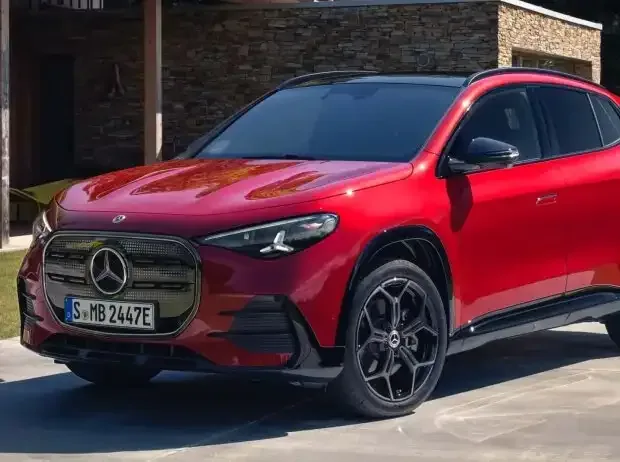
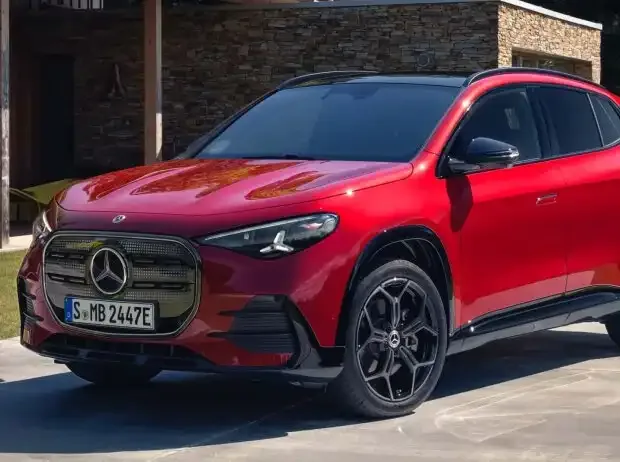
Now many manufacturers provide not only the combined electricity consumption according to WLTP in the configurator but also the highway consumption. The same value can also be found in the consumption guide of the DAT. But how do you get from highway consumption to highway range? We took a closer look at this topic using the example of the new Mercedes GLA 250+.
The highway consumption is based on the WLTP sub-cycle “Extra High,” where the average speed is just over 90 km/h – so it is driven significantly faster than in the overall WLTP cycle. Consumption at, for example, a constant 120 km/h is something different, but the highway value should at least give an indication of how much electricity is consumed at higher speeds.
For the GLA 250+, the combined WLTP consumption is 15.1 kWh/100 km, but the highway consumption given in the configurator is 19.4 kWh/100 km. A significant difference of almost 30 percent. This is certainly not an isolated case; it is similar with other electric cars.
How do you now calculate the more practically relevant highway range? You could approach the question roughly: simply divide the usable battery capacity by the highway consumption and multiply the result by 100. For the GLA 250+, this would result in 85 kWh / 19.4 kWh/100 km × 100 = 438 km.
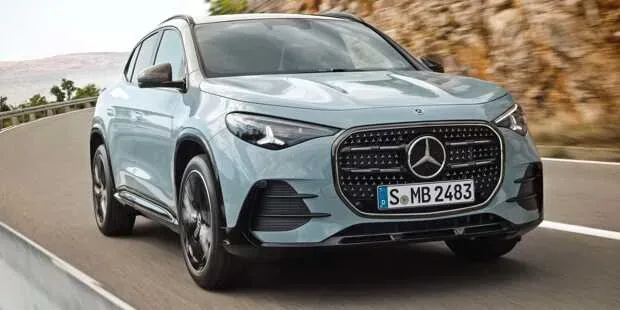
Photo series: Mercedes GLA (2026)
That this simple calculation is not correct can be seen when using the values for the combined WLTP cycle: 85 kWh / 15.1 kWh/100 km × 100 = 562 km. In reality, however, the combined range is 655 km. The calculation result is too small because the standard consumption includes charging losses, but the range does not. To obtain the standard range, we must divide by the pure driving consumption, which is lower, instead of the standard consumption.
Where do we get the pure driving consumption in the combined cycle? From the usable battery capacity and the combined WLTP range: 85 kWh / 655 km × 100 = 13.0 kWh/100 km. Dividing 85 kWh by this value again gives the standard range, so we have calculated correctly.
Read more Steiner demands from Ferrari: Lewis Hamilton must be number 1 now
Now back to the highway values. We need the pure driving consumption at highway speed. We cannot use the highway range here for the calculation because we do not know it yet. However, from these values, the charging efficiency can be derived: It results from the combined driving consumption of 13.0 kWh/100 km divided by the combined consumption of 15.1 kWh/100 km. This results in about 86 percent.
The pure driving consumption at highway speed is therefore 19.4 kWh/100 km × 0.86 = 16.7 kWh/100 km. From this, we can now calculate the highway range: Using the unrounded value results in 85 kWh / 16.7 kWh/100 km × 100 ≈ 510 km. The calculation becomes simpler by multiplying the combined WLTP range by the ratio between standard consumption and highway consumption. This results in 655 km × 15.1 / 19.4 = 510 km. This method is also used by the unofficial Mercedes portal JesMB.
Below we show a few examples of the calculated highway range. We also calculated the percentage difference between the combined range and the highway range. It is smaller for sedans like the CLA or the C-Class, larger for SUVs. The electric Polo is an outlier with -24 percent, which we cannot easily explain:
| Combined WLTP range | Combined WLTP consumption | Highway consumption | Highway range | |
| Mercedes GLA 250+ | 655 km | 15.1 kWh/100 km | 19.4 kWh/100 km | 510 km (-22 %) |
| Mercedes CLA250+ | 791 km | 12.3 kWh/100 km | 14.9 kWh/100 km | 653 km (-17 %) |
| Mercedes C 400 4Matic | 753 km | 14.3 kWh/100 km | 17.6 kWh/100 km | 612 km (-19 %) |
| BMW iX3 50 xDrive | 805 km | 15.1 kWh/100 km | 19.4 kWh/100 km | 627 km (-22 %) |
| Kia EV3 Long Range | 605 km | 14.9 kWh/100 km | 19.5 kWh/100 km | 462 km (-24 %) |
| VW ID. Polo 155 kW | 454 km | 13.3 kWh/100 km | 17.5 kWh/100 km | 345 km (-24 %) |
More on consumption and range:
Electric cars with the greatest range: Now 3 models over 900 km
Why consumption and battery capacity do not determine the range
In summary
The Mercedes GLA 250+ has a standard range of 655 km, but the calculated highway range is only 510 km, i.e., 22 percent less. This is at least an indication. How far you get yourself on the highway naturally depends on your own driving style and speed: Some drive at night and keep exactly 120 km/h with cruise control, others rely on their own throttle foot and drive by feel. What is certain is that at high speeds, you get significantly less range with an electric car than according to the WLTP standard. However, you get significantly further in the city.
Read more MotoGP Sprint Aragon 2026: Marc Marquez wins ahead of Alex and Bezzecchi
Source: JesMB, BMW (data of the iX3, PDF)