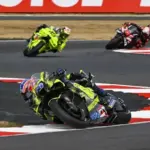


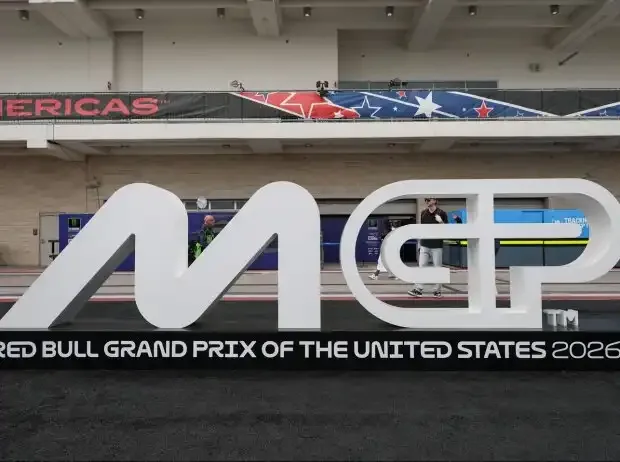
– MotoGP will continue to grow under the new owners Liberty Media, but not necessarily where it has traditionally been strongest. While Europe has been the center of the motorcycle world championship for decades, the calendar is set to become significantly more international in the coming years.
Read more After the Grasser case: Engines from Preining, Engel, and Wittmann collected!
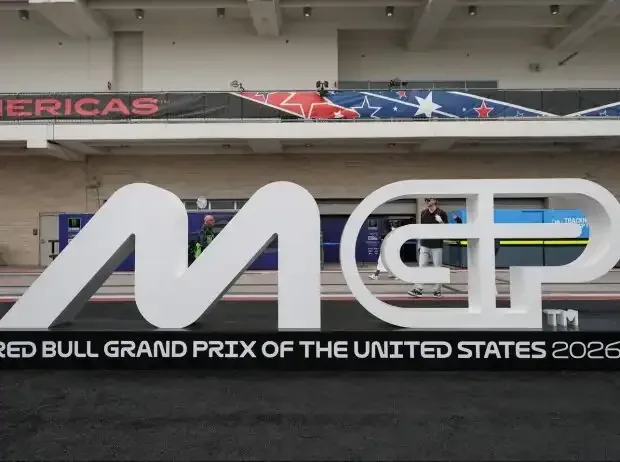
Carlos Ezpeleta, MotoGP Sporting Director, expects a shift towards a ratio of 50 percent Europe and 50 percent races outside Europe. This means the current race calendar is facing a fundamental change. With a maximum of 22 events per year, more global presence inevitably means some established European races will have to fight for their place.
“We are overrepresented in Spain and Central Europe,” says Ezpeleta regarding the current calendar structure. If new destinations are added, some existing events will inevitably have to give way.
50 percent Europe, 50 percent global
The change is apparently deliberately intended by MotoGP. Ezpeleta expects the ratio between European and non-European events to shift towards 50:50 within a few years. At the same time, markets such as the UK, the USA, and Southeast Asia are to be further developed.
It is not just about adding as many new races to the calendar as possible. MotoGP wants to be permanently present in these markets and build a fan base.
Photo gallery: The contract durations of the current MotoGP circuits
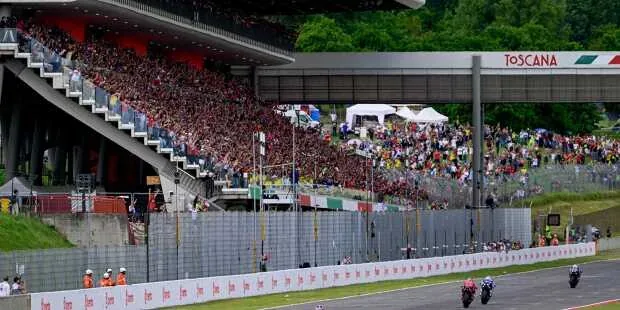
That is exactly why it is not enough to hold a race in a region once a year and then disappear again, explains Ezpeleta in an interview with Autosport, a sister platform of Motorsport-Total.com. Anyone who wants to develop a market must be visible there throughout the entire year. The calendar thus becomes an instrument of the global brand strategy.
22 race weekends are the upper limit
The problem: The MotoGP calendar cannot grow indefinitely. Ezpeleta speaks of a maximum of 22 events and makes it clear that the immediate task is to rebalance this limited space.
In consequence, this means: If new markets are added, other races must give way. This is an important development for the traditional European Grands Prix.
Because their historical significance alone does not guarantee a permanent future. MotoGP wants to hold on to its big and traditional events and not alienate the fans of these races. At the same time, the championship must grow where it has not yet been sufficiently present.
What a Grand Prix must deliver in the future
“We do not want to shy away from wanting a greater global presence,” explains the Sporting Director. This creates a conflict between tradition and expansion. In this context, the criteria by which MotoGP evaluates a location are particularly interesting.
A homologated race track remains, of course, the basic requirement. Beyond that, however, the question gains importance of what a Grand Prix can deliver outside the actual race. Ezpeleta names very concrete criteria.
Read more DTM eSports Championship: Jarschel is Champion and wins M2 Cup guest start
MotoGP wants to be “closer to big cities and important airports” and places value on “good hotel and hospitality infrastructure.” The goal is to make it easier for fans. “When they are at the track, we must not only offer them the best racing in the world, because we already have that, but we must also give them the best possible experience,” emphasizes Ezpeleta.
This shows how much the perspective on the calendar is changing. The question is no longer just whether a track enables good MotoGP races. It is also: Can this location advance MotoGP as a brand in a new market?
Sportingly, quality remains non-negotiable. Safety standards and the requirements for racing are an absolute prerequisite, says Ezpeleta. Only then do commercial and strategic considerations come into play.
Ezpeleta envisions “Mini-Super-Bowls”
But it is not only about adding new races; existing ones should also continue to develop. Ezpeleta describes the vision of making the 22 races events with their own personality. He calls it “Mini-Super-Bowls.”
Fans should not only experience good racing on the track but be offered as complete an event as possible. A Grand Prix thus increasingly becomes a product consisting of several components: sport, entertainment, hospitality, fan experience, city, and global marketing.
For existing promoters, this does not necessarily mean the end. According to Ezpeleta, MotoGP also wants to invest in existing events and work together with promoters to improve the fan experience. New races and the further development of existing races are therefore to take place in parallel.
Europe loses, but remains important
Despite the planned geographical shift, Ezpeleta does not want to fundamentally sacrifice the traditional European events. Many of these races are extremely successful and have contributed to building MotoGP over decades.
“We want to remain loyal to our historic events and the big races that have attracted so many people for decades,” promises the Spaniard.
- DTMAfter the Grasser case: Engines from Preining, Engel, and Wittmann collected!
- Formula 1Formula 1 engine: Can McLaren really follow Red Bull’s path?
- IndyCarIndyCar Markham 2026: Mick Schumacher out after accident
- Formula 1Red Bull: Max Verstappen names “big priority” for second half of the season
The change is intended to happen more gradually, and Europe will remain a central part of MotoGP in the future. But its previous dominance will diminish. New markets will gain more weight, while within Europe, regions with particularly high race concentration could come under pressure.
Read more «Absolute nonsense»: calendar responds to Thiim accusation — and even thanks him