

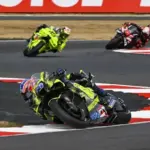

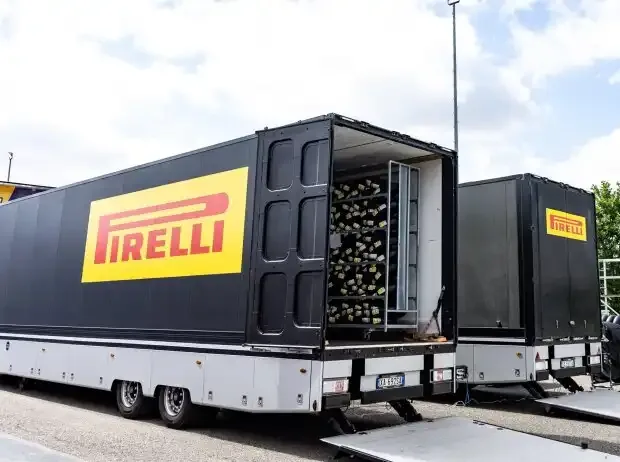
– From 2027, a new sole supplier will take over MotoGP with Pirelli. In the course of the change, a question arises again that has occupied fans for years: How much does a tire in the premier class actually cost and who pays for it?
Read more DTM Race Nürburgring 1: Cairoli celebrates third win of the season, twelve cars finish
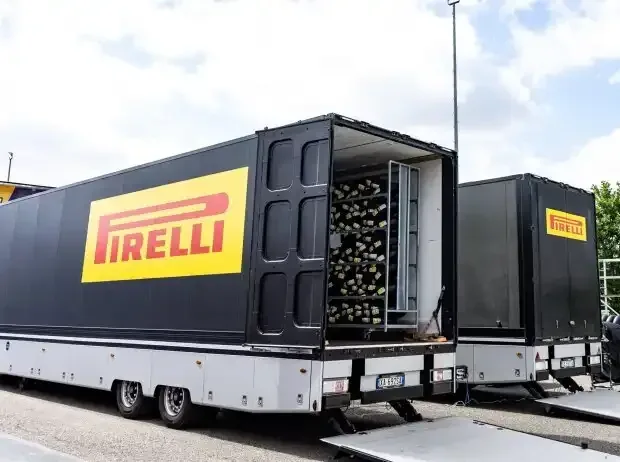
Financial details are traditionally rarely discussed in MotoGP. Neither salaries nor budgets or contract contents between manufacturers and rights holders are made public. Accordingly, the topic of tires is also opaque, even though they are among the biggest cost factors of a racing series.
The model of the sole supplier has long been established. After Bridgestone was the exclusive tire partner of MotoGP between 2009 and 2015, Michelin took over this role for the 2016 season. After eleven years, the collaboration ends in 2026.
With the new technical regulations and the future use of 850cc machines, Pirelli is joining, which already supplies Moto2 and Moto3. For the first time, the tires for all three Grand Prix classes will come from a single manufacturer.
Tire manufacturer initially pays the promoter
In an interview with Motorsport.com, a sister platform of Motorsport-Total.com, Giorgio Barbier, motorsport head for Pirelli’s motorcycle division, first clears up a widespread misconception. Basically, it is not the organizer who pays the tire manufacturer, but the other way around.
“Always. In every motorcycle championship and also in Formula 1, everywhere the tire manufacturer pays the promoter,” Barbier explains unequivocally.
However, this view is far too short-sighted. The license fee is only one part of the entire financial package. Added to this are the development of the tires, their production, transport to all race events, personnel at the tracks, and the complete organizational infrastructure.
“You can say,” Barbier illustrates, “I am the sole supplier of MotoGP and pay a fee for it. Let’s say six million euros, for example. But then you have to add: All tires cost me a total of 36 million euros. And these 36 million also have to be paid.”
Who ultimately bears which share of these costs is negotiated individually. According to the Italian, these are complex negotiations between manufacturer and promoter, in which, in addition to the license fee, services, personnel, and all ancillary costs are taken into account.
“Then you can ask the promoter: Will you support us in covering part of these costs? Or you disclose the total costs and add the fee. All of this is subject to negotiations,” says the Pirelli official.
Do MotoGP teams pay for their tires themselves?
Another frequently asked question concerns the teams themselves. Do they have to pay for their tires? Here, MotoGP differs from other racing series such as WSBK. “In the Superbike World Championship, they do,” confirms Barbier.
Read more «Inspiration»: McLaren tries to understand Ferrari’s update strategy
For MotoGP, however, this currently does not apply explicitly. “In MotoGP, this is currently not planned. In Moto3 and Moto2, however, it is.” While the teams of the two smaller classes pay for their tires, the tires in MotoGP are currently not directly financed by the racing teams.
Why MotoGP tires are not sold
Unlike the racing tires for the Superbike World Championship, MotoGP tires may not be sold freely. This is stipulated in the contract between manufacturer and championship. The background is simply explained.
The specially developed MotoGP tires are intended to be used exclusively in official championship operations. If they were freely available, teams could buy them and carry out additional development work outside the permitted test dates.
Therefore, depending on the respective concession status, manufacturers receive only between 170 and 260 tires for test rides per season. In this way, MotoGP retains control over the testing opportunities of all manufacturers.
Barbier remains vague: How much does a MotoGP tire cost?
Pirelli does not name a concrete amount for a MotoGP tire. However, Barbier provides an interesting hint about the actual production costs.
“We are not allowed to sell MotoGP tires. But we can guarantee our customers that Pirelli’s sport tires are developed by the same engineers and technicians, in the same factory in Breuberg, where the racing tires are also manufactured, and with the same sporting ambition that characterizes our brand.”
For comparison: A Diablo superbike rear tire is available for around 300 euros. The MotoGP prototypes are produced on the same production lines. “I only change the materials. Maybe I also adjust individual production steps. But my manufacturing costs will never be dramatically higher.”
An official price indication for a MotoGP tire therefore remains absent. However, Barbier’s statements suggest that the actual production costs are likely significantly lower than often assumed.
The much greater financial effort arises from development, logistics, personnel, and the comprehensive race service that a sole supplier must provide in MotoGP.
Read more Porsche 911 GT2 RS (2026): Flatnose Unique Piece in Moby-Dick Style