
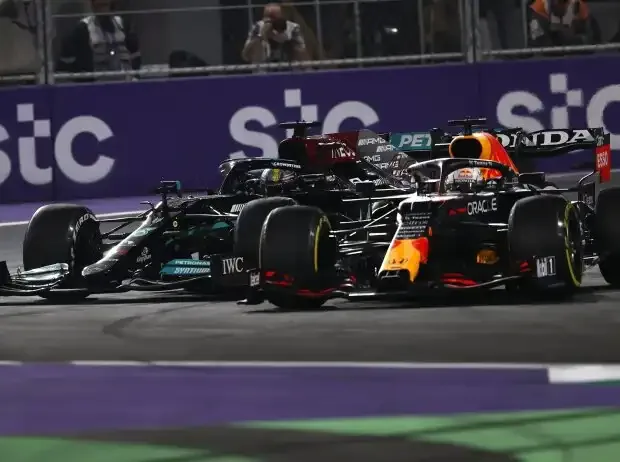
– In 2021, Formula 1 raced in Saudi Arabia for the first time – and experienced a memorable race right at the premiere in Jeddah. The focus was not only on the drivers, but also on the then race director Michael Masi and the legendary “bazaar” of the Jeddah Corniche Circuit.
Read more 24h Nürburgring Qualifiers: Scherer-Phx-Audi wins — Bad luck for Verstappen
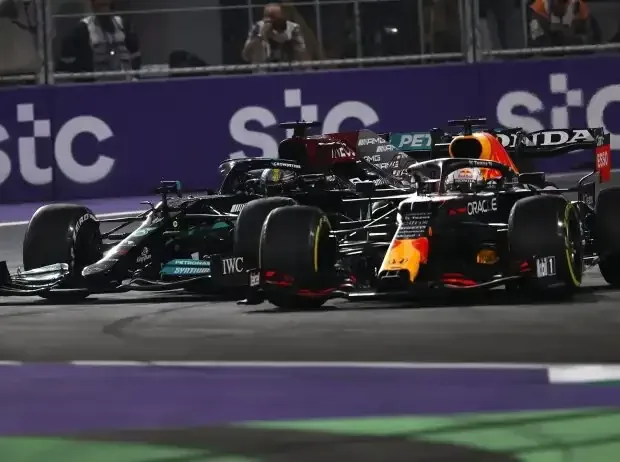
The background was a discussion between Masi and the then Red Bull sporting director Jonathan Wheatley during a race interruption, in which a penalty for Max Verstappen was “negotiated” after he had gained an advantage by cutting the track.
Because the radio communication between teams and race control was also broadcast on television in the 2021 season, the whole world heard the conversation – just like various radio messages later at the controversial season finale in Abu Dhabi.
“So if you ask me for my personal opinion, it was clearly the wrong decision to do that,” says later Formula 1 race director Niels Wittich about the decision at the time to include radio communication in TV broadcasts.
What went wrong in Saudi Arabia 2021, Niels Wittich?
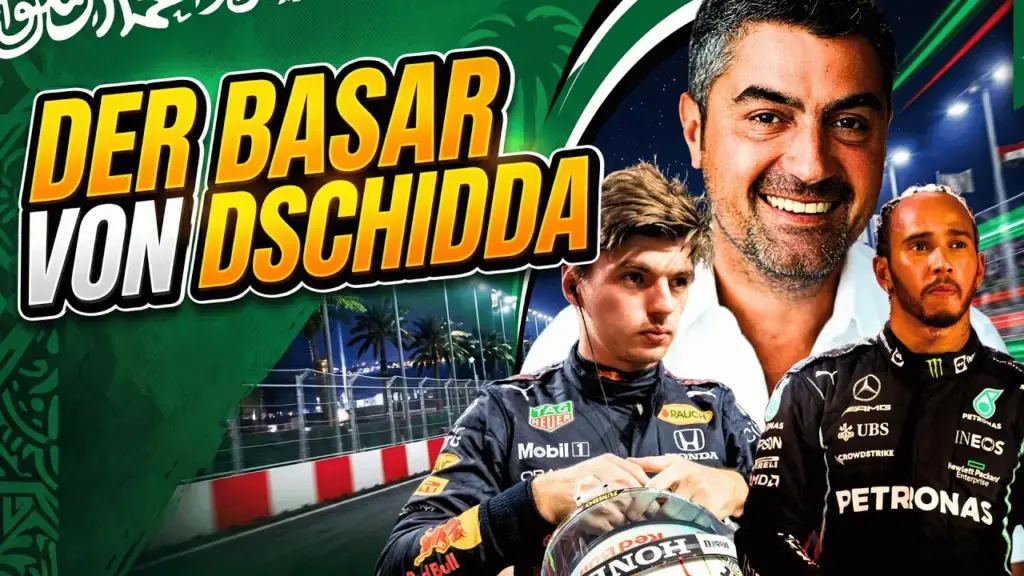
In an exclusive video interview on the YouTube channel of Formel1.de, he explains that it was “certainly super interesting” for viewers to get these behind-the-scenes insights. “For them, it was a new world,” says Wittich, who was Formula 1 race director from 2022 to 2024.
“It was COVID, you also had to somehow inspire the spectators. That means you just wanted to bring a little more value to the sport to make everyone happy,” explains Wittich. That’s why Masi also agreed to publish the radio communication at the time.
Read more Photo gallery: These Formula 1 major projects were never successful
Wittich: Teams constantly wanted to gain advantages
In retrospect, however, it was “definitely the wrong story,” emphasizes Wittich, who explains: “Towards the finale, it naturally completely escalated.” But even earlier in the season, the teams had repeatedly tried to gain an advantage through discussions with race control.
According to Wittich, this led to Masi being increasingly inundated with requests. “The workload on the race director is not small,” he emphasizes and explains: “It’s not like you just sit in race control, watch TV nicely and say: ‘Oh, what a great race!'”
Photo gallery: The biggest Formula 1 conspiracy theories
“You have to constantly look at all sections [of the track]. You have to talk to all your people. So there’s a lot, a lot going on permanently in the background,” says Wittich, who explains: “Apart from the fact that all this radio communication was wrong, it simply wasn’t feasible.”
After the controversial 2021 season finale, Masi lost his job, and when two new race directors for Formula 1, Wittich and Eduardo Freitas, were installed in 2022, the FIA put a stop to the constant radio discussions and thus also to the TV broadcast.
- 24h Nürburgring24h Nürburgring Qualifiers: Scherer-Phx-Audi wins – Bad luck for Verstappen
- 24h Nürburgring24h Qualifiers: Pit stop destroys Max Verstappen’s chance of victory
- MotoGPHow fast are MotoGP bikes really? All numbers and facts
- 24h Nürburgring24h Nürburgring Qualifiers: Race aborted – Driver deceased
Since then, the teams no longer have a direct connection to the race director. All conversations between teams and race control are conducted by another representative of race control, who passes on important information to the race director.
Read more 24h Qualifiers: Pit stop destroys Max Verstappen’s chance of victory